


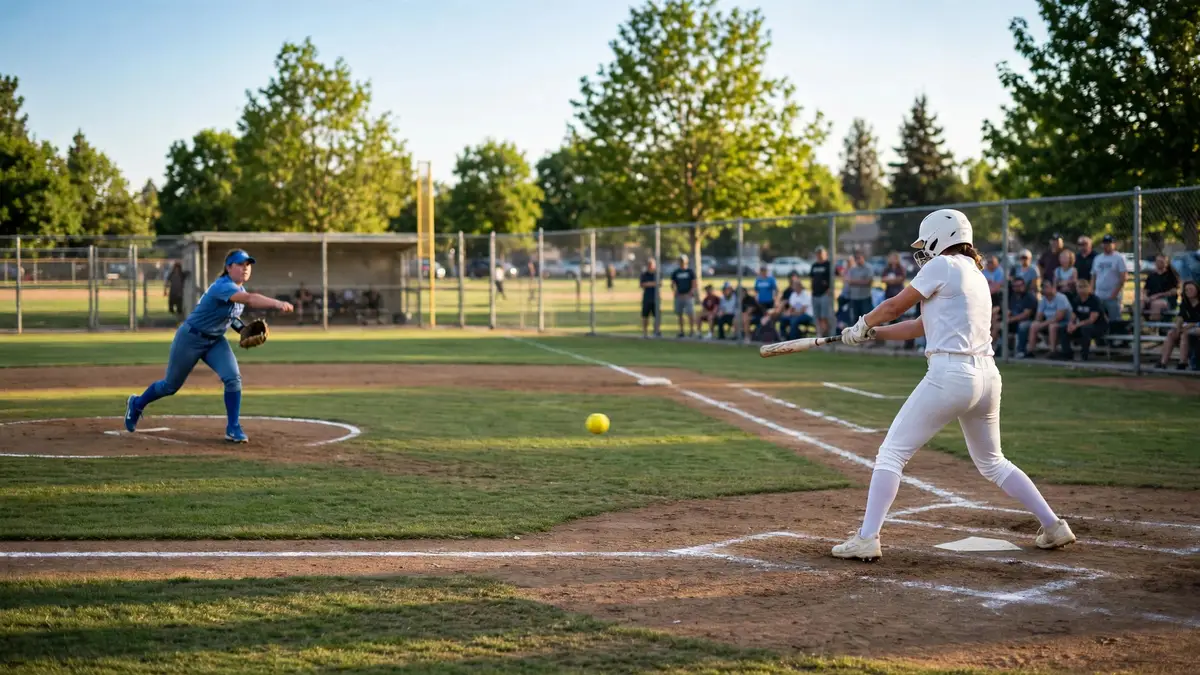
The Whole Game in Plain English
Softball looks simple from the stands: someone throws a big yellow ball, someone swings a bat, and people run around four bases. This guide fixes that, walking through the game one piece at a time.
You do not need to memorise every rule before your first game. Start with the shape of it — seven innings, nine players a side in fastpitch, four bases, three outs — and let the details fill in as you watch.
What are the basic rules of softball? Softball is played between two teams over seven innings. Each team bats until it makes three outs, then the sides swap. A run scores when a player rounds all four bases and touches home plate. The team with the most runs after seven innings wins.
What Is Softball?
Softball is a bat-and-ball team sport, a close cousin of baseball played with a larger ball on a smaller field. The ball is about 12 inches around in the adult game, bright yellow in most modern leagues, and thrown underhand by the pitcher. That underhand delivery is the biggest difference from baseball: pitches arrive quickly on a flatter path.
The core idea never changes: hit, run, and score more than the other team. Baseball fans will find most of it familiar — see our baseball rules for beginners guide.
How is softball different from baseball? The ball is bigger, the field is smaller, the pitcher throws underhand from a flat circle instead of a raised mound, and a standard game lasts seven innings instead of nine. The bases are 60 feet apart in fastpitch, compared with 90 feet in baseball.
Fastpitch vs Slowpitch: The Two Main Versions
The first thing to work out when you turn up to a game is which version you are watching, because the pitching rules change almost everything else. Fastpitch is the competitive version played in schools, colleges, and at the elite level. The pitcher throws hard, with a full windmill arm motion, and the ball can reach speeds that leave batters very little time to react. Bunting, stealing bases, and sharp defensive plays all matter a great deal.
Slowpitch is the version most adults meet in recreational and company leagues. The pitcher must throw the ball in a high arc, usually between 6 and 12 feet at its peak. There is no bunting and no stealing in most slowpitch leagues, and the emphasis shifts from pitching duels to hitting, fielding, and having fun. The rules in this guide focus mainly on fastpitch, since that is the standard competitive form. Local leagues add their own house rules — the blog rounds up how different leagues play.
The Field, Bases, and Lines
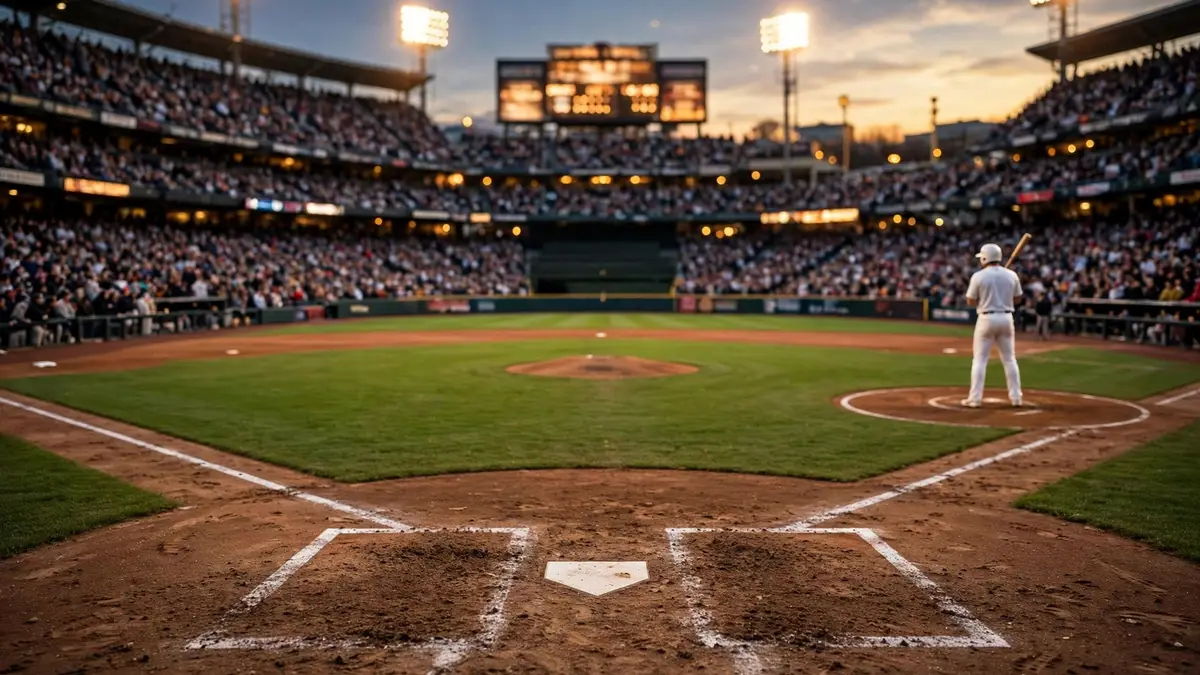
A softball field is a diamond, and once you can picture it, the whole game makes more sense. Home plate sits at one corner. First, second, and third base run counter-clockwise from home, each 60 feet apart in fastpitch. The pitcher stands in the middle on a flat circle, 43 feet from home plate in fastpitch, and a little further back, usually 50 feet, in slowpitch.
A batted ball landing between the foul lines is fair; outside them, it is foul and play stops. The batter’s box is the chalk rectangle beside home plate, and the on-deck circle is where the next batter waits. The MLB scores page shows how a baseball box score tells the same story.
How far apart are the bases in softball? In fastpitch softball the bases are 60 feet apart, and the pitcher throws from 43 feet away from home plate. In slowpitch the bases are usually 65 feet apart and the pitching distance is around 50 feet.
Teams and Positions
Each team fields nine players in fastpitch, and every position has a job that matters. The pitcher throws the ball and then becomes a fielder. The catcher crouches behind home plate, calls the pitches, and guards home on close plays. The first baseman holds runners close and catches throws for outs at first. The second baseman and shortstop cover the middle of the infield, turn double plays, and chase ground balls up the middle. The third baseman, sometimes called the hot corner, handles hard-hit balls down the line and bunts.
The outfield has three players: left, centre, and right field. Centre field is usually the fastest outfielder. In slowpitch, many leagues add a tenth player, a short fielder who plays shallow. In fastpitch, the designated player rule lets a team bat a strong hitter in place of a weaker fielder. The WNBA scores page shows how another sport handles rotations and bench depth.
Innings and How a Game Flows
A standard softball game lasts seven innings. Each inning has two halves: the visiting team bats first in the top half, and the home team bats in the bottom half. A team’s turn at bat ends when it makes three outs, and then the sides swap. The team with the most runs when the seventh inning ends wins.
If the home team is ahead after the top of the seventh inning, the bottom half is not played, because the result is already settled. And if the home team takes the lead in the bottom of the seventh, the game ends the moment the winning run scores. Many leagues also use a run rule, ending the game early when one team leads by a large margin. A full seven-inning game usually takes around two hours. The NBA scores page shows how another sport breaks its action into timed periods.
How many innings are in a softball game? A standard fastpitch softball game lasts seven innings. Each team bats once per inning and its turn ends after three outs. Tied games go to extra innings, and a run rule can end a lopsided game early.
Pitching Rules
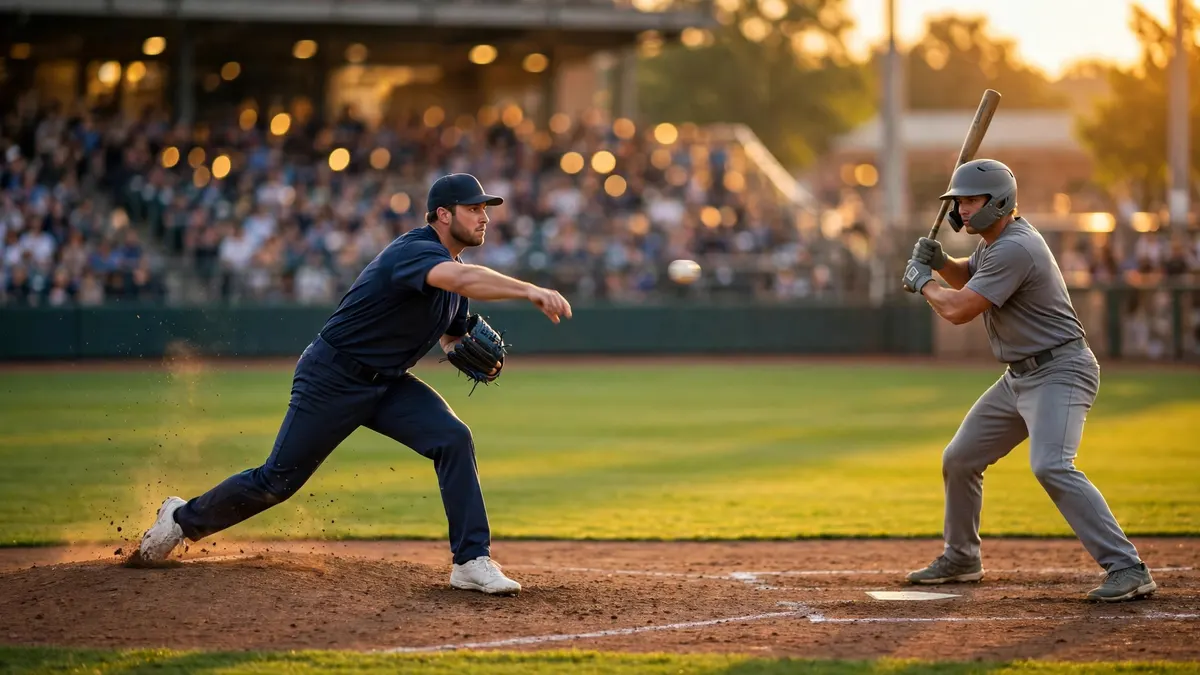
Pitching is where softball most clearly becomes its own sport. The pitcher must throw underhand, with the arm swinging below the hip, and in fastpitch that motion is the famous windmill: the arm circles all the way around before release. Before each pitch the pitcher must pause on the pitching plate, facing the batter. Stopping mid-motion can be called for an illegal pitch, which gives the batter a ball and lets runners advance one base.
The strike zone runs over home plate, between the batter’s armpits and the top of the knees. A pitch that passes through that zone and is not swung at is a strike. A pitch outside it that the batter lets go is a ball. Four balls means a walk, and the batter takes first base. Three strikes means a strikeout. Fastpitch pitchers throw a menu of pitches — rise ball, drop ball, curve, change-up, screwball — while slowpitch requires a high arc. The NFL scores page shows how a dominant unit shapes a contest in a very different sport.

What is an illegal pitch in softball? An illegal pitch is a delivery that breaks the pitching rules, such as leaving the pitching plate early, failing to pause before the pitch, or throwing overhand in fastpitch. The penalty is usually a ball for the batter, and runners advance one base.
Softball Rules for Beginners: Batting, Strikes, and Balls
The batter’s job sounds simple — hit the ball — but the rules around it are full of small details that decide games. The batter must stand inside the batter’s box with at least one foot in it. A swing and a miss, or a pitch taken in the zone, is a strike. A foul ball also counts as a strike, with one exception: a batter can never strike out on a foul ball. If the batter already has two strikes and hits a foul, the count stays at two strikes and the at-bat goes on.
The count is balls first, then strikes, so “3 and 2” is a full count. On a full count the next pitch decides the at-bat: a ball means a walk, a strike means a strikeout, and a ball put in play means the defence must make a play. Batters can also bunt, holding the bat still so the ball taps slowly into the infield — but a foul bunt with two strikes counts as a third strike. Patient hitters wait for a pitch they can drive — the volleyball rules for beginners guide shows how another sport rewards patience and placement.
Can you strike out on a foul ball in softball? No. A foul ball counts as a strike, but a batter cannot strike out on a foul ball. With two strikes, foul balls keep the at-bat alive until the batter puts the ball in play, takes a called strike, or swings and misses.
Base Running Rules
Running the bases is where softball gets chaotic in the best way, and where many beginners get confused. A runner must touch each base in order — first, second, third, then home. Runners can be tagged out if a fielder touches them with the ball, or the ball in the glove, while they are off a base. On a force play the fielder only needs to touch the base with the ball before the runner arrives.
The big base running difference from baseball is the lead-off rule. In fastpitch, a runner may not leave the base until the pitcher releases the ball. Leaving early is an out, and umpires watch for it closely. Once the ball is released, the runner can steal, trying to reach the next base before the catcher’s throw arrives. In slowpitch, most leagues do not allow stealing at all, and runners must wait for the ball to be hit. Runners can also advance on a sacrifice fly — a caught fly ball that lets a runner tag up and run home. Watch your base coach: they tell you when to run, stop, and slide. The ice hockey rules for beginners guide covers a sport with the same split-second decisions.
Scoring Runs
A run scores when a player safely touches all four bases in order and then touches home plate. Runs come from singles, doubles, triples, home runs, sacrifice flies, bases-loaded walks, or wild pitches. A home run scores every runner on base plus the batter — a grand slam, with the bases loaded, is worth four runs.
A team that wins 4-3 after seven innings played a close game; a team that wins 12-1 probably ended it early on the run rule. The box score adds the details, showing each player’s at-bats, hits, runs batted in, and strikeouts, plus the pitcher’s innings and runs allowed. An earned run is scored without a defensive error — which is why one bad throw can decide a game. The tennis scores page shows how a sport with no runs builds drama from points, games, and sets.
How do you score a run in softball? A run scores when a runner touches all four bases in order and reaches home plate safely. The run counts even if the batter is put out on the play, as long as the runner crossed home before the third out was recorded and it was not a force out.
Common Faults and Ways to Get Out
Outs are the currency of softball, and there are more ways to make one than most beginners expect. The obvious ones are the strikeout, the fly out, and the ground out at first base. Then come the trickier ones. A runner is out if they leave the base before the pitch is released in fastpitch. A batter is out if they step out of the batter’s box and hit the ball, or if they hit the ball twice with the bat.
A double play starts with a ground ball, a throw to second for the force, and a relay to first. Errors are not outs, but a dropped fly ball or a wild throw can keep an inning alive and change a game. Then there are the faults that cost a team without recording an out. An illegal pitch gives the batter a ball and moves runners up. Catcher’s interference awards the batter first base. Obstruction, when a fielder without the ball blocks a runner’s path, awards the runner the base they would have reached. The college football scores page shows how another sport’s penalties can swing a game.
Equipment You Actually Need
You do not need much to start playing softball, and that is part of its appeal. A glove is the first purchase, and it should fit your hand and feel broken in, not stiff. A bat must meet your league’s size rules and feel light enough to swing fast.
The ball is 12 inches around in most adult fastpitch, 11 inches in youth play, with raised seams and a bright yellow cover. A batting helmet with a face guard is required for batters in most organised play, and many players add a face mask in the field, especially pitchers and infielders. Moulded plastic cleats are standard in most recreational leagues; metal cleats are restricted in many youth leagues. A kit bag, water bottle, and sunscreen complete the starter kit. The PGA Tour schedule page shows another sport’s gear and calendar.
How to Follow a Game
Following a softball game is easier once you know what to watch between pitches. Before each pitch, look at the count, the number of outs, and who is on base. Those three facts shape every decision: a 3-0 count means the batter can wait for a perfect pitch, two outs with a runner on second means a single probably scores, and a full count with the bases loaded means the next pitch decides the inning.
Watch the pitcher between pitches: the grip, the pause, and the windmill. These small details are where the game lives. The college basketball scores and NHL scores pages show how other leagues package a night of results.

Beginner Tips for Players and Fans
If you are picking up a glove for the first time, start with the basics and build from there. Catch with two hands and watch the ball all the way in. Practise throwing with a proper grip and a full follow-through rather than muscling the ball. At the plate, keep your stance relaxed, your eyes on the pitcher’s release point, and your swing short and level. New batters strike out a lot, and that is normal.
Play the position that fits you. Fast runners do well in the outfield and on the bases. Strong arms suit shortstop, third base, and the outfield. Patient, calm players make good catchers, because the catcher runs the game from behind the plate. For fans, the best tip is to go to a game in person and sit behind home plate, where you can see the pitch move and hear the crack of the bat. The boxing schedule and UFC schedule pages list other live nights out — sport is always better with a crowd.
What is the best tip for a softball beginner? Watch the ball all the way into your glove, keep your batting stance relaxed, and learn the count, outs, and runners on base before every pitch. Those three habits will improve your fielding, your hitting, and your understanding of the game faster than anything else.
Frequently Asked Questions
How long does a softball game last?
A standard seven-inning fastpitch game usually takes around two hours. Tournament games with time limits can end sooner.
What is the difference between fastpitch and slowpitch softball?
Fastpitch pitchers throw hard underhand with a windmill motion, batters can bunt and steal, and games are usually low scoring. Slowpitch pitchers must throw a high arc, bunting and stealing are usually banned.
How many players are on a softball team?
A fastpitch team fields nine players: pitcher, catcher, four infielders, and three outfielders.
Can a runner steal a base in softball?
Yes, in fastpitch a runner can steal once the pitcher releases the ball, but leaving the base early is an out.
What happens if a softball game is tied after seven innings?
The game goes to extra innings until one team leads at the end of a full inning.
Is softball the same as baseball?
No, though the two sports are close cousins. Softball uses a bigger ball, a smaller field, underhand pitching from a flat circle, and seven-inning games, while baseball uses a smaller ball, a bigger field, overhand pitching, and nine innings.
What equipment does a beginner need for softball?
A glove, a league-approved bat, a batting helmet, cleats, and a ball are enough to start.
What is a walk-off win in softball?
A walk-off win happens when the home team scores the winning run in the bottom of the final inning. The game ends the moment the run scores.