



Cricket is a game that looks hard from the outside. The field is big, the rules use unfamiliar words, and a match can last a whole day. Yet the basics are simple: one side bats, the other side bowls and fields, and the side with more runs wins. This guide explains how you can play cricket in plain terms, whether you want to join a club, play with friends, or try the game for the first time.
This guide answers the question how can i play cricket in the simplest way possible. You will learn the rules, the gear, the formats, and where to find people to play with. By the end, you will know how cricket works, what to bring, and how to start playing cricket this weekend.
What Is Cricket?
Cricket is a bat-and-ball game played on a large field, so it is easy to see why newcomers find the sport fascinating. Two teams take turns to bat and to bowl, and the team that scores the most runs wins. Each team has 11 players, and each player has a role, though some players both bat and bowl.
A cricket match is played between two teams of 11 players, and each match has two innings. In the first innings, one team bats and scores as many runs as it can, while the other team bowls and fields to limit the score. In the second innings, the teams swap roles, and the team that scored more in the first innings sets a target for the other team to chase.
In much of the world, cricket is a way of life, yet the sport does not require you to know any jargon before you start. You can learn as you play, and your team-mates will explain the basics. The best way to understand the game is to watch a match and ask questions as you go.

How Cricket Works: The Basic Rules
How a Match Is Played
A cricket match starts with the toss. The captains flip a coin, and the winner chooses whether to bat or to bowl first, based on the pitch and the weather. A dry, flat pitch favours batting, while a damp pitch may help the bowlers.
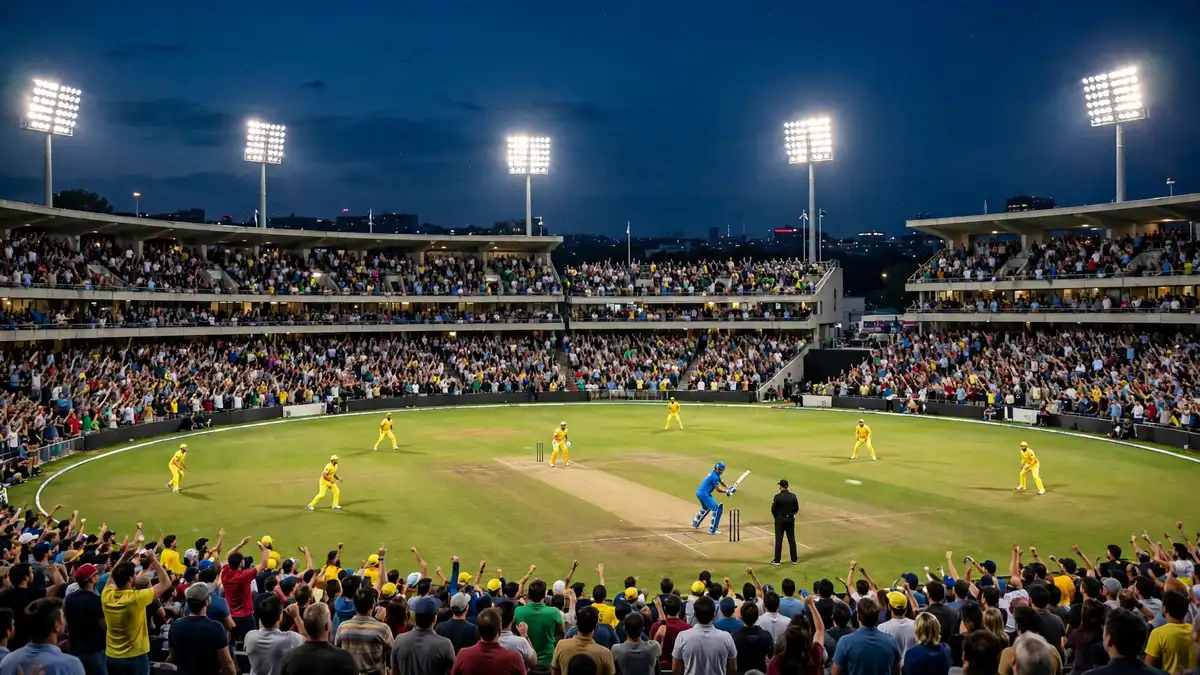
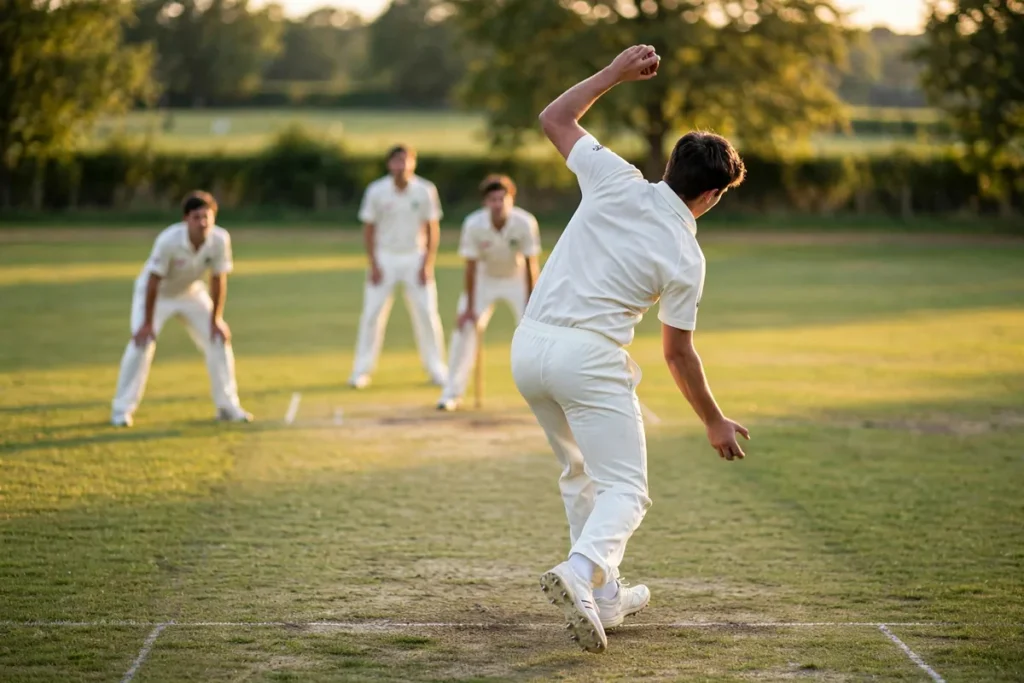
Each side takes turns to bat and to bowl. The batting side sends two batters to the crease, while the bowling side sends one bowler and ten fielders. The bowler delivers the ball from one end of the pitch, and the fielders spread out to stop the runs.
Each innings ends when the batting side has lost ten wickets, when the set number of overs is complete, or when the captain declares the innings closed. In a limited-overs match, the first innings ends after the set overs are bowled. In a Test match, each side bats twice, and the team with more runs wins.
A Personal Note on My First Time at the Nets
I will admit something here: the first time I went to the nets, I had no idea what to do. I stood at the crease, the bowler ran in, and I missed the ball completely. It took a few visits before I felt comfortable, and I am still learning. Do not expect to be good at once: the game rewards patience. And if you want to know why test cricket is hard, ask any player who has spent a day in the field in the sun.
Scoring Runs
Batters score runs by hitting the ball and running between the wickets, or by hitting the ball to the boundary. If the ball reaches the boundary after touching the ground, it scores four runs. If it clears the boundary without touching the ground, it scores six runs.
You can also score runs without hitting the ball: for example, if the bowler bowls a wide ball (outside the batter’s reach) or a no-ball (an illegal delivery), the batting side gets extra runs. A byes is a run scored when the batter misses the ball and the fielders do not stop it.
Wickets and Dismissals
A batter can be dismissed in several ways, and each one is called a wicket. The most common dismissals are:
- bowled: the ball hits the stumps and knocks the bails off;
- caught: a fielder catches the ball without it bouncing;
- leg before wicket (lbw): the ball hits the batter’s leg in front of the stumps;
- run out: the fielding side hits the stumps while the batter is out of the crease;
- stumped: the wicket-keeper hits the stumps while the batter is out of the crease.
Fielding Positions and the Fielding Table
Fielders are spread around the pitch in set positions, each with a name. The fielding captain places them to stop the batters from scoring, or to catch the ball if the batter hits it in the air. Fielding positions change with each bowler, and the captain moves players to cover the gaps.
| Position | Where they stand | What they do |
|---|---|---|
| Slip | Behind the batter, next to the keeper | Catches edges |
| Gully | Behind the batter, wider than slip | Catches edges and cuts |
| Point | Square to the batter, off side | Stops cuts and drives |
| Cover | In front of the batter, off side | Stops drives |
| Mid-off | Near the bowler, off side | Stops straight drives |
The Overs, That Is How Many Balls You Get
An over is a set of six legal balls bowled by one bowler from one end of the pitch. After six balls, the over ends, and the next bowler bowls from the other end. Each over is counted, and the number of overs in an innings depends on the format. In a T20 match, each side faces 20 overs, while in a Test match, there is no fixed number.
Essential Gear: What You Need to Start
Playing cricket needs some basic equipment, though you can start with very little. A bat, a ball, and a pair of shoes are enough for a casual game. For a full match, you will need more, and the list below tells you what to buy first.
The Bat: Your Most Important Piece of Kit
A cricket bat is made of willow, and it has a flat blade and a handle. Bats come in different sizes: a full-size bat is right for most adults, while a smaller bat is better for juniors. The bat should feel light if you hold it with one hand, and the handle should be comfortable.
Pick a bat that is not too heavy; a heavy bat will slow your hands and hurt your wrists. A lighter bat is easier to control, and you can build power over time. If you are not sure, ask a shop assistant or a coach to help you choose.
Balls and Protective Gear
A cricket ball is hard and heavy, and it can hurt if it hits you. A red ball is used in Test matches, a white ball in limited-overs matches, and a pink ball in day-night Tests. A tennis ball or a soft ball is a safer choice for beginners, because it does not hurt as much.
You will need protective gear for hard-ball cricket: at least a helmet, gloves, pads, and an abdominal guard. You may also need a chest guard or an arm guard if you choose to wear them. The gear should fit well and be comfortable under your shirt.
Clothing and Footwear
Wear white or light-coloured clothing for a Test match, and team colours for a limited-overs match. Most clubs have their own kit, so ask the club what to wear before you buy. Good shoes help you move on the field, so you should wear proper cricket shoes or trainers with grip.
Gear to Buy First: New or Used
If you are on a budget, the essentials below are a good place to begin. You can add more kit as you play more, and you can buy used gear from your club or online.
- Cricket bat (full size for adults, smaller for juniors)
- Cricket ball (or a tennis ball for soft-ball cricket)
- Batting gloves and leg pads
- Helmet with a face guard
- Abdominal guard and thigh guard
- Cricket shoes with grip
Safety Rules, Fair Play, and Protective Gear
Safety matters in cricket because the ball is hard and the game is physical. Always wear a helmet and pads when batting against a hard ball, and never face a fast bowler without the right gear. The same applies to fielding close to the bat: wear a helmet if you are in a close catching position.
Fair play is as important as safety. Cricket has a long tradition of respect for the other team and for the umpires. Do not appeal for a wicket unless you think it is out, and accept the umpire’s decision even if you disagree. The spirit of the game is part of what makes cricket special.
The how to bowl a cricket ball guide is useful if a coach corrects your bowling, because a badly bowled ball can hurt a batter. Good bowling is also a matter of safety: a high full toss can cause serious injury. Bowling within the rules protects everyone.
If you want to explore the game further, the cricket terms page explains the words people use on the field. It is also worth reading the cricket bats guide before buying, since a bat that is too heavy or too long can strain your wrists and back.
Cricket Formats You Can Play (T20, ODI, Test)
Cricket has many formats, and the right one for you depends on how much time you have and how serious you want to be. The three main formats are Test cricket, one-day cricket, and Twenty20, and each one plays a different way.
Test cricket lasts up to five days, with each side batting twice. Players wear white, and the matches can be slow but full of tension. The team that scores the most runs over the whole match wins. Test cricket is a good choice if you like the challenge and the strategy.
One-day cricket lasts a single day, with each side facing 50 overs. The game is faster, and the team that scores the most runs wins. One-day cricket is a good choice if you want a full match in a day, with time for other things after the game.
Twenty20, or T20, is the shortest format: each side faces 20 overs, and a match lasts about three hours. T20 is fast and fun, and it attracts many newcomers. If you play for a club, you are most likely to play T20 first.
The table below compares the main formats:
| Format | How long it lasts | Overs per side | Who it suits |
|---|---|---|---|
| T20 | About 3 hours | 20 | Beginners and busy players |
| ODI | One day | 50 | Players with a full day free |
| Test | Up to 5 days | No limit (two innings) | Experienced players |
| Tape-ball | One to three hours | Flexible | Social groups and parks |
| Indoor | One to two hours | Flexible | Winter practice and quick games |
You can find more detail on the cricket formats page if you want to compare them in depth.
Where Can I Play Cricket?
You can play cricket anywhere, though you will most often play in a park, on a field, or at a club ground. Many towns have a park where people play informally, and many schools have teams and nets. All you need is a bat, a ball, and a few friends to start a game in the park.
If you want a regular team, look for a local cricket club. The steps below will help you find one near you:
- search online for cricket clubs near your town;
- ask local schools, community centres, and sports shops;
- check social media and notice boards at local grounds;
- visit a ground on a match day and talk to players.
Many clubs run training nights and welcome beginners of all ages. If you are shy, bring a friend with you, and ask the coach what you need to wear and bring. Most people in cricket are happy to help a newcomer, and you will soon learn the rules and make friends.
Can I Play Cricket in the USA?
Yes, and the game is growing in America. There are now professional leagues, hundreds of clubs, and thousands of players across the country. The game is popular in cities with large communities from South Asia, the Caribbean, and England, and the number of grounds keeps rising. You can find a club in most American cities.
To play cricket in America, start by looking for a local club or league, and ask the club if they welcome beginners. If you live in a small town, your local park is a good place to start with friends, and a club may be a short drive away.
The game in the US is still smaller than in other countries, but it is growing fast. If you want to learn more about the game in the US, the cricket grounds and cricket clubs in the USA pages list many local grounds and facilities.
How to Practice: Drills and Skills
You do not need a full match to improve: short, regular practice works best. Find a friend, a wall, or a net and repeat the basics until they feel natural. The steps below are simple, and they work for players of any age.
Batting: Build Your Technique First
Start with your grip and stance. Hold the bat with both hands, stand side-on, and keep your head still. A relaxed grip and a steady head will help you meet the ball cleanly.
Then practise the straight drive: step toward the ball and play it back past the bowler. Repeat this 20 times a day and you will build the habit of playing straight. A simple drill is to toss a ball up and hit it gently into a wall, which helps you learn timing.
Bowling: Focus on Line and Length
Bowling is about line and length, not pace. Aim at the top of off stump, keep your arm high, and follow through. A slower ball that lands in the right place is better than a fast ball that goes wide.
Practise by aiming at a single stump from a short run-up. Bowl six balls, then walk down, pick them up, and repeat. The aim is to land the ball on the same spot again and again.
Fielding: Catching and Throwing
Fielding is a good place to start because it needs no special skill. Practise catching with a tennis ball first: stand close to a partner, throw underarm, and catch with soft hands. Move to a cricket ball when you are sure of your hands.
Throwing matters too: pick the ball up cleanly, turn side-on, and throw at the stumps. A good throw can stop a run or run a batter out.
Cricket for Young Players
Children can play cricket from a young age, and many clubs run junior teams for under-9s, under-11s, and older age groups. Young players start with a soft ball and a small bat, and they learn the game through fun drills and short matches. Coaches keep the sessions short and focus on fun, not on winning.
A young player should start with the basics: hold the bat correctly, learn to bowl with a straight arm, and practise catching with a soft ball. Parents can help by playing catch at home or in the park. If your child likes the game, ask your local club about junior nights, where they can meet other children and learn together.
What Age Is Best to Start?
There is no single answer, but most children can start playing cricket between the ages of five and eight. At this age, the game is taught through play: short games, soft balls, and small bats. Older children can start at any age, and they often pick up the game fast, especially if they have played other bat-and-ball sports like baseball.
Older children and teens can join a club as well, and they may play in a league or a school team. The key is to choose a format that suits their time and their level. Ask your club or your school about the best team for their age and their ability.
Common Mistakes Beginners Make
Many new players make the same mistakes, but these are easy to fix. This is what to watch for:
- playing with a bat that is too heavy or too long;
- forgetting to wear a helmet when batting against a hard ball;
- bowling with a bent arm or a poor follow-through;
- standing too close to the bat when fielding;
- trying to hit every ball for six rather than playing straight;
- forgetting to back up the stumps when the ball is thrown in;
- not calling clearly enough when running between the wickets.
How to Get Better Over Time
Find a coach or a mentor. A good coach will help you improve in ways that practice alone cannot, and will give you feedback on your technique. Most clubs have a coach or a senior player who will help you if you ask, and you can also find coaching videos online, though a real coach is better.
Watch good players closely: see how they hold the bat, how they move their feet, and how they set themselves before the ball arrives. Try to copy what they do, and ask them to show you how they play. The more cricket you watch, the more you will learn.
Play as much as you can: join a club, play in the park, or take part in a local league. The best players have played a lot of games, and they know the game through practice. Set simple goals each week, like hitting the ball straighter or bowling a line that is straighter, and work on one thing at a time.
Frequently Asked Questions
Can I start playing cricket as an adult?
Yes. Many clubs welcome adult beginners, and social leagues often have players of all ages. You can start with tape-ball or soft-ball cricket in a park, and build your skills from there. Your first games do not need a hard ball or full protective gear.
Do I need expensive equipment?
No. You can start with a bat, a ball, and a pair of trainers. Many clubs lend gear to beginners, so ask before buying. If you do buy, start with a bat that fits you, a helmet for safety, and a pair of gloves. You can add extras as you go.
How long does a cricket match take?
It depends on the format. A T20 match lasts about three hours, a one-day match lasts a full day, and a Test match can last up to five days. Tape-ball and indoor games are often complete in one to three hours.
Is cricket safe for my child?
Cricket is safe when players use the right protective gear and play at their level. Children usually start with a soft ball, and coaches teach them to wear a helmet when batting. Junior cricket uses shorter matches and softer balls to make it safe and fun.
How do I choose the right bat?
A bat should feel light in your hands and be the right length for your height. Hold it with one hand and check that you can lift it with little effort. Ask a coach or a shop assistant for advice, and try a few bats before you buy. A bat that is too heavy will slow your hands and hurt your wrists.
Where can I find cricket clubs near me?
Search online, check notice boards at local grounds, and ask at schools or community centres. Many social media groups and websites list clubs by town and city. Visit a ground on a match day and speak to players – most cricket people are happy to help. And if you want an easy way to keep track of the professional game while you learn, the cricket scores page is a good place to start.
A final tip: start social and stay curious. And if you want an easy way to keep track of the professional game while you learn, the cricket scores page is a good place to start.