





The 2026 Cup Series season runs from February to November, and it is one of the most changed calendars in years. A street race arrives, a famous short track returns as a points race, the championship moves back to Homestead-Miami, and the Chase format returns to decide the title.
That is a lot to track, and the raw date tables do not help much. They list every race in a grid, but they do not explain how the season fits together, which races matter most, or how to watch without missing a round. This guide does that job.
It is written for the 2026 season specifically. The evergreen schedule guide on this site covers how NASCAR calendars work in general. This one is about this year: its shape, its new venues, its playoff path, and its broadcast split.
Quick Answer
What is the 2026 Cup calendar? The NASCAR schedule 2026 is the 36-race Cup Series calendar running February to November, starting with the Daytona 500 in mid-February and ending with the championship race at Homestead-Miami on November 8. It has 26 regular-season races and a 10-race Chase playoff, plus two non-points events.
Table of Contents
- The 2026 Season at a Glance
- How the Season Is Structured
- The Regular Season, Month by Month
- The Chase Playoffs Explained
- What Is New in 2026
- Track Types and What They Mean
- The Other Two National Series
- How to Watch the 2026 Season
- Planning a Race Weekend
- Common Mistakes Fans Make
- FAQ
The 2026 Season at a Glance
The Cup Series runs 36 points-paying races in 2026. The first points race is the Daytona 500 on February 15. The last is the championship race at Homestead-Miami Speedway on November 8. Between those two dates, the series visits more than 20 tracks across the country.
Two non-points events sit outside the championship. The Clash opens the year, and the All-Star Race lands in mid-season. Neither awards championship points, but both draw large audiences and both matter to drivers and teams in their own way.
The season breaks into two clear halves. The first 26 races form the regular season, running from February to late August. The final 10 races form the Chase playoffs, running from early September to early November. That split shapes everything from team strategy to television coverage.
Why this season is different
Three changes set 2026 apart. The Chase format returns after several seasons of a different elimination system. A brand-new street circuit debuts at Naval Base Coronado in San Diego. The championship finale returns to Homestead-Miami for the first time since 2019.
Each change pulls the season in a different direction. The Chase changes how the title is won. The street race changes where the sport goes. Homestead changes how the finale is raced. Together, they make 2026 a season worth following closely, even for fans who drifted away in recent years.
The broadcast picture also changes through the year. FOX and FS1 carry the early season. Prime Video takes a mid-season block. TNT follows. NBC and USA Network carry the run to the finish. A fan who knows that rotation never hunts for a race on the wrong channel.
How the Season Is Structured
The Cup season has two phases, and the line between them is sharp. The regular season is about accumulation. The playoffs are about survival. A driver who understands both phases races them differently.
In the regular season, every driver chases wins, stage points and championship points. A win locks a driver into the playoffs, whatever his points position. That rule rewards aggressive racing from the first round, because a single win can save a season.
The playoffs in plain terms
The playoffs run for 10 races, from early September to early November. Sixteen drivers enter, and the field is cut in rounds. Four drivers are eliminated after each of the first three rounds, leaving four championship contenders for the finale at Homestead-Miami.
The finale is a single race. The highest finisher among the final four wins the title. That is the Chase in its simplest form: a season of accumulation, then a short, sharp elimination run, then one race for everything.
That structure is why the playoff races feel different. A bad finish in the regular season costs points. A bad finish in the playoffs can end a title run. Teams plan their cars, their pit strategy and their risks around that difference.
For a sense of how the playoff picture builds through the year, our guide to NASCAR playoff standings follows the points race as it develops, and explains what each position means for a driver’s chances.
The Regular Season, Month by Month
The regular season opens in February with the Clash, the Daytona duels, and then the Daytona 500. February is the sport’s biggest month, because the 500 is its largest single race. Teams arrive with new cars, new sponsors and new hopes, and the 500 sets the tone.
March takes the series west and south: Atlanta, the road course at Circuit of the Americas, Phoenix, Las Vegas and Darlington. That stretch tests every kind of track in quick succession, and it usually separates the teams that are ready from the teams that are still learning their cars.
Fans who want the full picture should also check the companion series, which run their own races on the same weekends. Our guide to the NASCAR Monster Cup qualifying format explains how starting positions are set, which matters most when a playoff spot is on the line.
The Chase Playoffs Explained
The Chase returns in 2026, and it changes the final 10 races. The playoff field is 16 drivers. The rounds are three races each, except for the finale, which is a single race. After each round, four drivers are cut.
Round one runs at Darlington, World Wide Technology Raceway and Bristol. Round two runs at Kansas, Las Vegas and the Charlotte road course. Round three runs at Phoenix, Talladega and Martinsville. The finale runs at Homestead-Miami on November 8.
| Season phase | Races | Dates | What decides it |
|---|---|---|---|
| Regular season | 26 | Feb 15 – Aug 29 | Wins and points set the 16-driver playoff field |
| Chase round 1 | 3 | Sep 6 – Sep 19 | 16 drivers cut to 12 |
| Chase round 2 | 3 | Sep 27 – Oct 11 | 12 drivers cut to 8 |
| Chase round 3 | 3 | Oct 18 – Nov 1 | 8 drivers cut to 4 |
| Championship | 1 | Nov 8 | Highest finisher of the final 4 wins the title |
What Is New in 2026
Three changes matter most in 2026, and each one deserves a clear explanation. The first is the Chase. The second is the San Diego street race. The third is the return of two tracks that have been away from the points calendar.
The Chase return is the biggest structural change. The previous elimination format is gone, replaced by the 10-race playoff stretch described above. Fans who followed the sport a decade ago will recognise it. Fans who started more recently will need to learn its rhythms, because the cut points land on different weekends than they used to.
The San Diego street race
The new street circuit at Naval Base Coronado debuts on June 21. It is a genuine street race, run on roads inside a naval base, and it is the first permanent street circuit on the Cup calendar. It also brings Cup racing back to Southern California after a long absence.
Street races are different from road courses. The walls are close, the surface changes, and there is little room for error. A driver who brushes a wall loses time or a wheel. A driver who finds the rhythm early can build a gap that is hard to close.
The San Diego market matters too. It is one of the largest media markets in the country, and a race there puts NASCAR in front of fans who may never visit a traditional oval. The sport has been trying to reach those fans for years, and a street race is its most direct attempt yet.
For the broader picture of how NASCAR fits into the American sports calendar, our guide to the NFL season shows the other sport that dominates autumn weekends, and why NASCAR’s playoff run has to fight for attention in October and November.
Baseball runs through the same summer months, and its fans face the same weekly rhythm of following a long season. Our guide to following MLB scores shows how a summer sport keeps its audience across six months, which is the same challenge NASCAR faces from February to November.
Track Types and What They Mean
The 2026 calendar covers five track types, and each one produces different racing. A fan who knows the types can predict what a race will look like before the green flag falls. A fan who does not will wonder why the same drivers look fast one week and slow the next.
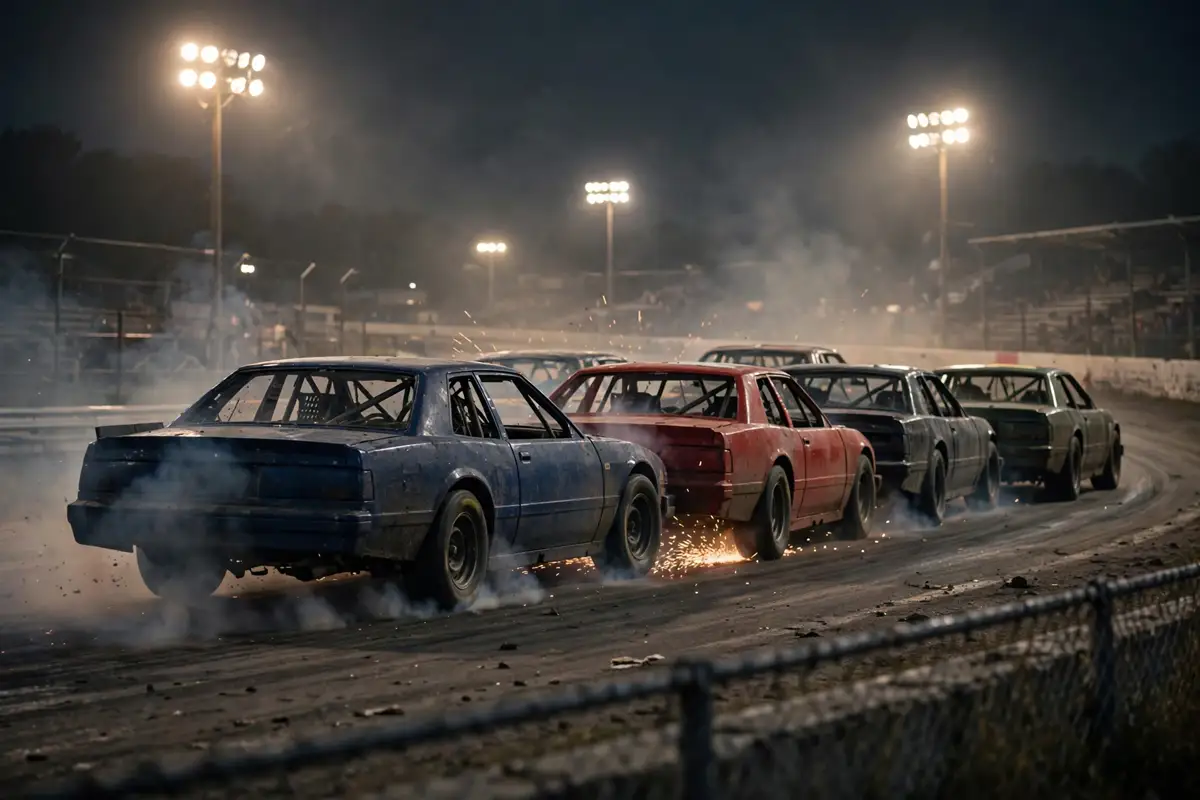
Superspeedways are the longest ovals, at Daytona and Talladega. Cars run in large packs, drafting inches apart at speeds over 200 miles per hour. A single mistake can collect a dozen cars, which is why superspeedway races are both thrilling and unpredictable.
The Other Two National Series
The Cup Series is the top level, but it is not the only series on the calendar. The O’Reilly Auto Parts Series, formerly the Xfinity Series, and the Craftsman Truck Series run their own schedules on the same weekends, usually on the Saturday or Friday before the Cup race.
The O’Reilly Series runs about 33 points races in 2026. The Truck Series runs about 23. Both follow the same basic structure: a regular season, then a playoff run to a finale. Both also share the Homestead-Miami finale weekend, with the Truck race on Friday, the O’Reilly race on Saturday, and the Cup race on Sunday.
Why the support series matter
The support series are where future Cup drivers are made. A driver who wins in the O’Reilly Series is usually a Cup driver within a year or two. A driver who wins in the Trucks is on the same path, one step further back. Fans who watch the support races see the next generation before it arrives.
The support races are also good racing in their own right. The cars are slower and the fields are closer, which produces more passing and more lead changes. A fan who only watches the Cup race is missing two extra races each weekend that are often more entertaining.
The schedules for the three series are published together, which makes planning easier. A race weekend at a track usually holds all three series, with the Trucks on Friday, the O’Reilly cars on Saturday, and the Cup cars on Sunday. That is the rhythm of a NASCAR weekend.
For readers who follow other American series, our guide to the college football season shows a sport with a similar weekend rhythm, where Saturday belongs to the colleges and Sunday belongs to the professionals.
Women’s basketball runs through the summer too, and its fans track a shorter, sharper season than NASCAR’s. Our guide to following WNBA scores explains a calendar where every game matters more because there are fewer of them, which is a useful contrast to a 36-race season.
How to Watch the 2026 Season
The 2026 broadcast deal splits the Cup Series across six outlets: FOX, FS1, Prime Video, TNT, USA Network and NBC. The split runs in blocks through the season, which is easier to follow than a week-by-week rotation.
FOX and FS1 carry the early season, from the Clash through the spring. Prime Video takes five races from late May to late June, including the Coca-Cola 600 and the San Diego street race. TNT takes the summer block from late June to late July. NBC and USA Network carry August to the finale in November.
A simple viewing plan
Mark the handover dates in advance. The Prime Video block starts with the Coca-Cola 600 on May 24 and ends with San Diego on June 21. The TNT block starts at Sonoma on June 28 and ends at Indianapolis on July 26. The NBC and USA block starts in August and runs to Homestead on November 8.
That plan covers the whole season in three moves. A fan who knows those three blocks will never open the wrong app on race day. A fan who does not will spend the first 10 minutes of a race hunting for the channel while the cars are already running.
Streaming is part of the picture now. Prime Video races stream on Prime, and TNT races are also available through its streaming partner. The league’s own app and website list the channel for every race, and that list is the safest source on the day.
For a comparison with how another sport handles its broadcast split, our guide to the NHL season follows a league whose games are spread across a similar mix of broadcast and streaming outlets.
Tennis offers the other model for a summer calendar, with big events spaced across the season rather than a weekly race. Our guide to the Wimbledon schedule shows how a single famous tournament anchors a whole summer, which is the role the Daytona 500 plays for NASCAR in February.
Planning a Race Weekend
Attending a race is different from watching one, and the 2026 calendar rewards planning. The best seats sell early, especially at Daytona, Bristol and the new San Diego street race. A fan who waits until race week will pay more and sit further from the action.
Start with the track, not the date. A short track gives a close, loud, contact-heavy day. A superspeedway gives a fast, pack-racing day with a huge crowd. A road course gives a day of walking between corners and watching different parts of the track. Each one is a different experience, and the right choice depends on what a fan wants from the day.
For fans who follow other sports live, our guide to the boxing calendar shows a sport where the live experience is also very different from the broadcast, and where planning the trip matters just as much as picking the event.
Soccer fans face the opposite problem to NASCAR fans: a single match is short, and the question is how long it lasts rather than when the next one starts. Our guide to how long a soccer game lasts covers the timing rules that make a football match far easier to plan around than a three-hour race.
Common Mistakes Fans Make
The most common mistake is treating the schedule as a list of dates. A date table tells a fan when a race happens, but it does not tell him why it matters. A race in March and a race in September can look the same on a table and feel very different in the standings.
The second mistake is ignoring the support series. A fan who only watches the Cup race misses the drivers who will be in the Cup field next year, and misses two extra races that are often better than the main event. The support races are part of the weekend, not a warm-up for it.
Mistake three: missing the broadcast handover
Fans miss races because they open the wrong channel. The 2026 season changes broadcasters three times, and each change catches fans who did not mark it. The fix is simple: write the three handover dates down, and check the league’s schedule page on race morning.
The fourth mistake is judging a driver by one track type. A driver who is fast on intermediates may be slow on road courses, and a driver who is strong on short tracks may struggle at superspeedways. The calendar tests every skill, and a driver’s season is the sum of all of them, not the best of them.
Mistake five: forgetting the Chase cuts
Fans who follow the regular season closely sometimes stop watching when the playoffs start, because the points system changes. That is the wrong way round. The playoffs are when the season matters most, and the cuts after each round are the moments that decide the title. A fan who skips the playoffs misses the point of the whole year.
The final mistake is expecting every race to be the same length. A short-track race can finish in under three hours. A superspeedway race can run long because of cautions. A road course race can be stopped and restarted. The schedule gives a start time, not a finish time, and a fan who plans around a fixed finish will be caught out.
For a different take on how a season’s structure shapes its ending, our guide to the UFC calendar follows a sport with no regular season at all, where every event stands alone and the schedule is a list of dates rather than a story.
FAQ
How many races are in the NASCAR schedule 2026?
The Cup Series runs 36 points-paying races in 2026, plus the Clash and the All-Star Race as non-points events. The O’Reilly Auto Parts Series runs about 33 points races, and the Truck Series runs about 23.
When does the NASCAR 2026 season start and end?
The season opens with the Clash in early February, the first points race is the Daytona 500 on February 15, and the championship race runs at Homestead-Miami Speedway on November 8.
What is the Chase in NASCAR 2026?
The Chase is the 10-race playoff that decides the Cup title. Sixteen drivers enter, four are cut after each of the first three rounds, and the final four race for the title at Homestead-Miami, where the highest finisher wins.
What is new on the NASCAR schedule 2026?
A street race debuts at Naval Base Coronado in San Diego on June 21, North Wilkesboro returns as a points race for the first time since 1996, Chicagoland returns, and the championship finale moves back to Homestead-Miami.
What channels show NASCAR in 2026?
FOX and FS1 carry the early season, Prime Video takes five races from late May to late June, TNT takes the summer block, and NBC and USA Network carry August through the finale in November.
How is this guide different from the evergreen NASCAR schedule article?
The evergreen guide explains how NASCAR calendars work in general. This guide is specific to 2026: its 36-race shape, its new tracks, its Chase format, and its broadcast split for this season only.

Share this guide: Share on X | Share on Facebook | Share on LinkedIn | Share by Email
About the author: Jaani covers NASCAR for Sports Flash Daily. View All Articles
Facts checked on 13 November 2026. This guide was made by checking the 2026 calendar against the league’s published national series schedule and the leading full-season guides, and by reading those guides to find the gaps they left.



















