




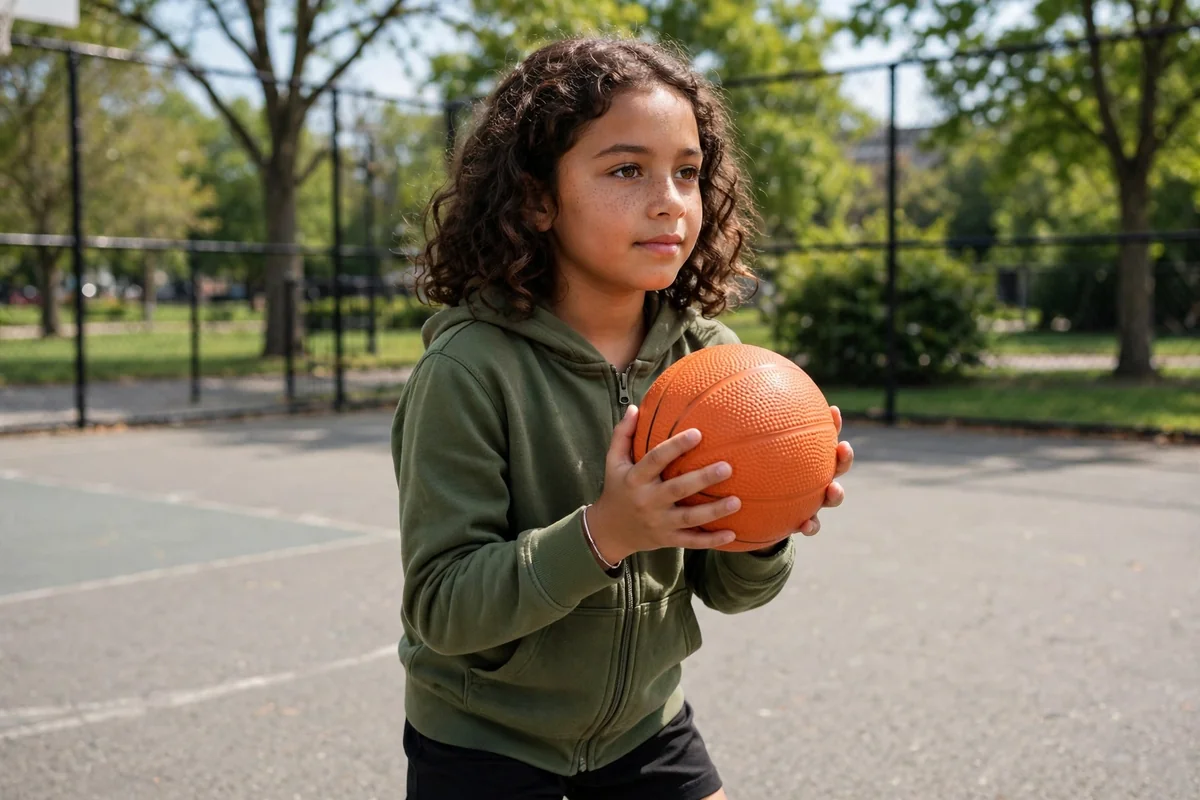
A junior rubber basketball is a practical first ball for young players. It is smaller and lighter than an adult ball, it has a rubber cover that grips well, and it can handle outdoor courts without wearing out as quickly as a leather ball. Champion Sports is a well-known name in school and youth sports equipment, and its junior rubber basketball is a common choice for PE classes, youth leagues, and home practice.
This guide explains what a junior rubber basketball is, who it suits, how sizes work, where it can be used, and how to look after it. It does not list prices or claim exact specifications for a particular model, because models change and hands differ. The goal is to help parents, coaches, and young players choose a ball that fits well and feels right.
If you are new to basketball, it helps to learn the rules first. The basketball rules for beginners guide explains the game in plain terms.
What Is a Junior Rubber Basketball?
A junior basketball is a smaller version of a standard basketball, made for younger hands. It has a smaller circumference and a lower weight, so a child can hold it with two hands, dribble it without straining, and shoot it with a more natural motion. An adult ball can be too big and too heavy for a young player, which can lead to poor form and frustration.
A rubber basketball has a rubber outer cover, rather than leather or composite leather. Rubber is durable, it grips well in many conditions, and it is easy to clean. It is a practical choice for school gyms, playgrounds, and driveways, where a ball may be used on rough surfaces and in different weather.
Junior Size Versus Adult Size
Size matters in many sports, not just basketball. The volleyball rules for beginners guide shows how a different ball game is organised.
Size matters more than most people expect. A ball that is too big forces a child to use two hands to shoot, to push the ball rather than shoot it, and to struggle with dribbling. A ball that fits lets a child use proper form, with one hand guiding and the other shooting, and with a controlled dribble.
Junior sizes are usually labelled by size number, such as size 5 or size 6, depending on the age group. The exact size for a child depends on age, hand size, and league rules. Your coach or league can confirm the size used in your child’s games, so practice matches what they use in matches.
Why Rubber Is a Practical Choice
Rubber is tough. It can handle concrete, asphalt, and indoor wood floors without wearing out quickly. It also grips well, even when hands are a little sweaty. That makes it a good choice for a first ball, where the ball will be used often and in different places.
Rubber balls are also easy to maintain. They can be wiped clean, they do not need special conditioning, and they hold air well with basic care. That simplicity is useful for schools and families, where a ball needs to be ready to use without fuss.
Who It Suits
A junior rubber basketball suits children who are learning the game. That includes young players in school PE, youth leagues, and home practice. It also suits beginners who are older but new to the sport, and who need a ball that is easier to handle while they learn.
It is not just for children. A junior ball can be useful for skill work, for smaller hands, and for practice where a lighter ball helps with form. Coaches sometimes use junior balls for drills, even with older players, to focus on technique rather than strength.
- Young beginners: Children learning to dribble, pass, and shoot for the first time.
- School PE classes: Classes where many balls are used, and durability matters.
- Youth leagues: Leagues that use a junior size for their age group.
- Home practice: Families who want a ball for a driveway, garden, or local court.
- Skill drills: Players working on form, where a lighter ball helps with technique.
If your child plays in a league, check the league’s ball size first. Using the same size in practice as in games helps a child build the right habits, and it avoids the confusion of switching between sizes.
Age and Hand Size in General Terms
Hand size shapes equipment choice across sports. The softball rules for beginners guide explains a related bat-and-ball game.
Age is a useful guide, but hand size matters more. A child with larger hands may be comfortable with a slightly larger ball, while a child with smaller hands may need a smaller ball. The best test is to hold the ball, dribble it, and shoot it. If the ball feels controllable and the shot feels natural, the size is likely right.
Coaches often group players by age, but they also watch how a child handles the ball. A ball that is too big can lead to a flat shot, a two-handed push, and a low dribble. A ball that fits lets a child shoot with an arc, dribble with control, and pass with accuracy.
For Parents and Coaches
Parents often buy a junior ball as a first ball, and coaches often buy several for a class or team. For parents, the key is size and grip. For coaches, the key is durability and consistency, so every ball in a set feels similar.
A good junior ball should feel the same from one ball to the next, so a child does not need to adjust when they pick up a different ball. That consistency helps in a class, where balls are shared, and in a team, where players rotate through drills.
Sizes: How to Choose the Right One
Basketball sizes are usually given as a number, with a smaller number for a smaller ball. Junior sizes are smaller than adult sizes, and they are designed for younger players. The right size depends on age, hand size, and league rules.
Here is a general guide to sizes, based on common youth groupings. It is a starting point, not a rule, and your league may use a different size for its age group.
| Player group | Size to try first | What to look for |
|---|---|---|
| Younger children | Smaller junior size | Ball fits in two hands, easy to dribble |
| Older children | Larger junior size | Ball feels controllable, shot has an arc |
| Teen beginners | Junior or intermediate size | Ball suits hand size and league rules |
| Adults learning | Intermediate or adult size | Ball suits hand size, not just age |
If you are unsure, ask your coach or league. They will know the size used in games, and they can suggest a size for practice. Trying a ball in a shop, or borrowing one from a coach, is the best way to test the fit.
How to Test the Fit
Testing fit before you buy saves time later. The tennis scores page shows how timing and form decide points in a racket sport.
Hold the ball with both hands. Your fingers should spread across the ball, not stretch to reach around it. Dribble the ball a few times. It should bounce back to your hand without you needing to reach down too far. Shoot the ball gently toward a hoop. The shot should feel like a push up, not a heave forward.
If the ball feels too big, your shot will be flat and your dribble will be low. If the ball feels too small, it may feel light and hard to control on a long pass. The right size feels balanced, and it lets you focus on form, not on the ball.
When to Move Up a Size
Children grow, and their hands grow with them. A ball that fit last year may feel small this year. Signs that a child is ready for a larger ball include a shot that feels too easy, a dribble that feels too high, and a grip that feels cramped.
Move up a size when the child can handle the larger ball with good form. Do not move up too early, because a ball that is too big can undo good habits. Let the coach advise on timing, especially if the league uses a set size for the age group.
For a comparison with another junior sport, the franklin batting gloves guide shows how youth equipment is sized for smaller hands.
Indoor and Outdoor Use
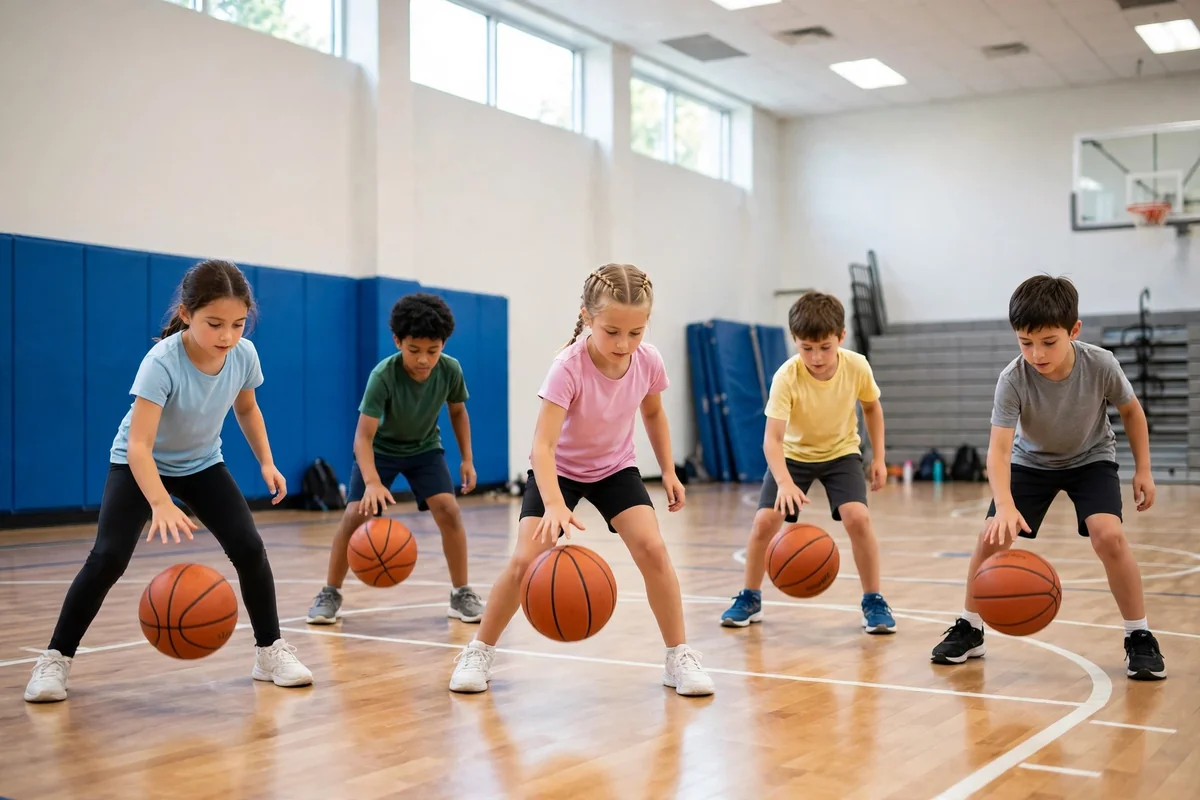
A rubber basketball works well both indoors and outdoors, which is one of its main strengths. Indoors, it grips a wood floor and bounces consistently. Outdoors, it handles concrete and asphalt without wearing out as quickly as a leather ball.
That does not mean a rubber ball is indestructible. Rough surfaces will wear any ball over time, and a ball used on gravel or very rough concrete will wear faster than one used on a smooth court. Still, rubber is the most practical choice for a ball that will be used in both settings.
Playing Indoors
Indoor courts are used for many sports. The NBA scores page shows how indoor basketball results are tracked week by week.
Indoors, a rubber ball bounces well on a wood or synthetic floor. It grips the floor, so it does not slide, and it bounces back to a consistent height. That consistency helps young players learn dribbling and shooting, because the ball behaves the same way each time.
Indoor courts are usually smoother than outdoor courts, so a ball lasts longer indoors. If you mainly play indoors, a rubber ball will stay in good condition for a long time with basic care. Wipe it clean after use, and store it in a dry place.
Playing Outdoors
Outdoor play needs durable kit. The NFL scores page shows how an outdoor sport is followed across a season.
Outdoors, a rubber ball is a better choice than a leather ball. Leather can absorb moisture, wear quickly on rough surfaces, and lose its grip. Rubber handles those conditions better, and it is easier to clean after outdoor play.
Outdoor courts can be hot, cold, or wet, depending on the weather. A rubber ball will still bounce and grip in most conditions, though a wet ball can be slippery. If the court is wet, dry the ball with a towel before you play, and be careful with footing.
Grip, Bounce, and Feel
Grip, bounce, and feel are the three things a young player notices first. Grip is how the ball holds in the hand. Bounce is how the ball returns after it hits the floor. Feel is how the ball sits in the hand, and how it leaves the hand on a shot.
A good junior rubber ball has a deep grip pattern, with channels that help fingers hold the ball. It should bounce back to a consistent height, without feeling too hard or too soft. It should feel balanced in the hand, not lopsided or heavy on one side.
- Grip: Deep channels and a tacky rubber surface help fingers hold the ball.
- Bounce: A consistent bounce, with the ball returning to hand height on a firm dribble.
- Feel: A balanced ball that sits naturally in the hand, without feeling too heavy.
- Weight: A lighter ball that a child can shoot with proper form, not push.
- Shape: A round ball that holds its shape, without flat spots or bulges.
If a ball feels slippery, check whether it is dirty or wet. A clean, dry rubber ball should grip well. If it still slips after cleaning, the surface may be worn, and it may be time for a replacement.
Checking Inflation
Checking inflation is a quick habit before play. The college basketball scores page shows how university basketball is followed.
A basketball needs the right amount of air. Too little air makes the ball bounce low and feel soft. Too much air makes the ball bounce high and feel hard. The right inflation gives a firm, consistent bounce.
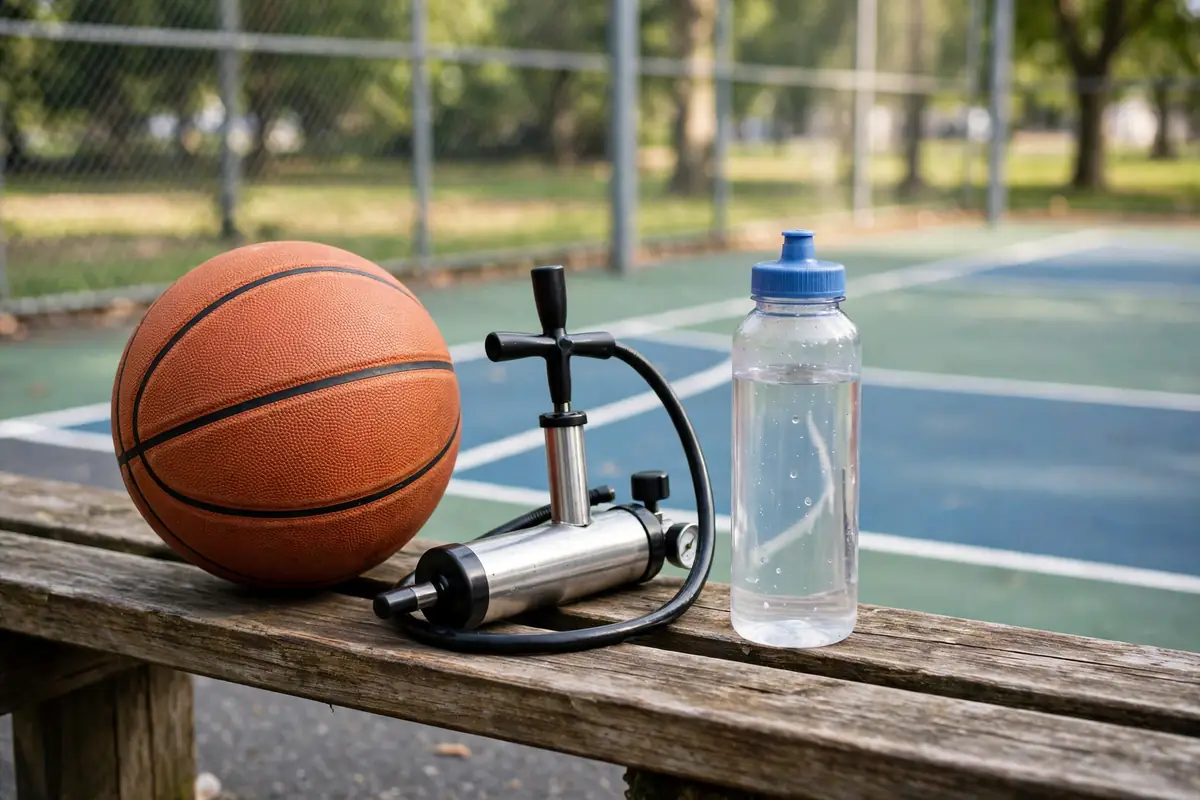
You can test inflation by dropping the ball from chest height. It should bounce back to about waist height. If it bounces much lower, it needs air. If it bounces much higher, it has too much air. A simple pump with a needle is all you need to adjust it.
How a Ball Should Bounce
A good bounce is even and predictable. The ball should come straight back up, not veer to one side. It should bounce to a similar height each time, when dropped from the same height. That consistency helps a child learn dribbling, because they can predict where the ball will be.
If a ball bounces unevenly, check for damage, dirt, or a flat spot. A ball that has been left in the sun or in a hot car can lose its shape. A ball that is under-inflated can also bounce unevenly. Inflate it correctly first, then check again.
Care and Maintenance
Good care habits keep kit usable for longer. The ice hockey rules for beginners guide takes the same practical approach to another sport.
A junior rubber basketball needs little care, but a few habits will keep it in good condition. The main habits are cleaning, drying, storing, and checking inflation. Those habits take only a few minutes, and they extend the life of the ball.
After play, wipe the ball with a clean, slightly damp cloth to remove dirt and dust. Let it dry fully before you store it. Store it indoors, in a dry place, away from direct sun and heat. That keeps the rubber from drying out and cracking.
- Wipe the ball clean after outdoor play, to remove dirt and dust.
- Let the ball dry fully before you store it, in a ventilated spot.
- Store the ball indoors, away from sun, heat, and cold.
- Check inflation regularly, and add air with a pump and needle if needed.
- Do not leave the ball in a hot car or in direct sun for long periods.
- Do not use the ball on gravel or very rough ground if you can avoid it.
If the ball gets wet, dry it with a towel and let it air dry. Do not use a heater to dry it quickly, as heat can damage the rubber. A dry ball grips better and lasts longer than a damp one.
A Simple Buying Checklist
A checklist saves time before you buy. The PGA Tour schedule page shows how a season is organised, which helps new fans follow a sport.
Before you buy, run through this checklist. It takes a few minutes and saves you from a poor purchase.
| Checklist item | What to check |
|---|---|
| Size | Fits the child’s hands, matches league size |
| Material | Rubber cover, durable and easy to clean |
| Grip | Deep channels, tacky feel, not slippery |
| Bounce | Consistent bounce, returns to hand height |
| Inflation | Holds air, pump and needle available |
| Use | Suits indoor, outdoor, or both, as needed |
| Return policy | Clear returns, in case the size is wrong |
If a ball passes those checks, it is a sensible buy. You do not need a perfect ball. You need a ball that fits, grips, bounces well, and lets a young player enjoy the game.
Frequently Asked Questions
What size is a junior basketball?
Junior basketballs are smaller than adult balls, and the size depends on age and league rules. Common junior sizes are smaller than the adult size, with a smaller circumference and lower weight. Ask your coach or league for the size used in your child’s games, and try that size first.
Is a rubber basketball good for outdoor use?
Yes, rubber is a practical choice for outdoor use. It handles concrete and asphalt better than leather, it grips well, and it is easy to clean. A rubber ball will still wear on rough surfaces, so use the smoothest court available and store the ball indoors when you are not using it.
Can adults use a junior basketball?
Adults can use a junior ball for skill work and drills, especially if they are learning the game or have smaller hands. For games, adults usually use an adult size, as set by the league. A junior ball is mainly made for younger players, but it can be useful for practice.
How do I inflate a junior basketball?
Use a pump with a needle, moistened slightly, and insert it into the valve. Add air in short bursts, and test the bounce by dropping the ball from chest height. It should bounce back to about waist height. Do not over-inflate, as that can make the ball too hard and affect its bounce.
How do I clean a rubber basketball?
Wipe the ball with a clean, slightly damp cloth to remove dirt and dust. Let it dry fully before you store it. Do not use harsh cleaners, and do not soak the ball. A clean, dry ball grips better than a dirty or damp one.
How long does a junior rubber basketball last?
It depends on how often it is used, where it is used, and how well it is cared for. With regular use and basic care, a rubber ball can last through a season of play. Replace it when the grip becomes smooth, the bounce becomes uneven, or the ball no longer holds its shape or air.
Is a Champion Sports junior rubber basketball good for school use?
Rubber junior basketballs are a common choice for schools because they are durable, easy to clean, and practical for both indoor and outdoor use. The key is size and grip, not brand alone. Choose a size that matches the age group, and check that the ball grips and bounces well.



















