


Chicago Cubs News: Offseason, Roster and Wrigley Guide
The Chicago Cubs went into the offseason with a star to celebrate and a roster to rebuild, and the same live-score habit that helps with MLB scores helps track a winter of moves. Pete Crow-Armstrong was named the unanimous National League Most Valuable Player for 2026, the brightest individual honour of the season, and the team was swept out of the playoffs by the San Diego Padres in the Wild Card Series. That contrast, a champion player and a short postseason, is the story of this offseason.
This guide brings the news together in one place: what happened in the playoffs, who is staying and who is leaving, what the front office has said about pitching, which young players could step up, the history that frames the club, and how to follow every move through the winter and into spring training.
Quick Answer
Table of Contents
- The Headline: Crow-Armstrong Wins the MVP
- How the Season Ended: The Wild Card Sweep
- The Outfield Question: Happ and Suzuki
- Pitching: The Biggest Need
- The Rotation: Who Is Back and Who Is Not
- The Bullpen and the Closer Question
- Catcher: Kelly, Amaya and Ayers
- Prospects to Watch: Ramirez, Shaw and Alcantara
- The Front Office: Hoyer, Hawkins and the Plan
- The Club’s History in Brief
- Wrigley Field and the Fan Experience
- How to Follow Chicago Cubs News
- Frequently Asked Questions About Chicago Cubs News
The Headline: Crow-Armstrong Wins the MVP
Pete Crow-Armstrong was unanimously named the 2026 National League Most Valuable Player on Thursday 12 November 2026. He was a finalist alongside Shohei Ohtani and Brice Turang, and the vote was unanimous. It is the biggest individual award for a Cub in years, and it confirms what fans saw all season: Crow-Armstrong is the face of the team now, a centre fielder whose defence, speed, and bat make him a complete player.
A unanimous MVP is rare, and it matters for the club as well as the player. It raises the profile of the whole roster, it gives the front office a cornerstone to build around, and it gives fans a reason to believe the next window is open. The award was announced during the GM Meetings week, when the baseball world was already talking about the Cubs’ offseason, and it set the tone for everything that followed.
How the Season Ended: The Wild Card Sweep
The Cubs’ season ended at the hands of the San Diego Padres in a two-game sweep in the National League Wild Card Series, and the MLB trade rumors guide explains how a short playoff exit shapes the rumour mill. The last game was on 1 October 2026, a 4-1 loss in San Diego. It was a short, sharp exit, and it left the club with a familiar feeling: a good regular season, a playoff appearance, and no series win to show for it.
The sweep was especially frustrating because the Cubs had reached the postseason in each of the last two seasons. Reaching the playoffs is an achievement, but a two-game sweep is a reminder that the roster, as built, was not deep enough in pitching to win a short series. In a three-game Wild Card round, there is no time to recover from a bad start, and the Cubs did not get one.
The Outfield Question: Happ and Suzuki
The Cubs have two spots to fill in the outfield alongside Crow-Armstrong, with Ian Happ and Seiya Suzuki heading to free agency, and the ASU baseball schedule guide shows how a college pipeline feeds a club’s depth chart. That is a large hole: two experienced outfielders, both regulars, both gone at the same time. The club must decide whether to bring one or both back, sign replacements, or trust its young players.
General manager Carter Hawkins has spoken about the internal options. Pedro Ramirez, Matt Shaw, and Kevin Alcantara are the names most often mentioned, and Hawkins has praised Ramirez in particular for his athleticism and work ethic. Ramirez forced his way to the majors by hitting .312 with nine home runs and 19 steals in 43 games at Triple-A, a line that earned him a real chance to compete for a spot.
Pitching: The Biggest Need
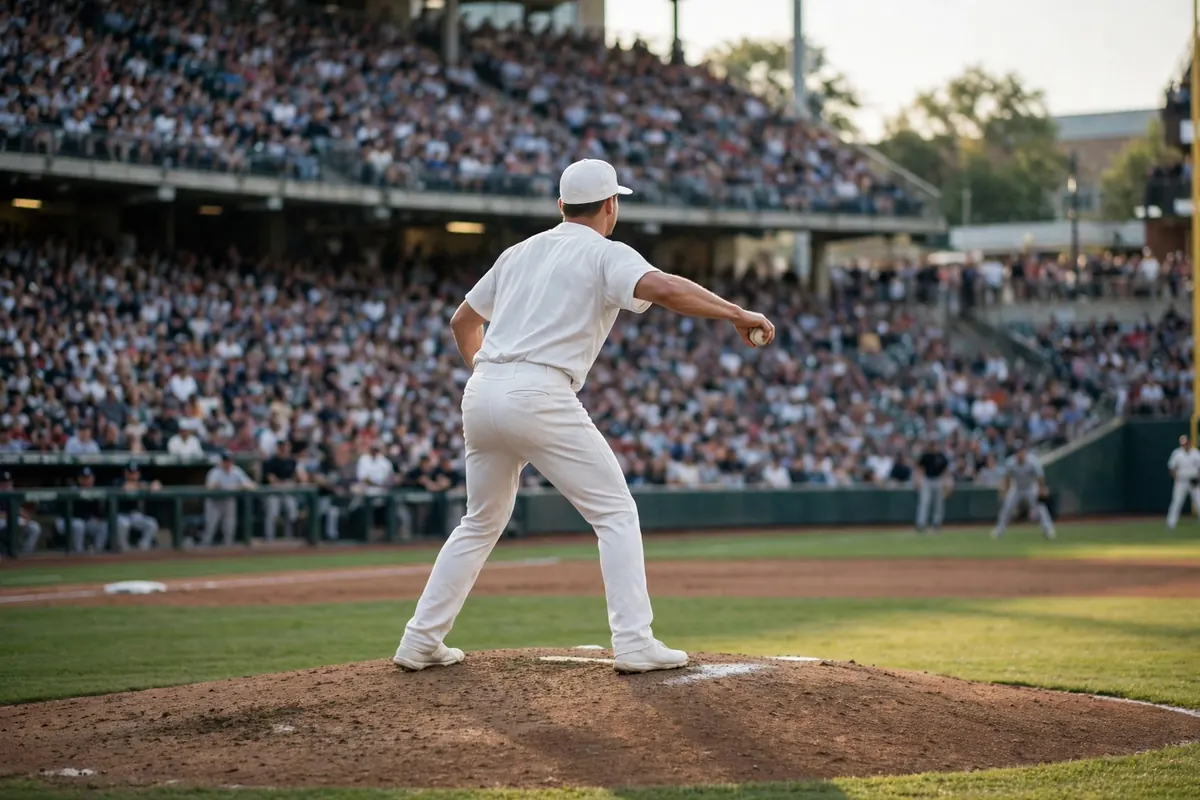
Pitching is the Cubs’ biggest need, and the front office has not hidden it. The SEC baseball standings guide shows how a pitching staff decides a standings race. All five pitchers who finished last season in the rotation are now free agents: left-handers Matthew Boyd, Shota Imanaga, and David Peterson, and right-handers Kevin Gausman and Clay Holmes. That is the whole rotation, gone at once, and it is why the pitching market will decide the Cubs’ winter.
The club also did not have a pitcher record double-digit saves this year, so the back end of the bullpen needs work as well. A team that cannot close games will lose close games, and the Cubs lost enough of those to know the cost. The plan, as Hawkins has described it, is to bring in several arms, from inside the organisation and from outside it.
Why the Cubs are not chasing Skubal
Tarik Skubal is the prize of the free-agent market, and he is reportedly seeking a contract in the region of $450 million. The Cubs, according to reports from the GM Meetings, are unlikely to enter the bidding. Hawkins put it plainly: the club would love to have a player of that quality, but it would not be able to add anyone else to the rotation, and a team needs at least four reliable starters to win a World Series. It is a choice between one star and a whole rotation, and the Cubs have chosen the rotation.
The Rotation: Who Is Back and Who Is Not
The Cubs would love to bring back Clay Holmes and David Peterson, according to MLB insider Bob Nightengale, writing in USA Today, and the Pittsburgh Penguins rumors guide shows how to read a return rumour without over-trusting it. Both were acquired by trade during the season, and both are now free agents. Holmes, a ground-ball specialist acquired from the New York Mets along with outfielder Tyrone Taylor, cost the Cubs infielder Jefferson Rojas, one of their top prospects. He then turned down a $12 million player option for 2027 to test free agency.
Holmes had a difficult end to the season. He posted an 8.24 ERA after the trade and did not make a playoff appearance before Chicago was eliminated. Hawkins has still said the club is interested in bringing him back, praising his stuff, his ground-ball rate, and the fit with the Cubs’ strong infield defence. A pitcher who keeps the ball on the ground is a good match for a team that defends well behind him, and the club clearly believes the late-season struggles were not the whole story.
The other names in the mix
Peterson, acquired from the Mets in August, finished the season with a 3.29 ERA and 78 strikeouts across 18 starts between the two teams, after a fractured leg had sidelined him in May. The Cubs have also been linked with Japanese right-hander Kaima Taira and domestic right-handers Freddy Peralta and Michael King as free-agent starters, and with trade targets including Seattle’s George Kirby and Minnesota’s Joe Ryan. A deal for Angels left-hander Reid Detmers at the trade deadline fell apart, which shows the club has been trying to add pitching for some time.

The Bullpen and the Closer Question
The bullpen needs a closer, or at least a group of relievers the manager can trust in the late innings, and the baseball rules for beginners guide explains the late-inning roles a bullpen must fill. The Cubs cleared space in November by outrighting first baseman Tyler Austin to Triple-A Iowa, and veteran relievers Caleb Thielbar, Hunter Harvey, and Colin Rea elected to enter free agency. The club also claimed right-hander Eric Orze off waivers from the Twins, and reinstated pitchers Justin Steele, Cade Horton, and Porter Hodge from the 60-day injured list.
Those moves are the start of a rebuild, not the end of it. A bullpen is built from a mix of returning pitchers, waiver claims, and free-agent signings, and the Cubs will need all three. The key question is whether they sign a proven closer or build a closer-by-committee, with several pitchers sharing the ninth inning. A committee is cheaper, but it is harder to manage in a close playoff race.
Catcher: Kelly, Amaya and Ayers
Hawkins has said that bringing back free-agent catcher Carson Kelly is a possibility, while adding that the team is comfortable sticking with internal options, and the Franklin batting gloves guide is a useful first read for a young catcher learning the position. Those options are likely to be Miguel Amaya tag-teaming the role with prospect Owen Ayers. Reports from The Athletic describe the club as ready to go young and lean on Ayers, a switch-hitting prospect, alongside Amaya.
Catcher is a position where defence matters as much as batting, and a young catching pair can work if the pitching staff trusts them. The risk is that a young catcher will struggle with game-calling and with the workload of a full season. The club’s comfort with the internal options suggests it believes Ayers is ready, or close to it, and that it would rather spend its money on pitching than on a veteran catcher.
Prospects to Watch: Ramirez, Shaw and Alcantara
Pedro Ramirez is the prospect to watch first, and the MLB Draft 2026 guide explains how a prospect’s draft stock turns into a major-league chance. His Triple-A line, .312 with nine home runs and 19 steals in 43 games, is the kind of production that forces a call-up, and Hawkins has spoken about him as a leader in the clubhouse race for an outfield spot. His athleticism and work ethic have been praised, and his versatility could help him move around the outfield and the infield.
Matt Shaw and Kevin Alcantara are the other names in the outfield mix. Shaw is an infielder who can also play the outfield, and Alcantara is an outfielder with size and power. Both will get a chance in spring training, and the club will watch how they handle major-league pitching. A prospect who earns a spot in spring training is a different player from one who is handed it, and the Cubs have made it clear the jobs are open.
The farm director change
The club has also made a change behind the scenes, hiring Ben Martin to take over as farm director, and Rylan Domingues to be a pitching analytics coordinator. Those moves matter for the long term: a farm system that develops pitchers and outfielders is the cheapest way to fill a roster, and the Cubs will need it if they are going to compete every year rather than in cycles.
The Front Office: Hoyer, Hawkins and the Plan
President of baseball operations Jed Hoyer agreed to a multi-year contract extension midway through the 2025 season, and The Athletic reported this week that it is a five-year deal. That gives the front office stability, and it means the plan for the next five years is Hoyer’s plan. General manager Carter Hawkins, who has spoken at length during the GM Meetings, is the public face of the offseason work.
The plan, as described at the GM Meetings in Las Vegas, is to make some minor moves up front, then some significant moves around the Winter Meetings period, and then a number of opportunistic moves just before spring training. Hawkins described the week at the GM Meetings as pretty normal, with a fair bit of chatter but only a few lesser signings completed. That pattern is familiar to Cubs fans: the club rarely makes its biggest move first.
The lockout shadow
One uncertainty hangs over the whole offseason. The collective bargaining agreement between owners and players is set to expire, and reports have raised the possibility of a lockout from 1 December, with the chance of litigation if the players disclaim the union. The GM Meetings ended with business largely as usual, but the shadow is real, and it could compress the offseason into a shorter window. Fans should follow the news through December, because the timetable for signings could change fast.
The Club’s History in Brief
The Cubs are one of the oldest clubs in baseball, and the LSU women’s softball schedule guide shows how another historic programme follows its season. They were a founding member of the National League in 1876 as the Chicago White Stockings, and they first took the field as the Cubs in 1903. They have won three World Series titles, in 1907, 1908, and 2016, and 17 National League pennants. The 2016 title broke a 108-year World Series drought, the longest in North American professional sports, when the Cubs came back from a 3-1 deficit to beat the Cleveland Indians in seven games, winning Game 7 by 8-7.
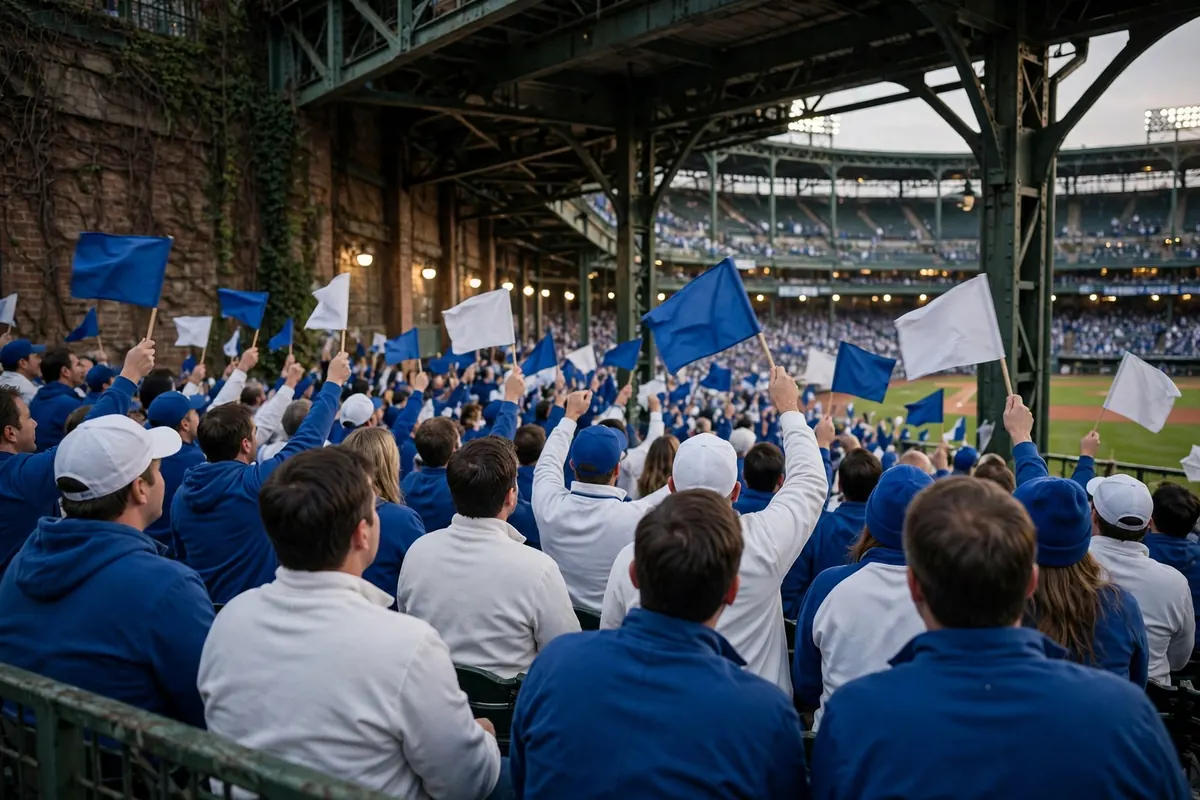
The club has played at Wrigley Field since 1916. The ballpark was built in 1914 as Weeghman Park for the Chicago Whales of the Federal League, and it was renamed Wrigley Field in 1926. It is the second-oldest ballpark still in use in the major leagues, after Fenway Park in Boston, which opened in 1912. The ivy on the outfield wall, the old scoreboard, and the neighbourhood around the park are part of the club’s identity, and they are why Wrigley is a destination for baseball fans from every team.
Wrigley Field and the Fan Experience
Wrigley Field, known as the Friendly Confines, is on the North Side of Chicago, in the Lake View neighbourhood, and the American Hockey League tickets guide shows how to plan a trip to a historic venue. It is a ballpark that rewards arriving early: the streets around it fill with fans, the rooftops beyond the outfield offer a view of the game, and the park itself is a museum of baseball history. The ivy, the manual scoreboard, and the old brick are all original features that have survived more than a century of baseball.
For a first visit, plan for the neighbourhood as well as the game. The ballpark is in a residential area, so parking is limited and public transport is the best way in. The game itself is the same as anywhere else in baseball, but the setting is not: a day game at Wrigley, with the sun on the ivy and the crowd singing in the seventh inning, is one of the best experiences in American sport.
How to Follow Chicago Cubs News
Follow the beat writers first. The Chicago Tribune, The Athletic, and MLB Trade Rumors cover the Cubs daily, and their reports are the source for most of the news in this guide. The club’s own site and social media accounts announce signings and roster moves, but the beat writers explain what those moves mean. Our guide to MLB scores shows how to follow live results, standings, and the playoff race, and the same approach works for the offseason: check the roster, check the free-agent list, and check the schedule.
The offseason calendar has its own rhythm. The GM Meetings in November are for talk, the Winter Meetings period is for signings, and spring training in February is for the roster to take shape. If you follow the news at those three points, you will not miss much. Between them, the news is usually minor: waiver claims, minor-league signings, and coaching changes, all of which matter more in February than they do in November.
Frequently Asked Questions About Chicago Cubs News
Who won the 2026 National League MVP?
Pete Crow-Armstrong of the Chicago Cubs, unanimously, announced on 12 November 2026. Shohei Ohtani and Brice Turang were the other finalists.
How did the Cubs’ 2026 season end?
They were swept by the San Diego Padres in two games in the National League Wild Card Series, with the last game on 1 October 2026, a 4-1 loss.
Who are the Cubs’ free agents this offseason?
Ian Happ and Seiya Suzuki in the outfield, all five pitchers who finished the season in the rotation, catcher Carson Kelly, and relievers including Caleb Thielbar, Hunter Harvey, and Colin Rea.
Are the Cubs bringing back Clay Holmes and David Peterson?
The club would love to bring back both, according to MLB insider Bob Nightengale. Holmes turned down a $12 million player option for 2027, and Peterson finished the season with a 3.29 ERA across 18 starts.
Are the Cubs signing Tarik Skubal?
No, according to reports from the GM Meetings. The club believes it cannot sign Skubal, reportedly seeking about $450 million, and still fill the rest of the rotation.
Who could fill the outfield spots?
Pedro Ramirez, Matt Shaw, and Kevin Alcantara are the internal options, with Ramirez the leader after hitting .312 with nine home runs and 19 steals in 43 Triple-A games.
When did the Cubs last win the World Series?
In 2016, beating the Cleveland Indians in seven games, ending a 108-year drought. Their other titles were in 1907 and 1908.
Where do the Cubs play?
At Wrigley Field in Chicago, their home since 1916. The ballpark was built in 1914 and renamed Wrigley Field in 1926.
Share this article: X | Facebook | LinkedIn | Email
Written by Saadi | View all articles by Saadi
Facts checked on 14 November 2026. Sources: MLB Trade Rumors, Heavy, FanSided, Bleacher Nation and RotoWire for the November 2026 offseason news, and Britannica and Baseball-Reference for the club’s history, World Series titles and Wrigley Field dates.