




Hasheem Thabeet is one of the most famous draft stories in NBA history. Picked second overall in 2009, ahead of James Harden, Stephen Curry and DeMar DeRozan, he was meant to be a franchise centre. His NBA career lasted five seasons and 224 games, and he never became the player the draft suggested. That is the story most fans know. It is not the whole story.
Thabeet never stopped playing. After the NBA, he built a long career overseas, in the G League, Japan, Taiwan and China, and then he came home. In 2026, at 39 years old, he is still playing for Dar City in Tanzania, the club he helped into the Basketball Africa League for the first time, and he is the elected president of the Tanzania Basketball Federation.
Quick Answer
Where is Hasheem Thabeet now? He is playing for Dar City in Tanzania and serving as president of the Tanzania Basketball Federation, a post he won in February 2026. The 7-foot-3 centre, born 16 February 1987, was the No. 2 pick in the 2009 NBA draft and played five NBA seasons. He helped Dar City qualify for the 2026 Basketball Africa League, the first Tanzanian club to reach the competition, and he was inducted into UConn’s Huskies of Honor on 14 February 2026.
Table of Contents
- The Basics: Who Is Hasheem Thabeet?
- From Tanzania to Texas: A Late Start
- UConn: A Defensive Star
- The 2009 Draft: Picked Second Overall
- The NBA Years: Memphis, Houston, Portland, Oklahoma City
- Why the NBA Did Not Work Out
- The Overseas Years
- Coming Home: Dar City and the BAL
- President of the Tanzania Basketball Federation
- Huskies of Honor
- Playing Style: What He Does on the Court
- Career Stats Table
- What Comes Next
- Frequently Asked Questions About Hasheem Thabeet
The Basics: Who Is Hasheem Thabeet?
Hasheem Thabeet was born Hashim Thabit Manka on 16 February 1987 in Tanzania. He is 7 feet 3 inches tall, and he plays centre. He is the first player born in East Africa to reach the NBA, and the first Tanzanian ever drafted into the league. His playing career began in 2009 and continues today, which makes it one of the longest active careers of any player from his draft class. He has played in the NBA, the G League, Japan, Taiwan, China and Tanzania, and he now combines playing with running his country’s basketball federation.
Thabeet’s story is unusual in two ways. First, he started basketball late: he did not play the game until he was 15 years old. Second, his career did not end when the NBA moved on. Most players in his position fade away. Thabeet went home, kept playing, and built a second act that matters more to his country than his NBA years ever did. Fans who want the basics of the sport can start with our basketball rules for beginners guide, which explains the centre position and the roles around it.
From Tanzania to Texas: A Late Start
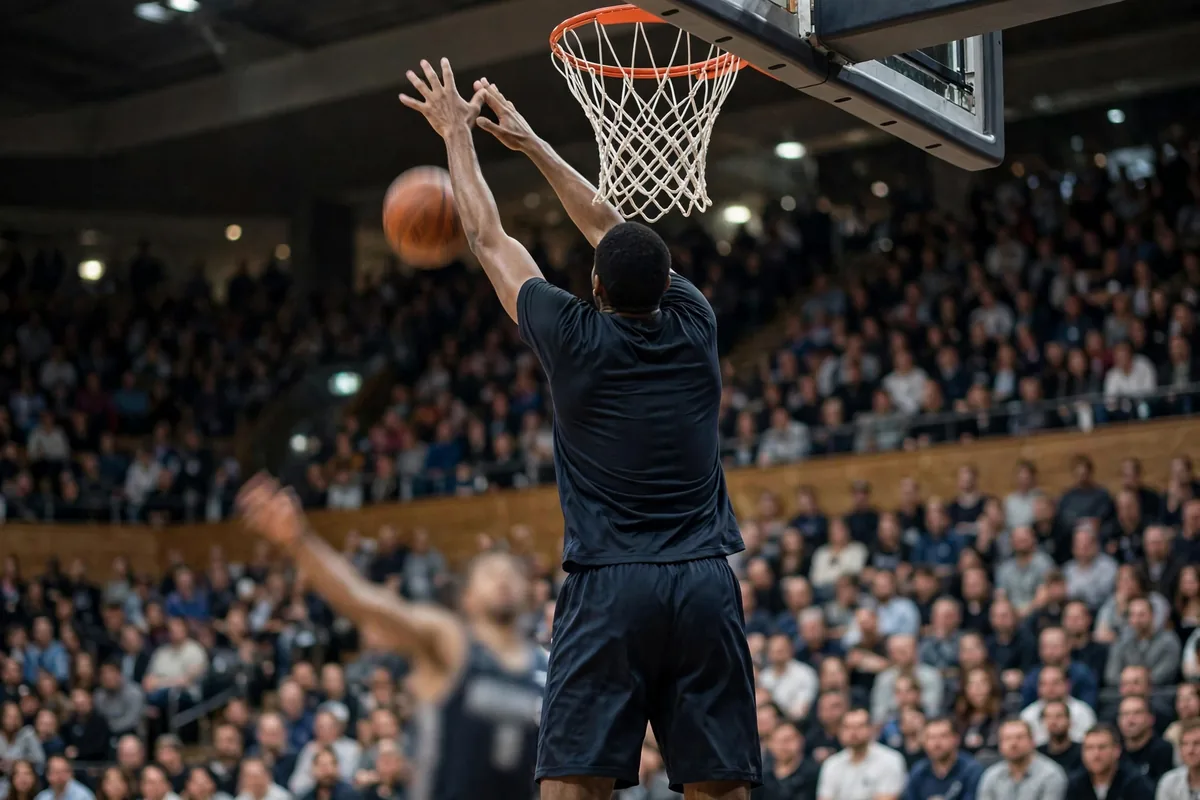
Thabeet grew up in Dar es Salaam, Tanzania, and he did not start playing basketball until he was 15. That is remarkably late for a professional player. Most NBA centres have been playing since childhood. Thabeet’s size was obvious from an early age, but the game itself was new to him. He learned quickly, and his height and coordination caught the attention of scouts who saw a raw, tall teenager with real potential.
He moved to the United States to attend Cypress Christian School in Houston, Texas, where he developed his game and attracted college attention. The move was a leap: a teenager from Tanzania, new to basketball, playing high school ball in Texas. He handled it, and by the time he finished school he was a sought-after recruit. He committed to the University of Connecticut as part of the class of 2006, joining one of the best programmes in college basketball. Our college basketball scores coverage follows the college game where his career took off.
UConn: A Defensive Star
Thabeet played three seasons at UConn, from 2006 to 2009, and he became one of the best defensive players in college basketball. He finished his UConn career with 99 starts in 100 appearances, averaging 10.3 points, 8.5 rebounds and 4.2 blocks per game. The blocks are the number that matters: 4.2 per game is an elite figure, and it made him a two-time National Defensive Player of the Year. He changed games without scoring, because opponents altered their shots when he was near the rim.
UConn was the right place for him. The programme had a history of developing big men, and the coaching staff built the defence around his length. He was not a polished scorer, but he did not need to be: his job was to protect the rim, rebound, and finish the easy chances his teammates created. He did that job at an All-American level. The college game is where stars are made, and our NCAA tournament schedule guide explains how a college season builds toward March.
The 2009 Draft: Picked Second Overall
The Memphis Grizzlies selected Thabeet second overall in the 2009 NBA draft. The pick put him ahead of James Harden, who went third, Stephen Curry, who went seventh, and DeMar DeRozan, who went ninth. That is a famous draft class, and the comparison has followed Thabeet ever since. Harden became an MVP. Curry became a four-time champion and the greatest shooter in the game’s history. DeRozan became a six-time All-Star. Thabeet became a cautionary tale.
The pick made sense at the time. A 7-foot-3 centre who had just won his second National Defensive Player of the Year award looked like a safe bet. Centres were still valued as rim protectors, and Thabeet’s college numbers suggested he could do that job in the NBA. Memphis needed a big man, and Thabeet was the best one in the draft. The draft is a gamble every year, and our NBA mock draft guide explains how teams weigh that gamble.
The NBA Years: Memphis, Houston, Portland, Oklahoma City
Thabeet’s NBA career lasted five seasons and 224 games. He played for four teams: the Memphis Grizzlies, the Houston Rockets, the Portland Trail Blazers, and the Oklahoma City Thunder. His last NBA season was 2013-14 with Oklahoma City. Across those five seasons, he averaged 2.2 points, 2.7 rebounds and 0.8 blocks per game. He never averaged more than a handful of minutes, and he never became a rotation player.
The pattern was the same at every stop. He arrived with promise, played sparingly, and moved on. Memphis traded him after two seasons. Houston and Portland gave him short looks. Oklahoma City, his last NBA team, used him as a deep bench player. The numbers tell the story plainly: a player drafted second overall who never cracked a rotation.
Four teams, one pattern
The NBA wanted centres who could move, shoot and pass. Thabeet could block shots and rebound, but the rest of his game did not develop fast enough. The league moved on, and so did he. Fans who follow the league’s daily action can check our NBA scores page for the latest results and standings.
Why the NBA Did Not Work Out
Thabeet’s NBA career is often described as a bust, and the label is fair in the narrow sense: a second overall pick should play more than 224 games. But the reasons are more interesting than the label. First, he started basketball at 15, which meant he had less than a decade of experience when he was drafted. Most of his peers had been playing for fifteen years. The gap showed in his footwork, his hands and his feel for the game. Second, the NBA changed while he was in it. The league moved toward smaller, faster line-ups, and a traditional rim-protecting centre who could not shoot became harder to play.
Third, his offensive game never developed. He averaged 10.3 points per game at UConn, but the NBA is a different level, and he could not score reliably against professional defences. A centre who cannot score and cannot shoot is a liability in a modern offence, no matter how well he blocks shots. Fourth, he was drafted into a difficult situation. Memphis was rebuilding, and a raw centre on a bad team gets little help. None of this is an excuse. It is an explanation. The business of roster building shapes careers like this, and our LeBron James trade coverage explains how quickly a team’s plans can change.
The Overseas Years
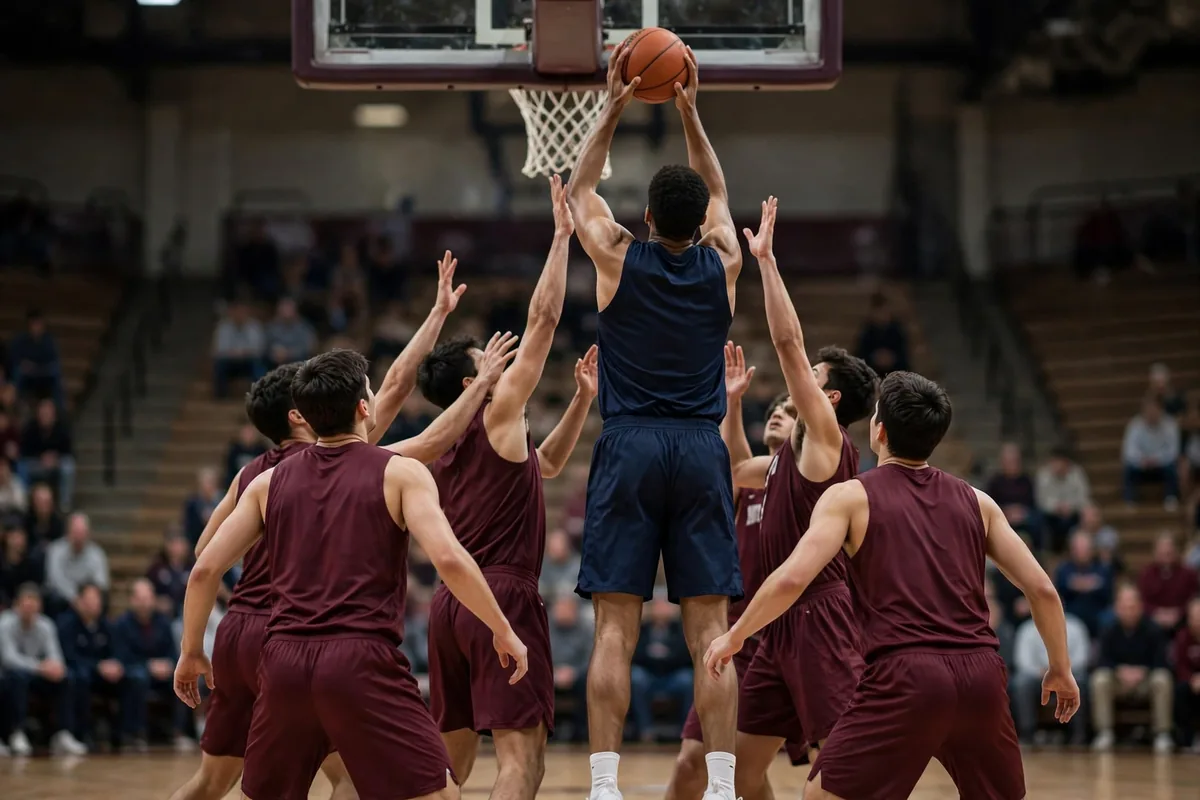
After his NBA career ended in 2014, Thabeet did not retire. He played in the G League, then in Japan, Taiwan and China, building a long international career. The overseas game suited him better than the NBA had. The pace was slower, the centres were more traditional, and his size and shot-blocking were genuine assets. He was not a star, but he was a useful professional, and he kept playing year after year.
The overseas years also kept him connected to basketball in Africa. He attended Basketball Africa League events, spoke about the game’s growth on the continent, and thought about what he could do for Tanzanian basketball. That thinking would shape the next chapter of his life. He was not just playing out the string. He was building toward a return home, and the return would be the most important move of his career.
Coming Home: Dar City and the BAL
In September 2023, Thabeet joined the roster of Pazi, the Tanzanian champions, for the 2024 BAL qualification tournaments. In December 2024, he was on the roster of Dar City, and he played in the inaugural East Africa Basketball Championship Cup, guiding the team to second place with a 4-1 record. The homecoming was underway. Dar City is his hometown club, based in Dar es Salaam, and Thabeet’s presence gave the team a leader, a mentor and a rim protector all at once.
The breakthrough came in the Road to BAL 2026 campaign. Dar City finished qualifying play with a 6-1 record and secured a spot in the 2026 Basketball Africa League, the first time a Tanzanian club had ever reached the competition. Thabeet captained the team, and the qualification was a landmark for Tanzanian basketball.
The BAL games
In the BAL itself, played at the Kalahari Conference in Pretoria, South Africa, Dar City opened with a 100-70 win over the Johannesburg Giants, with Thabeet recording four points, three blocks and two rebounds in 24 minutes. They followed it with a 90-85 win over the Nairobi City Thunder, in which Thabeet had four points, 13 rebounds and a block. A 118-97 loss to Al Ahly Ly of Libya followed, leaving Dar City at 2-1. Across the three games, Thabeet averaged 3.3 points, 6.0 rebounds and 1.3 blocks per game.
The numbers are modest, but the achievement is not. A 39-year-old centre, playing for his hometown club, led Tanzania into a continental competition for the first time. The sight of the former No. 2 pick leading Dar City onto the court in Pretoria was a powerful symbol: a player who had left Tanzania as a teenager, played in the NBA, and come home to build something. Thabeet has said he wants to keep playing into his 40s, and his performances in the BAL suggest he can. For fans of African basketball, the BAL is the continent’s Champions League, and Dar City’s arrival in it is a story that will be told for years. The growth of basketball beyond the NBA is a theme we follow, and our WNBA stats coverage tracks how new leagues build their audiences.
President of the Tanzania Basketball Federation
In late February 2026, Thabeet was elected president of the Tanzania Basketball Federation, the TBF, winning 34 of 60 votes and defeating Leonard Haule. The election took place in Dodoma, the capital, and it marked a shift from player to administrator. Thabeet had told the BAL president nearly three years earlier, while attending the BAL playoffs, that his goal was to become president of the Tanzanian federation. He has now met that goal.
His platform is grassroots development. He wants to see basketball played from the grassroots level in schools, with a focus on players under 13 and under 18, growing to senior levels. He wants to improve basketball infrastructure across the country and identify talent nationally, not just in Dar es Salaam. Tanzania is Africa’s fifth-most populous nation, and its basketball potential is largely untapped.
The election matters because it puts a former NBA player in charge of a national federation. Thabeet brings credibility, connections and a personal story that no administrator can match. He has played in the NBA, he has played in the BAL, and he has come home to build. The challenge is large: infrastructure, funding, coaching and organisation all need work. The link between playing and leading is rare in sport, and our college basketball scores coverage shows how the next generation of players is already coming through the system.
Huskies of Honor
On 14 February 2026, Thabeet was inducted into UConn’s Huskies of Honor, at half-time of a game against Georgetown at the Harry A. Gampel Pavilion in Storrs, Connecticut. He became the 24th individual player to join the Huskies of Honor, a group that also includes two teams, an administrator and three coaches. The honour recognises his college career: two National Defensive Player of the Year awards, 99 starts in 100 games, and a place among the best big men in programme history.
The induction was a reminder that Thabeet’s college career was genuinely great. The NBA years tend to dominate his story, but at UConn he was a star. The Huskies of Honor is UConn’s highest recognition for a player, and Thabeet earned it. The ceremony, held weeks before his election as TBF president, made February 2026 one of the most significant months of his life.

Playing Style: What He Does on the Court
Thabeet is a traditional centre. His game is built on size, length and timing. At 7-foot-3, he alters shots simply by being near the rim, and his 4.2 blocks per game at UConn showed how well he used that length. He is a rebounder and a rim protector first, and a scorer second. In the BAL, his value was not in points: it was in rebounds, blocks and the presence he gave Dar City’s defence. The three-game averages of 3.3 points, 6.0 rebounds and 1.3 blocks tell that story plainly.
His limitations are the same ones that ended his NBA career. He is not a shooter, he is not a passer, and he is not quick enough to guard on the perimeter. In the modern NBA, those are fatal flaws for a centre. In the BAL and in Tanzanian basketball, they matter less, because the game is slower and the centres are more traditional. Thabeet’s game fits the level he plays at now, and his experience makes him more valuable than his numbers suggest. He is a leader on the court, a mentor to younger players, and a player who understands the game at a level that comes from seventeen years as a professional. The centre position is explained in our basketball court dimensions guide, which shows where each player operates on the floor.
Career Stats Table
| Period | Team | League | Games | Averages |
|---|---|---|---|---|
| 2006-09 | UConn | College | 100 | 10.3 pts, 8.5 reb, 4.2 blk |
| 2009-14 | Memphis, Houston, Portland, Oklahoma City | NBA | 224 | 2.2 pts, 2.7 reb, 0.8 blk |
| 2014-23 | G League, Japan, Taiwan, China | Various | — | — |
| 2023-24 | Pazi | Tanzania / BAL qualifiers | — | — |
| 2024- | Dar City | Tanzania / BAL | — | 3.3 pts, 6.0 reb, 1.3 blk (BAL 2026, 3 games) |
The table shows the arc: a dominant college career, a short NBA career, a long overseas career, and a homecoming. The UConn line is 100 games, 99 starts, 10.3 points, 8.5 rebounds and 4.2 blocks per game. The NBA line is 224 games, 2.2 points, 2.7 rebounds and 0.8 blocks per game. The BAL line is three games, 3.3 points, 6.0 rebounds and 1.3 blocks per game. The overseas game counts are not listed because the sources do not agree on exact figures, and this guide does not guess at numbers it cannot verify. The pattern is clear without them: a player who found his place outside the NBA, and then found his purpose at home.
What Comes Next
Thabeet has two jobs now, and they point in the same direction. As a player, he wants to keep playing into his 40s, and his BAL performances suggest he can. As president of the Tanzania Basketball Federation, he wants to build a grassroots system that produces the next generation of Tanzanian players. The two roles reinforce each other: the player gives the president credibility, and the president gives the player a reason to keep going.
The work ahead is large. Tanzania needs courts, coaches, competitions and funding, and a federation president cannot conjure those overnight. But Thabeet has something few administrators have: a personal story that opens doors. He is the first Tanzanian in the NBA, the first East African in the NBA, and the man who led Dar City into the BAL. That story matters in a country where basketball is growing but still young. The future of a sport in a country is a long story, and our Utah Tech basketball guide follows a programme trying to build the same kind of future.
Frequently Asked Questions About Hasheem Thabeet
Where is Hasheem Thabeet now?
Thabeet is playing for Dar City in Tanzania and serving as president of the Tanzania Basketball Federation. He helped Dar City qualify for the 2026 Basketball Africa League, the first Tanzanian club to reach the competition.
How old is Hasheem Thabeet?
Thabeet was born on 16 February 1987, which makes him 39 years old. He was born in Tanzania as Hashim Thabit Manka.
What pick was Hasheem Thabeet in the NBA draft?
Thabeet was selected second overall in the 2009 NBA draft by the Memphis Grizzlies, ahead of James Harden, Stephen Curry and DeMar DeRozan.
How many NBA games did Hasheem Thabeet play?
Thabeet played 224 NBA games over five seasons, for the Memphis Grizzlies, Houston Rockets, Portland Trail Blazers and Oklahoma City Thunder. He averaged 2.2 points, 2.7 rebounds and 0.8 blocks per game.
How tall is Hasheem Thabeet?
Thabeet is 7 feet 3 inches tall. He plays centre.
When did Hasheem Thabeet become president of the Tanzania Basketball Federation?
Thabeet was elected president in late February 2026, winning 34 of 60 votes and defeating Leonard Haule. The election took place in Dodoma.
Is Hasheem Thabeet still playing basketball?
Yes. Thabeet is still playing for Dar City, and he has said he wants to keep playing into his 40s. He played in the 2026 Basketball Africa League, averaging 3.3 points, 6.0 rebounds and 1.3 blocks per game across three games.
What is the Huskies of Honor?
The Huskies of Honor is UConn’s highest recognition for a player. Thabeet was inducted on 14 February 2026, becoming the 24th individual player to join, after a college career in which he won two National Defensive Player of the Year awards.
Share this article: X | Facebook | LinkedIn | Email
Written by Admin (Sports Flash Daily) | View all articles
Facts checked on 14 November 2026. Sources: Andscape, Wikipedia, FIBA, UConn, Sports Illustrated and the Tanzania Daily News for the career history, the BAL results, the federation election and the Huskies of Honor induction, and Sports Flash Daily’s own basketball guides for the linked articles.



















