





The National Hockey League is home to some of the fastest, toughest and most skilled athletes in team sport. A single game can turn on one shift, one save or one pass, and the men who make those plays are the reason fans keep coming back. This guide explains who they are, how teams are organised, what their numbers mean, and how to follow them all season.
You do not need years of hockey knowledge to enjoy it. Once you understand positions, lines, rosters and the basic stats, every game becomes easier to read.
Table of Contents
- What the NHL Is and Who Plays in It
- How NHL Rosters Work
- Player Positions Explained
- Lines and Pairings: How Coaches Build a Team on the Ice
- How to Read Player Stats
- Advanced Stats in Plain English
- How Players Join the NHL: Draft, Free Agency and Trades
- How the Season Shapes a Player’s Year
- How to Follow Your Favourite Players
- Awards and Milestones Worth Knowing
- Frequently Asked Questions
What the NHL Is and Who Plays in It
The National Hockey League, known as the NHL, is the top professional ice hockey league in North America. It has 32 teams, split between the United States and Canada, and its season runs from autumn through to early summer, ending with the Stanley Cup playoffs.
Every team in the league is built around its players. Scouts, coaches and general managers spend the whole year finding, developing and keeping the right mix of scorers, defenders and goaltenders. A team with great talent but the wrong balance will struggle, while a well-balanced group can beat a more talented one.
Most athletes in the league come through junior hockey, college hockey or European professional leagues before they reach the NHL. Many are drafted as teenagers and spend years developing in the minor leagues before they earn a regular place. Others arrive later, after strong seasons overseas or in college.
The league is international. Canadians form the largest group, but Americans, Swedes, Finns, Russians, Czechs and players from many other nations all hold regular places, each bringing its own style of play.
If you are new to the sport, start with one team and a handful of its players. Learn their positions, watch how they are used, and check their numbers after each game. Within a few weeks you will know the roster better than most casual fans. If the rules still feel new, our beginner’s guide to ice hockey rules covers icing, offside and penalties in plain terms.
How NHL Rosters Work
A roster is the official list of athletes a team can use during a season. Teams usually carry around 23 players on the active roster, though the exact number moves up and down with injuries, call-ups and trades.
Only 20 players dress for a game: 12 forwards, 6 defencemen and 2 goaltenders. One goaltender starts, and the other sits on the bench as the backup. The rest of the roster stays ready, either scratched for the night or waiting for their chance.
Teams also keep players in the minor leagues, most often in the American Hockey League, known as the AHL. When injuries hit, a team calls up a minor-league player to fill the gap. Fans who want to see future stars early can find tickets for minor-league games through our AHL guide.
The salary cap shapes every roster decision. Each team has a limit on what it can spend on player salaries, so general managers must balance star contracts with cheaper young players and role players. You can read more in our guide to how the salary cap shapes rosters.
Rosters also change through waivers: when a team sends a veteran to the minors, other teams get a chance to claim him first. Waivers keep the league competitive and stop rich teams from stockpiling talent.
The people behind the roster
A general manager builds the roster. The head coach decides who plays and how they are used. Scouts watch junior, college and European games to find the next wave of talent. Player development staff work with young athletes on skating, strength and the mental side of the game.
Player Positions Explained
Every skater on the ice has a job, and the job depends on position. There are three broad groups: forwards, defencemen and goaltenders. Forwards split into centres and wingers, and each role asks for different skills.
Centres
The centre plays in the middle of the ice and takes faceoffs. After a stoppage, the centre lines up against the opposing centre, and the drop of the puck starts the play. Good centres win more than half of their draws, which gives their team the puck more often.
Centres also carry heavy defensive duties, usually first back when the other team attacks. The best centres score, pass, defend and win faceoffs, which is why they are often the highest-paid forwards on a team.
Wingers
Wingers play on the left and right sides of the ice. Their main job is to score goals and create chances, though modern wingers also backcheck hard and help in their own zone. Left wingers and right wingers often shoot from opposite sides, and coaches match them to the centre they play best with.
Some wingers are pure scorers who live near the net, others are playmakers who set up linemates, and a few are power forwards who mix size, speed and scoring.
Defencemen
Defencemen play closest to their own net. Their first job is to stop the other team from scoring, but the modern defenceman also starts attacks with a smart first pass and joins the rush when the chance is right.
Teams dress six defencemen per game, organised into three pairs. The best defenders combine skating, vision, a heavy shot and the strength to win battles in front of the net.
Goaltenders
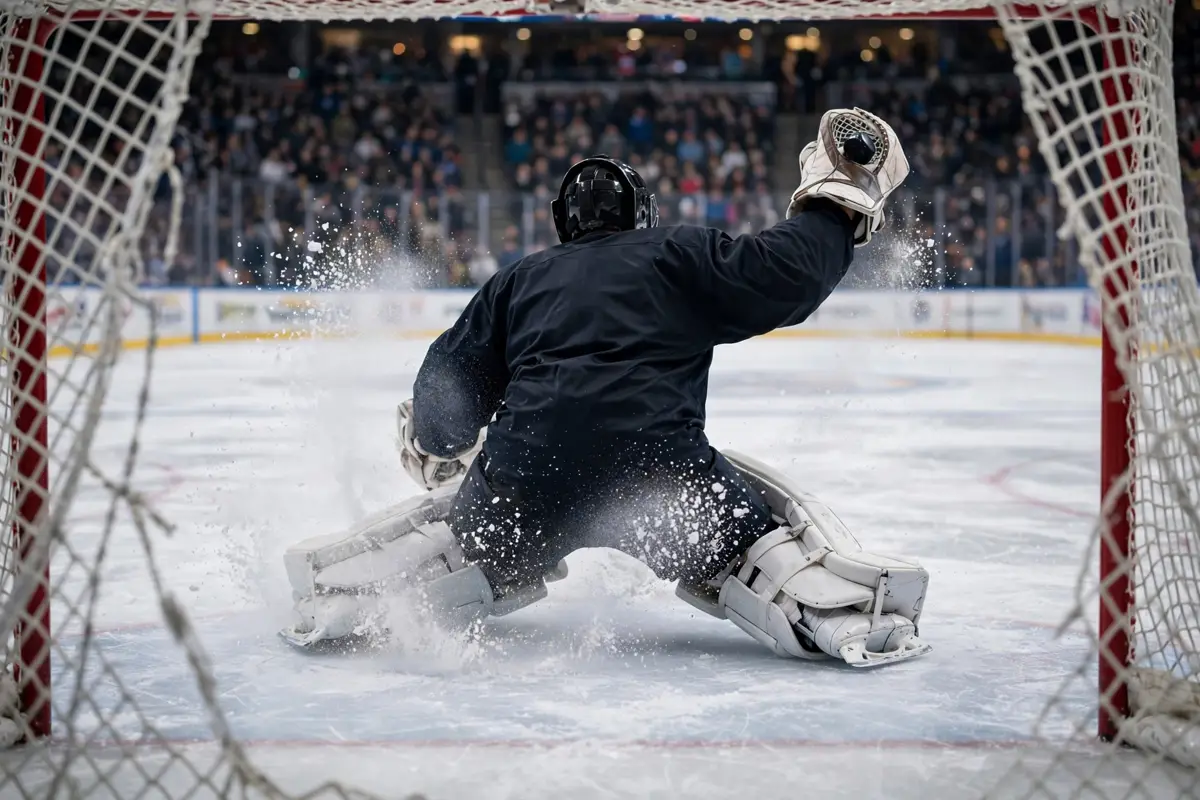
The goaltender is the last line of defence. Only one plays at a time, and the job is unlike any other in team sport. Goalies face shots at great speed, read plays as they develop, and must stay calm after conceding a goal.
Most teams carry two goaltenders: a starter who plays most games and a backup for rest days and injuries. A hot goaltender can carry a team for weeks, and a struggling one can sink even a strong roster.
Lines and Pairings: How Coaches Build a Team on the Ice
Hockey is played in shifts, not with one fixed group on the ice all game. Coaches roll four forward lines and three defence pairs through the game, changing them every 40 seconds or so. That rhythm is one of the first things new fans notice.
The four forward lines
The first line usually holds the team’s best scorers. It plays the most minutes and faces the other team’s best defenders. The second line is another scoring threat, often with a different mix of speed and skill.
The third line brings energy and checking. These players may not score much, but they wear down opponents, kill penalties and win puck battles. The fourth line plays the fewest minutes and often brings physicality and fresh legs late in games.
Lines are not fixed forever. Coaches shuffle them when a line goes cold or injuries hit, and a winger who starts on the fourth line can finish on the first if his play earns the promotion.
The three defence pairs
The top pair usually faces the opponent’s best forwards and plays the most minutes. The second pair often drives offence, moving the puck and joining the attack. The third pair plays sheltered minutes against weaker opposition and often includes a young defender learning the league.
Pair chemistry matters. Defencemen must know where their partner will be without looking, cover for each other when one jumps into the play, and communicate constantly. Coaches rarely break up a pair that works.

Special teams
When a player takes a penalty, his team plays short-handed and the other team gets a power play. Coaches pick special groups for these moments. Power-play units load up on scorers and puck-movers, while penalty-kill units use fast, smart defenders who block shots and clear the puck.
Some athletes make their living on special teams: a great penalty killer may play few even-strength minutes but still be vital to the team.
How to Read Player Stats
Stats are the language of hockey debate. They let you compare players, spot trends and back up what your eyes tell you. The table below covers the numbers you will see most often.
| Stat | What it measures | Who it matters most for |
|---|---|---|
| Goals (G) | Pucks scored by the player | Forwards, offensive defencemen |
| Assists (A) | Passes that lead directly to a goal | Playmakers, centres, defencemen |
| Points (P) | Goals plus assists | All skaters |
| Plus/Minus (+/-) | Goal difference while the player is on the ice at even strength | All skaters |
| Shots on Goal (SOG) | Shots that reach the net | Scorers |
| Time on Ice (TOI) | Minutes played per game | All skaters, shows trust |
| Hits | Body checks delivered | Physical forwards, defencemen |
| Blocked Shots (BS) | Shots stopped before reaching the net | Defencemen, penalty killers |
| Save Percentage (SV%) | Share of shots stopped | Goaltenders |
| Goals Against Average (GAA) | Goals allowed per 60 minutes | Goaltenders |
| Wins (W) | Games won by the goaltender | Goaltenders |
| Shutouts (SO) | Games with no goals allowed | Goaltenders |
Points are the headline number for skaters: 80 in a season is a strong year, and 100 puts a player among the league’s elite. For goaltenders, save percentage is the key number, with anything above .910 solid and the best pushing past .920.
Plus/minus needs care. It rewards players on good teams and punishes players on bad ones, since it counts goals for and against while they are on the ice. Use it as a hint, not a verdict, and always pair it with other numbers.
Time on ice tells you how much a coach trusts a player. Top forwards often play 19 to 21 minutes a night, top defencemen 23 to 25, and a starting goalie plays the whole game. A young player whose ice time grows month by month is earning his place.
Advanced Stats in Plain English
Basic stats tell you what happened. Advanced stats try to tell you why it happened and whether it will keep happening. You do not need to master them, but a few terms will help you follow modern hockey talk.
Corsi counts all shot attempts, including shots that miss or get blocked, while a player is on the ice. It is a rough measure of puck possession: teams that attempt more shots than they allow usually control the game. Fenwick is the same idea without blocked shots.
Expected goals models estimate how likely each shot was to become a goal, based on distance, angle and situation. A player who creates high-quality chances is more valuable than one who takes many low-quality shots from far out.
Zone starts show where a player begins his shifts. A centre who starts most shifts in the defensive zone has a harder job than one who starts in the attacking zone, so his numbers deserve extra credit.
High-danger chances are shots from the most dangerous areas, close to the net and in the middle of the ice. Teams and players who generate more of these chances usually score more, even if their total shot count looks ordinary.
You can find these numbers on public stats sites, and most of them are free. Start with Corsi and expected goals, add the rest slowly, and you will soon read a game the way analysts do.
How Players Join the NHL: Draft, Free Agency and Trades
New talent reaches the league through three main routes, and each one shapes rosters in a different way.
The entry draft
The NHL Entry Draft takes place every summer. Teams pick eligible young players, usually 18 years old, from junior leagues, college hockey and European clubs. The order favours teams that finished low in the standings, which helps weaker teams rebuild.
Draft picks are long-term bets: a first-round pick may arrive within a year or two, a late-round pick may need three or four seasons, and some never play an NHL game at all.
Free agency
When a player’s contract ends, he may become a free agent and sign with any team. Unrestricted free agents can choose freely, while restricted free agents give their old team the right to match an offer. The free agency period opens in the summer and often brings the biggest headlines of the off-season.
Trades
Teams swap players, draft picks and prospects throughout the year, with a rush of deals before the trade deadline late in the regular season. Contending teams add veterans for a playoff run, while rebuilding teams collect picks and young players for the future.
Trades are where rosters change fastest. A single deal can reshape a team’s lines, its salary cap and its chances in the playoffs. That is why trade rumours draw so much attention, including the chatter around clubs like Pittsburgh, where the rumour mill rarely sleeps.
How the Season Shapes a Player’s Year
The hockey calendar has a clear rhythm, and each part asks different things of the athletes.
Training camp opens in September, when players report in shape and fight for roster spots. Young players get their chance to impress, veterans shake off the rust, and coaches test new line combinations.
The regular season runs from October into April. Each team plays 84 games, a grind that tests depth as much as talent. Back-to-back games, long road trips and injuries all take their toll, which is why teams with strong third and fourth lines often survive the winter better.
The playoffs follow in spring, with 16 teams chasing the Stanley Cup in best-of-seven series. Ice time rises for the stars, checking gets tighter, and every mistake is punished. Players often play through injuries that would keep them out in November.
The off-season is short. Players rest, heal, train and, for many, negotiate new contracts. The draft and free agency then reset the board, and the cycle begins again. If you want to track results as the season unfolds, tonight’s live games are the best place to start.
How to Follow Your Favourite Players
Following one player is the easiest way into the league. Pick a skater or goalie you enjoy watching, then build a routine around him.
Start with official stats pages
The league’s official site publishes player stats, game logs and shift charts. Team sites add news, interviews and injury updates. These two sources give you the facts without noise, and they are the first place to check after a game.
Use score apps and alerts
Live score apps let you follow a game without watching it. Set alerts for your favourite team and players, so your phone tells you when they score or when a game goes to overtime. Most apps also carry standings, schedules and player news in one place.
Watch highlights with a purpose
Highlights show goals, but they hide the rest of the game. When you watch a clip, look at what the player did before the goal: the backcheck, the pass, the screen in front of the net. That habit turns highlights into real learning.
Fantasy hockey as a learning tool
Fantasy hockey forces you to learn players beyond the stars. You will discover penalty killers, faceoff specialists and young defencemen because their numbers help your team. It is one of the fastest ways to learn the whole league, and it makes quiet Tuesday games matter.
Learn the other sports too
Hockey fans often follow more than one league. The same habits work everywhere: learn the roster, learn the stats, follow the news. Basketball’s live scoreboard rewards the same kind of attention, and comparing sports makes you a sharper fan of each one.
Baseball fans use the same routine, and baseball’s live scoreboard works the same way for following hitters night after night.
Combat sports work differently, and our explainer on what mixed martial arts is shows how a single athlete’s career is tracked.
Soccer runs on a different clock, and a guide to how long a soccer game lasts helps if you follow both sports.
College football has its own weekly rhythm, and the college football scoreboard is a good second screen on Saturdays.
Motorsport fans can check NASCAR’s race calendar the same way, building a weekly habit around the schedule.
Football’s live scoreboard fills Sundays the same way hockey fills winter nights.
Awards and Milestones Worth Knowing
The league hands out awards each summer that mark the careers fans remember.
The Hart Trophy goes to the player judged most valuable to his team. The Art Ross Trophy goes to the scoring leader. The Norris Trophy honours the best defenceman, and the Vezina Trophy honours the best goaltender. The Calder Trophy goes to the best rookie, and the Conn Smythe Trophy goes to the most valuable player of the playoffs.
Milestones matter too: 1,000 career games means more than a decade in the league, while 300 wins for a goalie or 500 goals for a scorer builds a career fans remember long after retirement.
Veterans chase the Stanley Cup, the one prize that defines a career in this league. When you know what is at stake for each player, every game carries more weight.
Frequently Asked Questions
How many players are on an NHL roster?
A team usually carries around 23 players on its active roster. Only 20 dress for a game: 12 forwards, 6 defencemen and 2 goaltenders.
What is the difference between a centre and a winger?
A centre plays in the middle, takes faceoffs and carries heavy defensive duties. A winger plays on the left or right side and focuses more on scoring and creating chances.
How many teams are in the NHL?
The league has 32 teams, split into two conferences and four divisions. Sixteen teams reach the playoffs each spring, and the last team standing wins the Stanley Cup.
What does plus/minus mean in hockey?
Plus/minus counts the goal difference while a player is on the ice at even strength. A plus rating means his team outscored the opposition during his shifts. It is useful as a rough guide, but it favours players on strong teams, so it should never be read on its own.
How can I follow NHL players if I cannot watch every game?
Use the league’s official stats pages, set alerts in a live score app, and read team news the next morning. Fantasy hockey also helps, since it pushes you to learn players across the whole league instead of just the stars.
What is the salary cap and why does it matter for players?
The salary cap is the limit on what each team can spend on player salaries. It stops rich teams from buying every star and forces general managers to balance big contracts with young, cheaper players.
By Saadi — View All Articles
Facts checked on 13 November 2026. This guide was made by reading the league’s official stats pages and roster rules, comparing leading hockey guides, and checking team and player coverage from major sports outlets.



















