


Artur Beterbiev: Record, Titles and Fighting Style
Artur Beterbiev is the hardest puncher in modern boxing. He won his first twenty professional fights by knockout or stoppage, a run no other light-heavyweight champion has matched. He went on to become the undisputed light-heavyweight champion, the first man to hold all four major belts in the division, and the first undisputed champion there since Roy Jones Jr. in 2002.
This profile covers his whole story: the amateur career that produced world and European gold medals, the move to Montreal, the climb through the professional ranks, the title wins, the two fights with Dmitry Bivol that decided the undisputed crown, and the fighting style that makes him so feared.
Quick Answer
Table of Contents
- The Short Version: Why Beterbiev Matters
- Early Life and the Amateur Years
- Amateur Golds and the Olympics
- Turning Professional in Montreal
- The Climb: Twenty Knockouts in a Row
- Winning the IBF Title
- Unifying the Division
- Beterbiev vs Bivol: The Undisputed Fights
- How Beterbiev Fights
- The Record, Explained
- Titles and Honours
- What Comes Next
- Frequently Asked Questions About Artur Beterbiev
The Short Version: Why Beterbiev Matters
Beterbiev matters because of power, and because of what the power won. A knockout rate of twenty knockouts in twenty-one wins is the highest among modern light-heavyweight champions, and it is the reason opponents fight him the way they do: on the back foot, trying to survive, rather than trying to win.
He also matters because of the undisputed title. Boxing has four major sanctioning bodies, and holding all four belts at once is rare. Beterbiev did it in October 2024, beating Dmitry Bivol by majority decision to become the undisputed light-heavyweight champion. He was the first man to hold the undisputed crown in the division since Roy Jones Jr. in 2002, and the first to do so in the four-belt era.
The loss in the rematch, also by majority decision in February 2025, did not erase the achievement. It set up one of the great rivalries in modern boxing, and it left Beterbiev as a former undisputed champion with a clear path back to the top.
Early Life and the Amateur Years
Artur Asilbekovich Beterbiev was born on 21 January 1985 in Khasavyurt, in Dagestan, then part of the Soviet Union. He grew up in a region famous for producing combat sports athletes, and he boxed from a young age. He later moved to Montreal, Canada, to turn professional, and he holds both Russian and Canadian citizenship.
As an amateur, Beterbiev fought more than 300 times. The commonly quoted record of 295 wins and 5 losses is an estimate, and the confirmed record is 102 wins and at least 13 losses. Either way, the amateur career was long, and it gave him a depth of experience that few professional boxers match.
He boxed as a light-heavyweight for most of his amateur career, and as a heavyweight at the end of it. The move up in weight for the 2012 Olympics showed his willingness to test himself against bigger men, and it foreshadowed a professional style built on pressure rather than size.
Amateur Golds and the Olympics
Beterbiev’s amateur honours are among the best of his generation. He won gold at the European Championships in 2006 in Plovdiv and again in 2010 in Moscow, both at light-heavyweight. He won silver at the World Championships in 2007 in Chicago, gold at the World Cup in 2008 in Moscow, and gold at the World Championships in 2009 in Milan.
He boxed at two Olympic Games. He competed at Beijing 2008 at light-heavyweight, and at London 2012 he reached the heavyweight quarter-finals. An Olympic quarter-final is a long way in a tournament where a single loss ends the run, and reaching it at a heavier weight showed his quality.
The amateur career also gave him wins over fighters who would become professional champions. He beat Kenneth Egan and Ismail Sillakh on his way to the 2006 European title, among others. Those wins mattered, because they taught him to beat skilled, mobile opponents, not just to knock out willing ones.
Turning Professional in Montreal
Beterbiev moved to Montreal to pursue a professional career, and he made his debut on 8 July 2013 at the Bell Centre, stopping Christian Cruz in the second round. Montreal has a long boxing tradition, and the city became his home base. His trainer is Marc Ramsay, who has guided his career from the start.
His early promoters were Yvon Michel from 2013 to 2017, and from 2019 he has worked with Top Rank and Bob Arum. The Top Rank deal took his fights to a bigger stage, and it set up the title fights that followed.
Turning professional at 28 is late for a boxer, but Beterbiev’s amateur career meant he was ready. He did not need the usual apprenticeship of learning the trade against weak opposition. He could fight good opponents early, and he stopped them.
The Climb: Twenty Knockouts in a Row
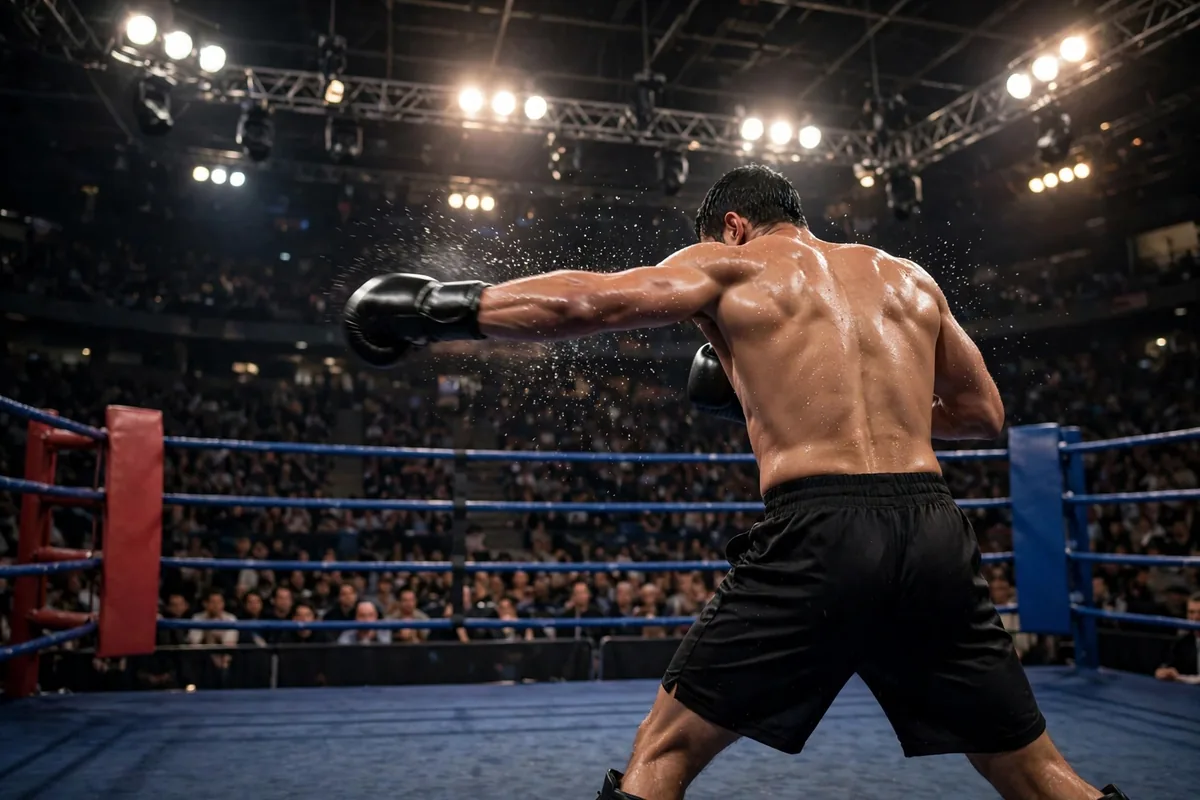
Beterbiev won his first twenty professional fights by knockout or stoppage. That run is the heart of his reputation. Opponents knew what was coming, and they still could not stop it. The run included wins over former champions and unbeaten fighters, not just journeymen.
He beat Tavoris Cloud, a former champion, and Gabriel Campillo, another former champion. He stopped Jeff Page Jr., who was unbeaten at the time, and Callum Johnson, who was also unbeaten. He defeated four unbeaten opponents with ten or more fights: Page, Johnson, Oleksandr Gvozdyk and Dmitry Bivol.
The knockout run ended when he beat Bivol by majority decision in October 2024. That was the first time a professional opponent had heard the final bell against him. The run had lasted eleven years, and it had made him the most feared puncher in the sport.
A knockout run like that changes how opponents fight. Fighters who would normally press forward instead move backwards. Fighters who would normally trade instead hold and clinch. Beterbiev’s power does not just end fights. It changes the shape of every fight he is in, before the first bell.
Winning the IBF Title
Beterbiev won his first world title on 11 November 2017, beating Enrico Koelling for the IBF light-heavyweight title. The IBF belt was the first of the major titles he would hold, and he kept it until February 2025, a reign of more than seven years.
He defended the IBF title against a run of strong challengers, and each defence added to the knockout run. The title gave him a base, and the defences gave him the ranking and the reputation to chase the other belts.
The IBF reign also showed his patience. He did not rush into unification fights. He built his record, defended his belt, and waited for the right fights. When the unification fights came, he was ready for them.
Unifying the Division
Beterbiev added the WBC light-heavyweight title on 18 October 2019, beating Oleksandr Gvozdyk, who was unbeaten at the time. The win unified two of the four major belts, and it was one of the best wins of his career. Gvozdyk was a skilled, mobile champion, and Beterbiev broke him down over ten rounds.
He held the WBC title until February 2025, alongside the IBF belt. The two belts together made him the man to beat in the division, and they set up the fight with Bivol for the remaining belts.
The WBA title came with the undisputed fight in October 2024, when he beat Bivol. The WBO belt was the fourth piece, and the win made him the undisputed champion. Holding all four belts at once is the highest achievement in a division, and Beterbiev reached it at the age of 39.
Beterbiev vs Bivol: The Undisputed Fights
The two fights with Dmitry Bivol are the defining fights of Beterbiev’s career, and they are among the best light-heavyweight fights of the modern era.
The first fight was on 12 October 2024, for the undisputed light-heavyweight championship. Beterbiev won by majority decision, two judges scoring it for him and one scoring it a draw. The win made him the undisputed champion, and it ended his knockout run, because Bivol was the first man to last the distance with him.
The rematch was on 22 February 2025. Bivol won by majority decision, again with two judges for the winner and one scoring it a draw. The loss cost Beterbiev the undisputed title, and the IBF, WBC and WBA belts with it. The two fights were close, and both were scored the same way: a narrow win for the home favourite of the night, with one judge seeing it even.
The rivalry is not settled. Two fights, one win each, both by majority decision, is the classic set-up for a third fight. A trilogy would decide the best light-heavyweight of the era, and it would be one of the biggest fights boxing could make.
Why the Bivol fights were different
Bivol is a skilled, mobile boxer who does not stand still. He moves, he jabs, and he does not give a puncher a still target. That style is the hardest test for a pressure fighter, because it denies them the exchanges they need.
Beterbiev adapted. He cut off the ring, worked the body, and won rounds late. In the first fight, his pressure told in the second half. In the rematch, Bivol’s movement and jab told early, and Beterbiev could not quite catch up. The two fights showed both men’s strengths, and both men’s limits.
How Beterbiev Fights
Beterbiev is an orthodox fighter, 5 feet 11 and a half inches tall, with a reach of 73 inches. He fights at light-heavyweight, the 175-pound division. His style is pressure: he walks opponents down, cuts off the ring, and throws hard punches to the head and body.
His power comes from his whole body, not just his arms. He steps into his punches, turns his hips, and lands with his weight behind the shot. That is why his punches hurt even when they land on the guard. The force goes through the guard and into the man behind it.
He is also a good body puncher. Body punches slow an opponent down, drop their guard, and set up the head shot that ends the fight. Beterbiev works the body early, and the head late, and that pattern has ended many of his fights.
His defence is underrated. He is not a slick, elusive boxer, but he is hard to hit cleanly, because he keeps his guard high, moves his head, and never gives an opponent a still target. He takes punches, but he takes them on the gloves and the arms, not on the chin.

The Record, Explained
Beterbiev’s professional record is 21 wins, 20 by knockout, and 1 loss in 22 fights. The numbers below put that record in context.
| Measure | Number |
|---|---|
| Total fights | 22 |
| Wins | 21 |
| Wins by knockout | 20 |
| Losses | 1 |
| Knockout rate | 20 of 21 wins |
| World title fights | 9 wins, 1 loss, 8 by knockout |
| Wins over former or current world champions | 6 wins, 1 loss, 5 by knockout |
| Unbeaten opponents beaten | 4 with ten or more fights |
The world title record is the most telling line. In world championship fights, Beterbiev is 9-1 with 8 knockouts. He has beaten six former or current world champions, and lost to one, Bivol. The record shows a fighter who raises his level for the biggest fights, not one who pads his record against weak opposition.
The knockout rate is the other headline. Twenty knockouts in twenty-one wins is a rate of about 95 per cent, the highest among modern light-heavyweight champions. The only man to go the distance with him in his first twenty-two fights was Bivol, twice, and both fights were close decisions.
Titles and Honours
Beterbiev’s major world titles are the IBF light-heavyweight title from 11 November 2017 to 22 February 2025, the WBC light-heavyweight title from 18 October 2019 to 22 February 2025, and the WBA Super light-heavyweight title from 12 October 2024 to 22 February 2025. He also held the IBO and Ring magazine titles during his reign as undisputed champion.
He held the undisputed light-heavyweight championship between October 2024 and February 2025. He was the first boxer to become the undisputed light-heavyweight champion since Roy Jones Jr. in 2002, and the first to do so in the four-belt era.
His amateur honours are the European gold medals in 2006 and 2010, the World silver in 2007, the World Cup gold in 2008, and the World gold in 2009. Those medals, plus two Olympic appearances, make him one of the most decorated amateurs to turn professional in his era.
What Comes Next
Beterbiev is 41 years old, and the question for any fighter at that age is how much is left. The two Bivol fights showed he can still compete at the highest level, and the rematch was close. A third fight with Bivol would be the biggest fight available to him, and the one that would settle the rivalry.
If the trilogy does not happen, there are other champions and contenders in the division. A fight for a vacant belt, or a fight against another former champion, would keep him near the top. What he will not do is fight weak opposition for the sake of it. His career has been built on fighting the best available, and that is unlikely to change.
For fans, the boxing schedule is the best place to track what is next, and our guide to the best boxing gloves for beginners covers the gear that starts every boxing journey. The Conor Benn record page shows how another fighter’s career reads as a ranking story, and our guide to the types of martial arts covers the disciplines that feed into combat sports.
Frequently Asked Questions About Artur Beterbiev
What is Artur Beterbiev’s professional record?
21 wins, 20 by knockout, and 1 loss in 22 fights. He won his first 20 professional fights by knockout or stoppage.
When did Artur Beterbiev become undisputed champion?
On 12 October 2024, when he beat Dmitry Bivol by majority decision to win the undisputed light-heavyweight championship. He held it until the rematch on 22 February 2025.
Who did Artur Beterbiev lose to?
Dmitry Bivol, by majority decision in the rematch on 22 February 2025. Beterbiev had beaten Bivol by majority decision in their first fight.
How tall is Artur Beterbiev, and what is his reach?
He is 5 feet 11 and a half inches tall, with a reach of 73 inches. He fights orthodox at light-heavyweight, the 175-pound division.
What did Artur Beterbiev win as an amateur?
European gold in 2006 and 2010, World silver in 2007, World Cup gold in 2008, and World gold in 2009. He boxed at the Beijing 2008 and London 2012 Olympics.
When did Artur Beterbiev turn professional?
On 8 July 2013, stopping Christian Cruz in the second round at the Bell Centre in Montreal, where he is based.
Who trains Artur Beterbiev?
Marc Ramsay, who has trained him since the start of his professional career. His promoters have included Yvon Michel and, since 2019, Top Rank.
How many knockouts does Artur Beterbiev have?
20 knockouts in 21 wins, a knockout rate of about 95 per cent. Eight of his nine wins in world title fights came by knockout.
Share this article: X | Facebook | LinkedIn | Email
Written by Jaani | View all articles by Jaani
Beterbiev’s story is a reminder that power alone does not make a champion. Fans of combat sports can start with our guide to what is MMA and the UFC schedule for the next big fights. For results across sports, the NFL scores page, the NBA scores page and the MLB scores page track the action each week, the NASCAR schedule sets up the next race weekend, and the tennis scores page covers the court game.
Facts checked on 14 November 2026. Sources: Wikipedia and BoxRec for Beterbiev’s record, titles and amateur honours, and Sports Flash Daily’s own boxing guides for the linked articles.