




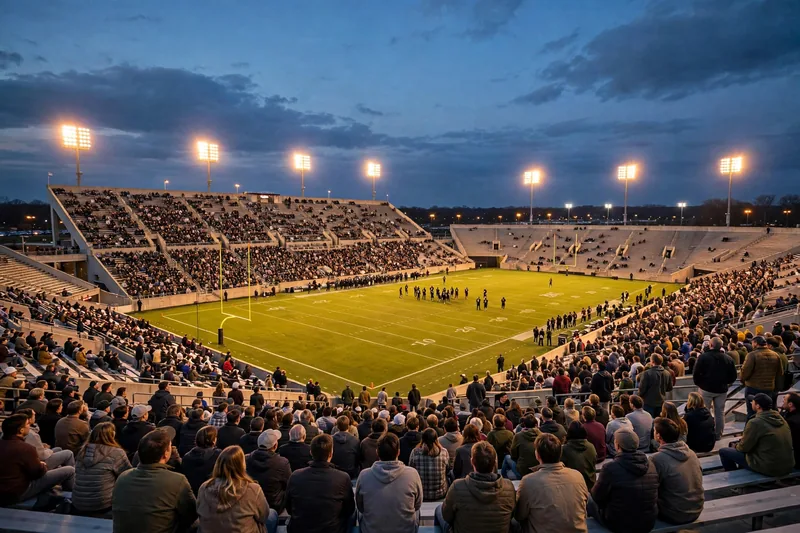
A Kansas State vs Arizona prediction is a preview of how a college football meeting between these two programs might unfold. It is not a result, and it is not a guarantee. It is one informed view of the strengths, styles, and questions that could shape the game, built from the way analysts normally study a matchup. Fans use it to get ready for kickoff, to understand what each side does well, and to know which moments are likely to matter most.
College football predictions work best when they are read as guides rather than answers. A team can look strong on paper and still face a hard afternoon if the matchup does not suit it. A team with a quieter profile can cause problems if its style attacks a clear weakness on the other side. This guide explains how a Kansas State vs Arizona prediction is put together, which factors carry the most weight, how to read the language used in previews, and what to watch for once the game starts.
What a College Football Prediction Really Is
A prediction is a reasoned opinion about a future game. The writer looks at how each team plays, where each team is strong, and where each team can be hurt. The writer then weighs those points against each other and describes the most plausible shape of the game. That description may include a lean toward one side, a view on the style of game to expect, and a list of the battles that should decide it. The same habit of checking the reasoning applies when you follow the latest MLB scores.
The best previews show their working. They explain why a running game matters here, why a passing attack could open up, or why a defensive front could set the tone. They do not hide behind vague praise. They name the areas that will be tested, and they admit where the evidence is thin. A reader should finish a good preview knowing what to look for, even if the writer’s lean turns out to be wrong.
A Preview, Not a Result
No honest preview can promise an outcome. College football is a sport of short seasons, young players, and high variance. One interception, one missed kick, one long return, or one drive that stalls inside the red zone can flip the feel of a game. A prediction that ignores that uncertainty is selling confidence rather than insight. That uncertainty is part of why fans check the latest tennis scores with the same care.
- A prediction is a guide to the matchup, not a fixed result.
- The same facts can support different leans, depending on which factors a writer values most.
- A good preview explains its reasoning and names the key battles.
- A preview is most useful before kickoff, as a way to watch the game with purpose.
- A prediction should be checked against what actually happens on the field.
Why This Matchup Draws Attention
Kansas State and Arizona bring different traditions, different recruiting bases, and different styles of play to the table. That contrast is part of the interest. When two programs built in different ways meet, the game becomes a test of ideas as well as talent. One side may lean on physical play and ball control, while the other may lean on tempo, spacing, and big plays through the air. A preview helps fans see that contrast before the first snap.
How Analysts Build a Prediction
Analysts do not start with a gut feeling and work backward. They start with a checklist. They look at offense, defense, special teams, coaching, and context, one area at a time. They then ask how those areas interact. A strong offense means less if it keeps facing short fields after turnovers. A strong defense means more if it can get off the field on third down and give its offense extra chances.
Step One: Look at the Offenses
Offense is where most previews begin, because it is the easiest part of the game to picture. Analysts ask whether a team moves the ball steadily or in bursts, whether it scores in the red zone, and whether it protects the ball. They also ask how balanced it is. A team that can run and pass keeps a defense honest. A team that can do only one of those things is easier to plan against, even if that one thing is done very well. You can practise the same kind of reading in golf by following the PGA Tour schedule.
Step Two: Look at the Defenses
Defense is often where games are decided, even when the headlines focus on quarterbacks and receivers. Analysts look at how a defense stops the run, how it pressures the passer, and how it covers in the secondary. They also look at tackling, because missed tackles turn short gains into long ones, and they look at third-down defense, because getting off the field is what turns a good defense into a winning one. The NHL scores page is another place to see how defense shapes results night after night.
Step Three: Look at Special Teams and Field Position
Special teams are easy to overlook and costly to ignore. A reliable kicker changes decisions on fourth down. A strong punter flips the field and makes the other offense drive a long way. A dangerous return game can produce a score from nowhere, or at least give the offense a short field to work with. Fans of combat sports see a similar effect on the UFC schedule page, where one moment can change a card.
The Key Factors in This Matchup
Every game has its own key factors, but the list below covers the areas that analysts return to most often when they study a meeting like this one. None of them decides a game on its own. Together, they give a reader a clear picture of where the game is likely to be won or lost. For a wider view of the sport, the college football scores page is a useful place to follow results across the weekend.
Offense: Balance, Explosiveness, and Ball Security
Balance is the first test for an offense. Can it gain yards on the ground when the defense expects a run? Can it complete passes when the defense loads the box to stop the run? An offense that answers yes to both questions is hard to defend, because the defense cannot commit to one answer. An offense that answers yes to only one question can still succeed, but it needs that one strength to be sharp every week.
Ball security is the third test, and it is the one that most often decides a close game. Turnovers give the other team extra chances and better field position. A team that protects the ball can stay in a game even when it is not playing its best. A team that gives the ball away has to play almost perfectly in every other area to make up for it.
- Balance keeps a defense from committing to one answer.
- Explosiveness creates points in a single play and punishes a single mistake.
- Ball security protects field position and limits extra chances for the other side.
- Red-zone efficiency turns long drives into points instead of field goals or empty trips.
- Third-down conversion keeps drives alive and keeps the other offense on the sideline.
Defense: Stopping the Run, Pressing the Passer, and Covering Deep
Run defense sets the tone for everything else. If a defense stops the run on early downs, it forces the offense into obvious passing situations. That makes the pass rush more effective and the coverage easier to hold. If a defense cannot stop the run, the offense stays ahead of the chains, controls the clock, and keeps its full playbook open.
Coverage is the final layer, and it is tested most when a game is close. Can the secondary hold up against deep routes? Can it tackle in space after a short catch? Can it avoid the penalty that extends a drive? These are small moments, but they add up. A secondary that is sound and disciplined gives the whole defense a higher floor.
Quarterback Play and Decision-Making
The quarterback touches the ball on almost every offensive play, so his decisions shape the game more than any other single player. Analysts look at accuracy, at how he handles pressure, at whether he takes care of the ball, and at whether he can extend a play when the first read is covered. They also look at how the offense is built around him, because a quarterback is rarely judged fairly without that context.
Coaching, Adjustments, and Game Management
Coaching matters most in the gaps between plays. A good staff prepares a plan that fits its players and attacks the other side’s weakness. A good staff also adjusts. If a plan is not working in the first quarter, the best coaches change it at halftime, or even on the next series. A preview should ask whether each staff has shown that ability to adapt, or whether it tends to stay with a plan even when the game has moved on. For the wider stakes, see the college football playoff predictions.
Home Field and the Environment
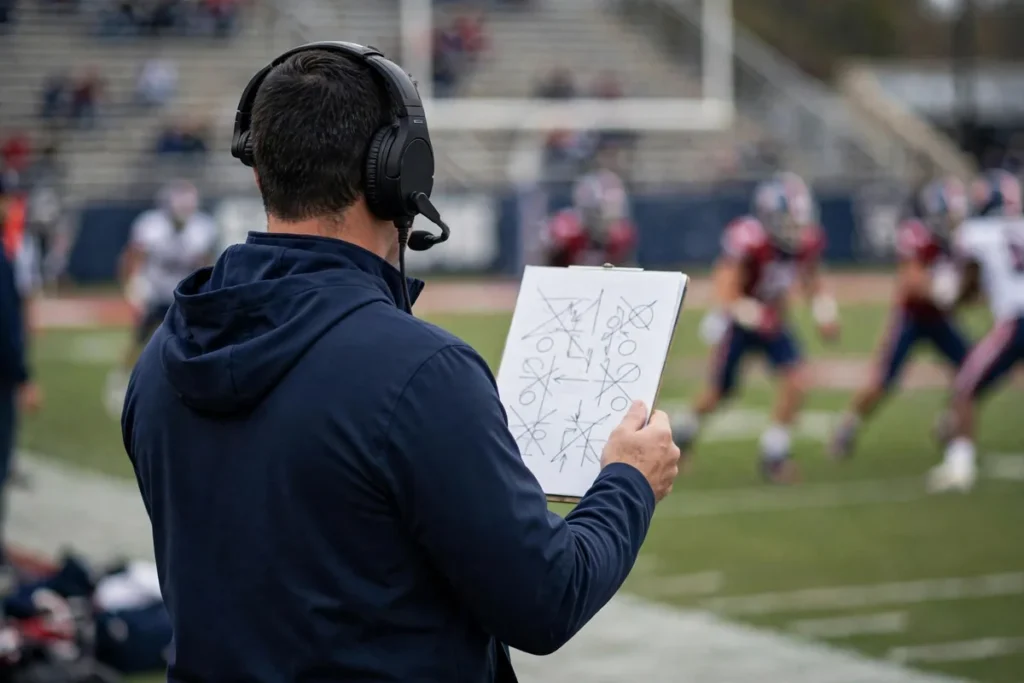
Home field is a real factor in college football, and it is more than a line on a preview. A home crowd can make communication harder for a visiting offense, especially on third down. Travel, time zones, and an unfamiliar stadium can add to that effect. A loud environment forces a visiting team to use silent counts, to simplify its calls, and to spend energy on things that come easily at home.
How to Read a Prediction Like an Expert
Reading a prediction well is a skill of its own. The first step is to separate the lean from the reasoning. The lean is the headline: which side the writer favours, and by how much. The reasoning is the body: the factors, the matchups, and the turning points that support that lean. A reader who only reads the lean has learned very little. A reader who reads the reasoning can judge the preview for themselves.
The Language of Previews
Previews use a shared language, and it helps to know what the words mean. A team is said to have an edge when it is stronger in one area. A matchup is said to be a mismatch when one side has a clear advantage in a specific pairing. A game is called a toss-up when the writer sees little to separate the teams. None of these words is a promise. They are shorthand for a judgment, and the judgment should be backed by reasons in the text.
- Edge: a clear advantage in one area, such as run defense or pass protection.
- Mismatch: a pairing where one side should win most of the time.
- Toss-up: a game with little to separate the teams on the evidence available.
- Lean: a mild preference for one side, short of a firm pick.
- Turning point: a moment or battle that is likely to swing the game.
Numbers Without the Noise
What to Watch for When the Game Starts
A preview is only useful if it tells a fan what to watch. The list below is a practical guide to the first half, when the shape of the game usually becomes clear. Watch for the small signs, not just the score. The score can flatter a team that has been lucky, or punish a team that has moved the ball well without finishing drives.
The First Quarter: Tempo, Tackling, and Field Position
The opening drives reveal the plan each side has brought. Watch how each offense attacks on first down. Is it running to set up manageable second downs, or is it throwing early to test the secondary? Watch how each defense responds. Is it tackling well in space, or are short gains turning into long ones? Early tackling is a good sign for a defense. Missed tackles early often mean a long afternoon. The same early signs matter in basketball, as the NBA scores page shows across a long season.
The Middle of the Game: Adjustments and Depth
Halftime adjustments get a lot of attention, but adjustments happen all game. Watch for a coach who changes a protection, moves a receiver, or brings a different pressure after a series that went badly. Those changes are the visible sign of a staff that is reading the game rather than repeating a plan that is not working.
The Fourth Quarter: Finishing Drives and Protecting the Ball
Late in a close game, the questions narrow. Can the offense finish a drive with a touchdown instead of a field goal? Can the defense get a stop when it needs one? Can the team with the lead protect the ball and run the clock? These are not new questions, but they become sharper when the margin is small and the clock is short.
A Simple Framework for Comparing Predictions
No single preview should be taken as the final word. A better approach is to read two or three previews, compare their reasoning, and look for the points where they agree and where they differ. Agreement on a key battle is a useful signal. Disagreement is useful too, because it shows where the evidence is open to more than one reading. A similar way of weighing factors is used in the NFL coverage map guide.
| Factor | What to look for | Why it matters |
|---|---|---|
| Offense | Balance, efficiency, ball security | Decides whether drives finish with points |
| Defense | Run stops, pressure, coverage | Decides whether the other side stays on schedule |
| Quarterback | Decisions under pressure, accuracy | Shapes almost every offensive play |
| Coaching | Plan, adjustments, game management | Decides how a team responds when the plan fails |
| Special teams | Kicking, punting, returns, coverage | Decides field position drive by drive |
| Home field | Crowd, travel, environment | Can tip a close game late |
| Turnovers | Takeaways, giveaways, margin | The fastest way to change a game |
Common Mistakes When Reading Predictions
The most common mistake is to treat a prediction as a promise. A preview that leans one way is not saying the other side cannot win. It is saying that, on the evidence available, one path looks more likely. College football produces upsets every week, and the teams that cause them are often the ones whose strengths were undervalued in the preview. For a sense of how quickly a weekend can shift, the latest NFL scores show how often favourites are tested across a full slate.
- Treat a lean as a judgment, not a guarantee.
- Read recent form in context, including the strength of the opponent.
- Look beyond star players to the line of scrimmage and the supporting cast.
- Check whether a preview explains its reasons or only states a view.
- Compare more than one preview before settling on a view of the game.
Frequently Asked Questions
What does a Kansas State vs Arizona prediction actually predict?
A Kansas State vs Arizona prediction predicts the shape of the game, not a fixed result. It describes which side looks stronger in the main areas, which battles are likely to decide the game, and what kind of game to expect. It may include a lean toward one side, but that lean is a judgment based on the factors in the preview, and it should be read with the reasoning that supports it.
How should I use a prediction before watching the game?
Use it as a checklist. Note the key battles it names, such as run defense against the running game, or pass protection against the pass rush. Watch those battles in the first half and see whether they play out as the preview expected. That approach turns a prediction into a way of watching with purpose, rather than a number to check against the final score.
Which factor matters most in a matchup like this?
No single factor matters most in every game. Offense, defense, quarterback play, coaching, special teams, and turnovers all interact, and the most important factor is often the one where the gap between the teams is largest. A preview should name that gap clearly, and explain why it matters more here than the other areas where the teams are closer.
Why do different predictions disagree about the same game?
Different writers weigh the same facts differently. One writer may value a strong running game more than a strong passing game. Another may value home field more than recent form. A third may see a defensive weakness that the others have missed. Disagreement does not mean one preview is wrong and the other is right. It means the evidence can support more than one reading, and the reader should compare the reasons behind each view.
Can a prediction be useful if it turns out to be wrong?
Yes. A prediction can be useful even when its lean is wrong, if its reasoning helped a reader understand the game. A preview that named the right key battles, explained the right risks, and admitted its uncertainty has done its job, even if a turnover or a single big play changed the result. The test of a preview is not whether it called the winner. It is whether it helped the reader see the game more clearly.
Where can I follow college football results after the game?
The simplest way is to check a scores hub that covers the full weekend, including conference games and out-of-conference meetings. That gives the result in context, with the other scores from the same round alongside it. For a broader look at how the sport is covered, the NCAA tournament schedule page shows how a different college postseason is organised, which helps explain why regular-season games carry so much weight.
A Kansas State vs Arizona prediction is best read as a guide to the matchup, not as a settled answer. The factors in this guide — offense, defense, quarterback play, coaching, special teams, home field, and turnovers — give a reader a clear way to study the game before kickoff and to watch it with purpose once it starts. Read more than one preview, compare the reasons behind each lean, and let the game itself be the final test of what the previews got right.



















