




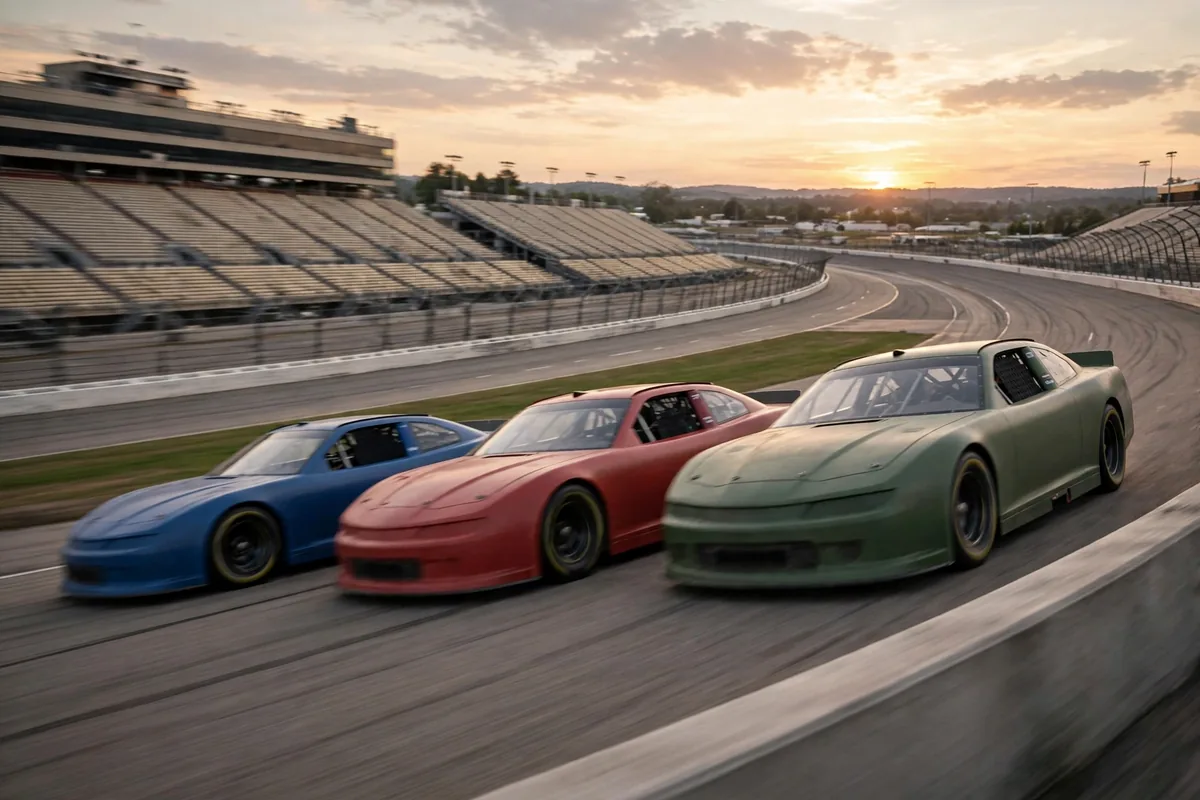
The name on the trophy changed, but the shape of the season stayed familiar. From 2017 to 2019, NASCAR’s top series carried the Monster Energy name, and the calendar ran from a February start at Daytona to a November finish at Homestead. Three seasons, three champions, and a schedule that fans still use as a reference point when they talk about how the sport used to be laid out.
This is a historical guide. The Monster Energy Cup Series was the name of NASCAR’s top division only from 2017 to 2019. It is not the current name. The series is now the NASCAR Cup Series, and the modern calendar looks different in several places. This guide explains the nascar monster energy cup schedule as it actually ran in those three years: the shape of the season, the key dates, the playoff structure, and what changed when the sponsorship ended.
Quick Answer
What was the Monster Energy Cup schedule? The Monster Energy NASCAR Cup Series ran from 2017 to 2019 with 36 points races each season, plus the Clash, the Duel qualifying races at Daytona, and the All-Star Race. Each season started at Daytona International Speedway in February and ended at Homestead-Miami Speedway in November. Martin Truex Jr. won in 2017, Joey Logano in 2018, and Kyle Busch in 2019. Monster Energy’s title sponsorship ended after 2019, and the series became the NASCAR Cup Series from 2020.
Table of Contents
- What Was the Monster Energy Cup Series?
- The Season at a Glance: 36 Races, Three Years
- 2017: The First Monster Season
- 2018: The Playoff Shake-Up
- 2019: The Last Monster Season
- The Full 2019 Calendar, Race by Race
- How the Playoffs Worked
- The Tracks That Defined the Era
- Champions of the Monster Era
- How to Read an Old Schedule Today
- What Changed After 2019
- Frequently Asked Questions About the Monster Energy Cup Schedule
What Was the Monster Energy Cup Series?
Monster Energy became the entitlement sponsor of NASCAR’s top series in December 2016, after Sprint decided not to stay on. The series was renamed the Monster Energy NASCAR Cup Series, and the name ran for three seasons: 2017, 2018, and 2019. In 2019, NASCAR turned down Monster’s offer to extend the naming rights beyond that season, and the sponsorship ended.
The name was new, but the series was not. It was the same top division that had been called the Winston Cup, the Nextel Cup, and the Sprint Cup in earlier years.
For the current calendar, our NASCAR schedule page covers the modern season and how it is laid out today.
The Season at a Glance: 36 Races, Three Years
Each Monster era season had the same skeleton: 36 points races, plus three non-points events. The non-points events were the Clash at Daytona, the Duel qualifying races at Daytona, and the All-Star Race at Charlotte. The regular season ran from February to early September, and the playoffs ran from mid-September to mid-November.
| Season | Dates | Champion | Regular-season finale | Playoff finale |
|---|---|---|---|---|
| 2017 | Feb. 19 – Nov. 19 | Martin Truex Jr. | Richmond | Homestead, Nov. 19 |
| 2018 | Feb. 11 – Nov. 18 | Joey Logano | Indianapolis, Sep. 9 | Homestead, Nov. 18 |
| 2019 | Feb. 10 – Nov. 17 | Kyle Busch | Indianapolis, Sep. 8 | Homestead, Nov. 17 |
The pattern is easy to remember: Daytona opened the year, Indianapolis closed the regular season in 2018 and 2019, and Homestead closed the whole season in all three years. The 36-race count stayed fixed, and the playoff field was 16 drivers in each season. Boxing runs a looser calendar, as our boxing schedule shows.
The rhythm of a season
September brought the regular-season finale and the start of the playoffs, and November brought the championship race at Homestead.
2017: The First Monster Season
The 2017 season was the 69th season of professional stock car racing in the United States, and the 46th modern-era Cup season. It began at Daytona International Speedway with the Advance Auto Parts Clash, the Can-Am Duel qualifying races, and the 59th running of the Daytona 500. It ended with the Ford EcoBoost 400 at Homestead-Miami Speedway on Nov. 19.
Jimmie Johnson entered the season as the defending champion, having won his seventh Cup title the year before, a total that tied Richard Petty and Dale Earnhardt. The year belonged to someone else. Martin Truex Jr. of Furniture Row Racing won the championship, his first in the series, and Toyota won the manufacturers’ title for the second year in a row.
Truex won eight races in 2017, the most in the field, and he led the full-season points as well as the playoff. That combination — most wins, most points, and the title — made his season one of the most complete of the modern era. Baseball fans can follow a season the same way on our MLB scores page. The schedule gave him the room to build that lead: a long regular season with 26 races, then a ten-race playoff that rewarded consistency as much as speed.
What stood out in 2017
The first Monster season kept the calendar largely unchanged from the Sprint era, which helped fans settle into the new name without learning a new map. The Daytona 500 still opened the year, the summer still ran through Daytona in July and Darlington on Labor Day weekend, and Homestead still closed it. The change fans noticed most was on the cars and the broadcasts, where the Monster branding replaced Sprint’s.
2018: The Playoff Shake-Up
The 2018 season was the 70th season of NASCAR professional stock car racing, and the 47th modern-era Cup season. It began at Daytona on Feb. 11 with the Clash and the Daytona 500 qualifying, and the 60th Daytona 500 ran on Feb. 18. The regular season ended with the Brickyard 400 at Indianapolis on Sep. 9, and the playoffs ended at Homestead on Nov. 18.
The big story of 2018 was the playoff calendar. NASCAR moved the final regular-season race to Indianapolis, and the playoffs opened at Las Vegas Motor Speedway. Richmond joined the playoff slate for the first time, hosting the second playoff race, and Charlotte moved to the cutoff race of the Round of 16 — with a twist. The Charlotte race used the road course, known as the Roval, for the first time in the playoffs, putting a road-course layout among the ten playoff races.
Joey Logano of Team Penske won the championship, his first Cup title. Martin Truex Jr. finished second in the points, and Kyle Busch led the full-season points without taking the title, a reminder that the playoff format can crown a driver who was not the season-long points leader.
The Roval arrives
The Charlotte Roval was the most talked-about change of the 2018 calendar. It stayed on the calendar after the Monster era ended, which says something about how well the experiment worked.
Our guide to NASCAR playoff standings explains how the playoff rounds and the cut lines work in the modern format.
2019: The Last Monster Season
The 2019 season was the 71st season of professional stock car racing in the United States, and the 48th modern-era Cup season. It began at Daytona on Feb. 10 with the Clash, the Duels ran on Feb. 14, and the 61st Daytona 500 ran on Feb. 17. The regular season ended with the Brickyard 400 on Sep. 8, and the playoffs ended with the Ford EcoBoost 400 at Homestead on Nov. 17.
The 2019 calendar was almost identical to 2018. No new tracks were added, and no dates were switched. The schedule was released on April 3, 2018, and it kept the same order as the year before. That stability was deliberate: the track contracts ran to 2021, and major changes were unlikely until those deals expired.
Kyle Busch of Joe Gibbs Racing won the championship, his second Cup title. He won five races and led the full-season points, and he took the finale at Homestead to seal the title. Martin Truex Jr. finished second for the second year in a row. The season closed the Monster era with a familiar face on top: Busch had also won the title in 2015, and his 2019 win made him a two-time champion.
Why 2019 felt like an ending
Fans knew during the season that the Monster name would not return. NASCAR had turned down the extension offer, and the 2019 finale at Homestead carried a farewell feel. The last Monster Energy Cup race was the Ford EcoBoost 400 on Nov. 17, 2019, and the series went into the winter without a title sponsor for the first time in years.
The Full 2019 Calendar, Race by Race
The 2019 calendar below lists the points races and the non-points events, with the dates that were published when the schedule was released. Times were Eastern, and the television split was Fox and FS1 for the first half of the season and NBC and NBCSN for the second half.
| No. | Date | Race | Track |
|---|---|---|---|
| — | Sun, Feb. 10 | Advance Auto Parts Clash | Daytona |
| — | Thu, Feb. 14 | Can-Am Duel | Daytona |
| 1 | Sun, Feb. 17 | Daytona 500 | Daytona |
| 2 | Sun, Feb. 24 | Folds of Honor QuikTrip 500 | Atlanta |
| 3 | Sun, Mar. 3 | Pennzoil 400 | Las Vegas |
| 4 | Sun, Mar. 10 | TicketGuardian 500 | Phoenix |
| 5 | Sun, Mar. 17 | Auto Club 400 | Fontana |
| 6 | Sun, Mar. 24 | STP 500 | Martinsville |
| 7 | Sun, Mar. 31 | O’Reilly Auto Parts 500 | Texas |
| 8 | Sun, Apr. 7 | Food City 500 | Bristol |
| 9 | Sat, Apr. 13 | Toyota Owners 400 | Richmond |
| 10 | Sun, Apr. 28 | GEICO 500 | Talladega |
| 11 | Sun, May 5 | Gander RV 400 | Dover |
| 12 | Sat, May 11 | Digital Ally 400 | Kansas |
| — | Sat, May 18 | Monster Energy Open / All-Star Race | Charlotte |
| 13 | Sun, May 26 | Coca-Cola 600 | Charlotte |
| 14 | Sun, Jun. 2 | Pocono 400 | Pocono |
| 15 | Sun, Jun. 9 | FireKeepers Casino 400 | Michigan |
| 16 | Sun, Jun. 23 | Toyota / Save Mart 350 | Sonoma |
| 17 | Sun, Jun. 30 | Camping World 400 | Chicagoland |
| 18 | Sat, Jul. 6 | Coke Zero Sugar 400 | Daytona |
| 19 | Sat, Jul. 13 | Quaker State 400 | Kentucky |
| 20 | Sun, Jul. 21 | Foxwoods Resort Casino 301 | New Hampshire |
| 21 | Sun, Jul. 28 | Gander RV 400 | Pocono |
| 22 | Sun, Aug. 4 | Go Bowling at The Glen | Watkins Glen |
| 23 | Sun, Aug. 11 | Consumers Energy 400 | Michigan |
| 24 | Sat, Aug. 17 | Bass Pro Shops NRA Night Race | Bristol |
| 25 | Sun, Sep. 1 | Bojangles’ Southern 500 | Darlington |
| 26 | Sun, Sep. 8 | Big Machine Vodka 400 at the Brickyard | Indianapolis |
| 27 | Sun, Sep. 15 | South Point 400 | Las Vegas |
| 28 | Sat, Sep. 21 | Federated Auto Parts 400 | Richmond |
| 29 | Sun, Sep. 29 | Bank of America Roval 400 | Charlotte |
| 30 | Sun, Oct. 6 | Drydene 400 | Dover |
| 31 | Sun, Oct. 13 | 1000Bulbs.com 500 | Talladega |
| 32 | Sun, Oct. 20 | Hollywood Casino 400 | Kansas |
| 33 | Sun, Oct. 27 | First Data 500 | Martinsville |
| 34 | Sun, Nov. 3 | AAA Texas 500 | Texas |
| 35 | Sun, Nov. 10 | Can-Am 500 | Phoenix (ISM Raceway) |
| 36 | Sun, Nov. 17 | Ford EcoBoost 400 | Homestead-Miami |
The west coast swing in March — Las Vegas, Phoenix, and Fontana — was a fixture of the early season, and the summer stretch through Pocono, Michigan, Sonoma, and Chicagoland set up the run to the playoffs. Tennis uses a weekly rhythm too, explained on our tennis scores page.
Reading the table
The playoff races start at No. 27, Las Vegas on Sep. 15, and run through No. 36 at Homestead. A fan who wants to follow the 2019 season today can use this table as a map: start at Daytona in February, follow the numbers, and end at Homestead in November. Golf’s season map works the same way; see our PGA Tour schedule.
How the Playoffs Worked
The playoffs used 16 drivers and four rounds: the Round of 16, the Round of 12, the Round of 8, and the Championship 4. Each round cut four drivers, and the four who survived to Homestead raced for the title in a single race. The highest finisher among the four at Homestead won the championship.
That mix — win and advance, or score enough points to survive — gave every playoff race two contests at once: the race for the win, and the race for the cut line.
The 2019 playoff dates
The playoffs opened at Las Vegas on Sep. 15, then went to Richmond on Sep. 21 and the Charlotte Roval on Sep. 29. The Round of 12 ran through Dover, Talladega, and Kansas in October. The Round of 8 ran through Martinsville, Texas, and Phoenix, and the finale was at Homestead on Nov. 17. Each round lasted three races, and the finale was a single race with four drivers eligible for the title.
Qualifying set the starting order for each race, and the format changed from track to track. Our guide to NASCAR Monster Cup qualifying explains how qualifying worked and how to read the starting grid.
The Tracks That Defined the Era
A schedule is a list of places, and the Monster era had a set of tracks that gave each season its shape. Daytona opened the year and closed the summer with a July night race. Talladega and Daytona supplied the drafting races, where large packs ran inches apart. Bristol and Martinsville supplied the short-track contact, where tempers ran short and bumpers were used. Darlington supplied the Labor Day tradition, with its narrow groove and its throwback weekend.
The road courses were Sonoma and Watkins Glen, with the Charlotte Roval joining them in 2018 as a playoff race. Indianapolis closed the regular season in 2018 and 2019, and Homestead closed the whole season in all three years.
Tracks that left the calendar later
Chicagoland hosted a regular June race in the Monster era, and Fontana’s two-mile oval hosted the March west coast swing. The 2019 table above is the best record of where the series raced when the Monster name was on the trophy.
Champions of the Monster Era
Three drivers won the three Monster era titles, and each one took a different road to the trophy.
- 2017 — Martin Truex Jr., Furniture Row Racing, Toyota. Eight wins, the full-season points lead, and the championship at Homestead on Nov. 19. His first Cup title, and the high point of Furniture Row’s run as a single-car team.
- 2018 — Joey Logano, Team Penske, Ford. Three wins, including the finale at Homestead on Nov. 18. He beat Martin Truex Jr., who finished second, and Kyle Busch, who led the full-season points.
- 2019 — Kyle Busch, Joe Gibbs Racing, Toyota. Five wins, the full-season points lead, and the championship at Homestead on Nov. 17. His second Cup title, after his first in 2015.
Truex’s 2017 season stands out for its dominance: eight wins and the points lead in the same year. Logano’s 2018 season stands out for the opposite reason: three wins, but the right win at the right time. Busch’s 2019 season combined both: five wins, the points lead, and the finale win. Together, the three years show how the playoff format can reward dominance, timing, or both.
The manufacturers
Toyota won the manufacturers’ title in 2017, with Truex and Busch leading the way. Ford took the title in 2018 behind Logano and the Penske cars. Toyota won again in 2019. The manufacturer race ran alongside the driver title all season, and it gave fans a second contest to follow through the summer. Hockey has its own points race, tracked on our NHL scores page.
How to Read an Old Schedule Today
Old schedules are useful, but they need care. A race name from 2019 may belong to a different track today, a track may have moved its date, and a sponsor name may have changed. The safest way to use a 2019 table is to match the track and the date, not the sponsor name on the race.
- Match the track first. The track is the fixed part. The race name changes with the sponsor.
- Check the date, not the month alone. A race that ran in June in 2019 may run in a different month now.
- Count the points races. The 36-race count is the check that you are looking at a full season, not a partial list.
- Separate points races from exhibitions. The Clash, the Duels, and the All-Star Race never counted toward the title.
- Use the finale as an anchor. Homestead closed all three Monster seasons, so it is the easiest date to verify.
Fans who follow other motorsport calendars will recognise the same habit. Our UFC schedule page shows how a different sport lays out its year, and the same rule applies: the venue and the date are the facts that last, while the event name changes.
What Changed After 2019
The series became the NASCAR Cup Series from 2020, with no title sponsor in the name. The calendar kept its shape at first — Daytona in February, Homestead as the finale in 2020 — and then changed more sharply in later years. New tracks joined, old tracks left, the finale moved away from Homestead, and the schedule became less rigid than the 2019 version, which had kept the same order as 2018.
Those changes are part of a longer shift that began after the Monster era: the series now moves dates and tracks more freely than it did when the contracts ran to 2021.
Why the Monster era still matters
Fans search for the Monster era schedule because it marks a clear period: three seasons, one sponsor, one playoff format, and a stable calendar. It is a useful baseline for comparing what came before and what came after. A fan who knows the 2019 table can see at a glance which tracks have stayed, which have gone, and which have returned.
For the current season, the NASCAR schedule 2026 draft covers the modern calendar and how it differs from the older versions.
Frequently Asked Questions About the Monster Energy Cup Schedule
What years was the Monster Energy Cup Series?
2017 to 2019. Monster Energy became the title sponsor in December 2016, and the sponsorship ended after the 2019 season when NASCAR turned down an extension offer.
How many races were in a Monster Energy Cup season?
36 points races each season, plus three non-points events: the Clash, the Duel qualifying races at Daytona, and the All-Star Race.
When did the 2019 season start and end?
It started with the Clash on Feb. 10, 2019, the Daytona 500 ran on Feb. 17, and it ended with the Ford EcoBoost 400 at Homestead-Miami Speedway on Nov. 17, 2019.
Who won the Monster Energy Cup championships?
Martin Truex Jr. in 2017, Joey Logano in 2018, and Kyle Busch in 2019. All three titles were decided at Homestead-Miami Speedway.
When did the playoffs start in 2019?
At Las Vegas Motor Speedway on Sep. 15, 2019. The playoffs ran for ten races and ended at Homestead on Nov. 17.
What is the series called now?
The NASCAR Cup Series. The Monster Energy name ended after 2019, and the series has run without a title sponsor in its name since 2020.
Did the 2019 schedule change from 2018?
No. The 2019 calendar kept the same track order as 2018, with no new tracks added and no dates switched. The regular season ended at Indianapolis on Sep. 8, and the finale was at Homestead on Nov. 17.
Where can I find the current NASCAR schedule?
On our NASCAR schedule page, which covers the modern Cup Series calendar and how it differs from the Monster era.
Share this article: X | Facebook | LinkedIn | Email
Written by Jaani | View all articles by Jaani
Facts checked on 14 November 2026. Sources: Jayski for the 2018 and 2019 calendars; NBC Sports and NASCAR.com for the champions list; and Sports Flash Daily’s own NASCAR guides for the linked articles.



















