




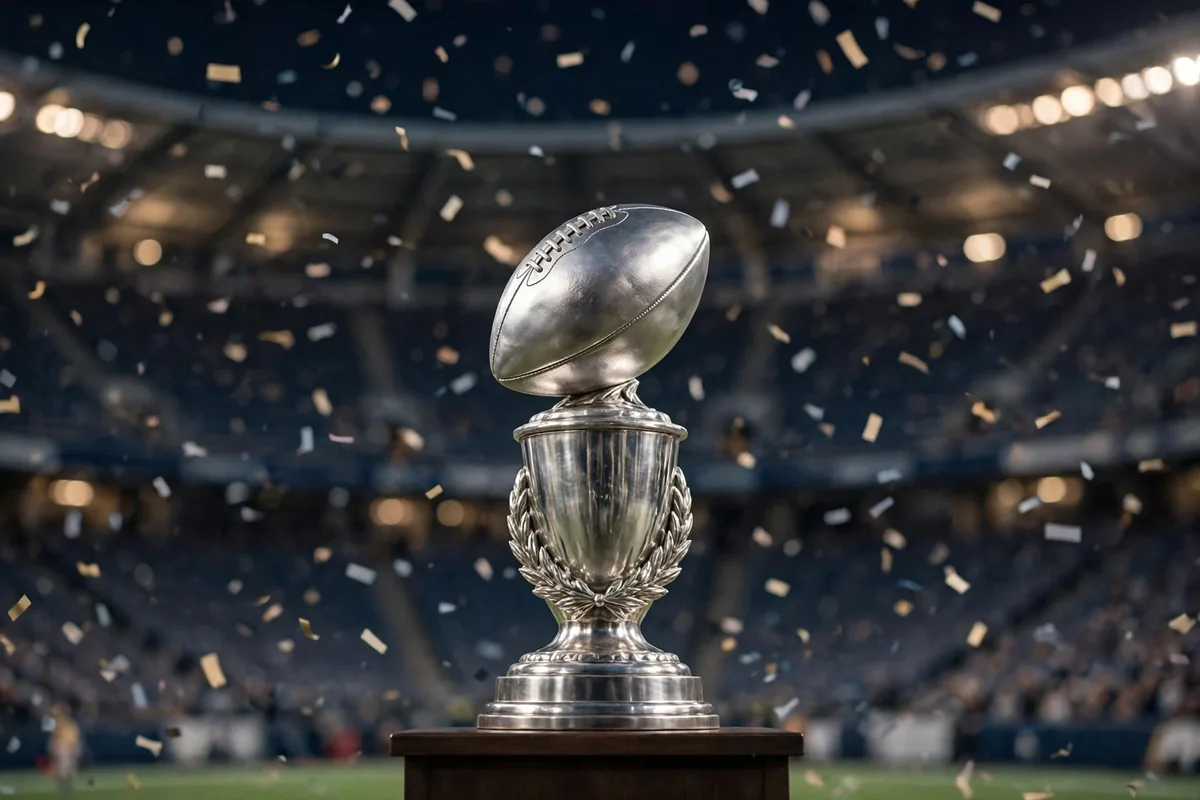
Super Bowl Champions by Year: Every Winner Since 1967
The Super Bowl is the biggest single day in American sport. One game decides the NFL champion, and the winner takes home the Vince Lombardi Trophy. Sixty games have been played, from Green Bay’s win over Kansas City in January 1967 to Seattle’s win over New England in February 2026, and twenty different franchises have lifted the trophy.
This guide lists every champion by year, with the score of each game. It also explains how the list works, who has won the most, which teams have never won, and which games are worth remembering. If you want one page that settles every argument about Super Bowl history, this is it.
Quick Answer
Table of Contents
- How to Read This List
- Every Super Bowl Champion by Year
- The Early Years: 1967–1979
- The 1980s: New Powers Rise
- The 1990s: Dynasties and First-Timers
- The 2000s: Brady, the Patriots and the Giants
- The 2010s: Parity and Rematches
- The 2020s: Kansas City, Philadelphia and Seattle
- Most Super Bowl Wins by Team
- Teams That Have Never Won a Super Bowl
- The Most Memorable Super Bowls
- How to Follow the Next Super Bowl
- Frequently Asked Questions
How to Read This List
The year shown for each game is the calendar year in which it was played. That matters, because the NFL season starts in one year and ends in the next. Super Bowl LX, for example, was played on 8 February 2026, but it decided the 2025 season. Some lists use the season year instead, so the same game can appear under 2025 or 2026 depending on the source. This guide uses the game date, and says so plainly.
Every Super Bowl Champion by Year
| Game | Date | Champion | Score | Runner-up |
|---|---|---|---|---|
| I | 15 Jan 1967 | Green Bay Packers | 35–10 | Kansas City Chiefs |
| II | 14 Jan 1968 | Green Bay Packers | 33–14 | Oakland Raiders |
| III | 12 Jan 1969 | New York Jets | 16–7 | Baltimore Colts |
| IV | 11 Jan 1970 | Kansas City Chiefs | 23–7 | Minnesota Vikings |
| V | 17 Jan 1971 | Baltimore Colts | 16–13 | Dallas Cowboys |
| VI | 16 Jan 1972 | Dallas Cowboys | 24–3 | Miami Dolphins |
| VII | 14 Jan 1973 | Miami Dolphins | 14–7 | Washington Redskins |
| VIII | 13 Jan 1974 | Miami Dolphins | 24–7 | Minnesota Vikings |
| IX | 12 Jan 1975 | Pittsburgh Steelers | 16–6 | Minnesota Vikings |
| X | 18 Jan 1976 | Pittsburgh Steelers | 21–17 | Dallas Cowboys |
| XI | 9 Jan 1977 | Oakland Raiders | 32–14 | Minnesota Vikings |
| XII | 15 Jan 1978 | Dallas Cowboys | 27–10 | Denver Broncos |
| XIII | 21 Jan 1979 | Pittsburgh Steelers | 35–31 | Dallas Cowboys |
| XIV | 20 Jan 1980 | Pittsburgh Steelers | 31–19 | Los Angeles Rams |
| XV | 25 Jan 1981 | Oakland Raiders | 27–10 | Philadelphia Eagles |
| XVI | 24 Jan 1982 | San Francisco 49ers | 26–21 | Cincinnati Bengals |
| XVII | 30 Jan 1983 | Washington Redskins | 27–17 | Miami Dolphins |
| XVIII | 22 Jan 1984 | Los Angeles Raiders | 38–9 | Washington Redskins |
| XIX | 20 Jan 1985 | San Francisco 49ers | 38–16 | Miami Dolphins |
| XX | 26 Jan 1986 | Chicago Bears | 46–10 | New England Patriots |
| XXI | 25 Jan 1987 | New York Giants | 39–20 | Denver Broncos |
| XXII | 31 Jan 1988 | Washington Redskins | 42–10 | Denver Broncos |
| XXIII | 22 Jan 1989 | San Francisco 49ers | 20–16 | Cincinnati Bengals |
| XXIV | 28 Jan 1990 | San Francisco 49ers | 55–10 | Denver Broncos |
| XXV | 27 Jan 1991 | New York Giants | 20–19 | Buffalo Bills |
| XXVI | 26 Jan 1992 | Washington Redskins | 37–24 | Buffalo Bills |
| XXVII | 31 Jan 1993 | Dallas Cowboys | 52–17 | Buffalo Bills |
| XXVIII | 30 Jan 1994 | Dallas Cowboys | 30–13 | Buffalo Bills |
| XXIX | 29 Jan 1995 | San Francisco 49ers | 49–26 | San Diego Chargers |
| XXX | 28 Jan 1996 | Dallas Cowboys | 27–17 | Pittsburgh Steelers |
| XXXI | 26 Jan 1997 | Green Bay Packers | 35–21 | New England Patriots |
| XXXII | 25 Jan 1998 | Denver Broncos | 31–24 | Green Bay Packers |
| XXXIII | 31 Jan 1999 | Denver Broncos | 34–19 | Atlanta Falcons |
| XXXIV | 30 Jan 2000 | St. Louis Rams | 23–16 | Tennessee Titans |
| XXXV | 28 Jan 2001 | Baltimore Ravens | 34–7 | New York Giants |
| XXXVI | 3 Feb 2002 | New England Patriots | 20–17 | St. Louis Rams |
| XXXVII | 26 Jan 2003 | Tampa Bay Buccaneers | 48–21 | Oakland Raiders |
| XXXVIII | 1 Feb 2004 | New England Patriots | 32–29 | Carolina Panthers |
| XXXIX | 6 Feb 2005 | New England Patriots | 24–21 | Philadelphia Eagles |
| XL | 5 Feb 2006 | Pittsburgh Steelers | 21–10 | Seattle Seahawks |
| XLI | 4 Feb 2007 | Indianapolis Colts | 29–17 | Chicago Bears |
| XLII | 3 Feb 2008 | New York Giants | 17–14 | New England Patriots |
| XLIII | 1 Feb 2009 | Pittsburgh Steelers | 27–23 | Arizona Cardinals |
| XLIV | 7 Feb 2010 | New Orleans Saints | 31–17 | Indianapolis Colts |
| XLV | 6 Feb 2011 | Green Bay Packers | 31–25 | Pittsburgh Steelers |
| XLVI | 5 Feb 2012 | New York Giants | 21–17 | New England Patriots |
| XLVII | 3 Feb 2013 | Baltimore Ravens | 34–31 | San Francisco 49ers |
| XLVIII | 2 Feb 2014 | Seattle Seahawks | 43–8 | Denver Broncos |
| XLIX | 1 Feb 2015 | New England Patriots | 28–24 | Seattle Seahawks |
| 50 | 7 Feb 2016 | Denver Broncos | 24–10 | Carolina Panthers |
| LI | 5 Feb 2017 | New England Patriots | 34–28 (OT) | Atlanta Falcons |
| LII | 4 Feb 2018 | Philadelphia Eagles | 41–33 | New England Patriots |
| LIII | 3 Feb 2019 | New England Patriots | 13–3 | Los Angeles Rams |
| LIV | 2 Feb 2020 | Kansas City Chiefs | 31–20 | San Francisco 49ers |
| LV | 7 Feb 2021 | Tampa Bay Buccaneers | 31–9 | Kansas City Chiefs |
| LVI | 13 Feb 2022 | Los Angeles Rams | 23–20 | Cincinnati Bengals |
| LVII | 12 Feb 2023 | Kansas City Chiefs | 38–35 | Philadelphia Eagles |
| LVIII | 11 Feb 2024 | Kansas City Chiefs | 25–22 (OT) | San Francisco 49ers |
| LIX | 9 Feb 2025 | Philadelphia Eagles | 40–22 | Kansas City Chiefs |
| LX | 8 Feb 2026 | Seattle Seahawks | 29–13 | New England Patriots |
The Early Years: 1967–1979
Green Bay won the first two Super Bowls under Vince Lombardi, beating Kansas City 35–10 and Oakland 33–14. The games were not yet called the Super Bowl in official marketing; the first two were billed as the AFL–NFL World Championship Game. Super Bowl III changed everything. The New York Jets, heavy underdogs from the AFL, beat the Baltimore Colts 16–7, and the result proved the AFL belonged on the same field. Kansas City won Super Bowl IV, and the merger followed.
The 1980s: New Powers Rise
The 1980s opened with Pittsburgh’s fourth title and Oakland’s second, then the balance of power shifted. San Francisco won four Super Bowls in the decade, in 1982, 1985, 1989 and 1990, behind Joe Montana, one of the greatest quarterbacks the game has seen. Washington won twice, in 1983 and 1988, and the New York Giants won their first in 1987.
The 1990s: Dynasties and First-Timers
The 1990s began with the closest finish the game had seen: the New York Giants beat Buffalo 20–19 in Super Bowl XXV when the Bills’ last-second field goal went wide right. Buffalo then lost three more Super Bowls in a row, to Washington and twice to Dallas, becoming the only team to reach four straight Super Bowls and the only team to lose four in a row.
The 2000s: Brady, the Patriots and the Giants
The 2000s belonged to New England. The Patriots won their first Super Bowl in February 2002, beating the St. Louis Rams 20–17, and went on to win three titles in four years. Tom Brady, a sixth-round draft pick, became the defining quarterback of the era, and his partnership with coach Bill Belichick produced the longest-running dynasty in the modern game.
The 2010s: Parity and Rematches
The 2010s were the decade of rematches. New England and the New York Giants met again in February 2012, and the Giants won again, 21–17. Baltimore beat San Francisco 34–31 in 2013 in a game remembered for a power cut in the stadium. Seattle won its first title in 2014, crushing Denver 43–8, then lost the next year to New England 28–24 on a goal-line interception.
Our College Football Playoff predictions page explains who is in line.
Our college football scores page tracks the race to the playoff in the college game.
The 2020s: Kansas City, Philadelphia and Seattle
The 2020s began with Tampa Bay winning in 2021, as Tom Brady won his seventh Super Bowl with his second team. The Los Angeles Rams won in 2022, beating Cincinnati 23–20, and then Kansas City took over: the Chiefs won in 2023, beating Philadelphia 38–35, and again in 2024, beating San Francisco 25–22 in overtime.

Most Super Bowl Wins by Team
| Team | Wins | Winning years (game dates) |
|---|---|---|
| New England Patriots | 6 | 2002, 2004, 2005, 2015, 2017, 2019 |
| Pittsburgh Steelers | 6 | 1975, 1976, 1979, 1980, 2006, 2009 |
| Dallas Cowboys | 5 | 1972, 1978, 1993, 1994, 1996 |
| San Francisco 49ers | 5 | 1982, 1985, 1989, 1990, 1995 |
| Green Bay Packers | 4 | 1967, 1968, 1997, 2011 |
| New York Giants | 4 | 1987, 1991, 2008, 2012 |
| Kansas City Chiefs | 4 | 1970, 2020, 2023, 2024 |
| Denver Broncos | 3 | 1998, 1999, 2016 |
| Las Vegas / Oakland / Los Angeles Raiders | 3 | 1977, 1981, 1984 |
| Washington Commanders | 3 | 1983, 1988, 1992 |
| Miami Dolphins | 2 | 1973, 1974 |
| Indianapolis / Baltimore Colts | 2 | 1971, 2007 |
| Los Angeles / St. Louis Rams | 2 | 2000, 2022 |
| Baltimore Ravens | 2 | 2001, 2013 |
| Tampa Bay Buccaneers | 2 | 2003, 2021 |
| Seattle Seahawks | 2 | 2014, 2026 |
| Philadelphia Eagles | 2 | 2018, 2025 |
| New York Jets | 1 | 1969 |
| Chicago Bears | 1 | 1986 |
| New Orleans Saints | 1 | 2010 |
The list counts franchises, not cities: the Raiders’ three wins came as Oakland twice and Los Angeles once, and the Rams’ two came as St. Louis and Los Angeles. New England and Pittsburgh share the record at six, and both built their totals in two bursts: Pittsburgh won four in the 1970s and two in the 2000s, while all six of New England’s came between 2002 and 2019. The betting market rates the next champion long before the season starts, and our NFL lines page explains how those numbers work.
Teams That Have Never Won a Super Bowl
Twelve current franchises have never won a Super Bowl, and four of them have never even reached the game. The four who have never appeared are the Cleveland Browns, the Detroit Lions, the Jacksonville Jaguars and the Houston Texans. Cleveland and Detroit both won NFL championships before the Super Bowl era, in 1964 and 1957 respectively, but neither has reached the big game since it began.
The other eight have reached the game and lost. Buffalo lost four in a row from 1991 to 1994 and has never been back. Minnesota lost four in the 1970s. Cincinnati lost three, in 1982, 1989 and 2022. Atlanta lost twice, in 1999 and 2017, the second in the famous 28–3 collapse. Carolina lost twice, in 2004 and 2016. Arizona, San Diego / Los Angeles Chargers and Tennessee have each lost once. The list is a reminder of how hard the game is to win: half the league has never lifted the trophy. The CFP rankings show the same kind of waiting game in college football, where long-suffering programmes chase a first title too.
The Most Memorable Super Bowls
Some Super Bowls are remembered for the score. Others are remembered for a single play, and these five are the ones fans still argue about.
Super Bowl III (1969): Jets 16, Colts 7
The AFL’s Jets were 18-point underdogs against the NFL’s Colts. Quarterback Joe Namath guaranteed a win before the game, then delivered it. The result gave the AFL credibility and made the merger work.
Super Bowl XXV (1991): Giants 20, Bills 19
The closest finish of its era. Buffalo’s Scott Norwood missed a 47-yard field goal wide right with seconds left, and the Giants held on. It was the first of Buffalo’s four straight defeats.
Super Bowl XLII (2008): Giants 17, Patriots 14
New England arrived 18–0 and chasing perfection. The Giants ended it with a famous escape-and-catch on the final drive, and the Patriots’ perfect season died one game short.
Super Bowl LI (2017): Patriots 34, Falcons 28 (OT)
Atlanta led 28–3 late in the third quarter. New England scored 31 unanswered points and won in overtime, the first overtime Super Bowl and the greatest comeback the game has seen.
Super Bowl LVIII (2024): Chiefs 25, 49ers 22 (OT)
The second overtime Super Bowl. Kansas City won its second straight title and its third in five years, beating San Francisco in a game that went down to the final drive of overtime.
Other games deserve a mention: Pittsburgh’s 35–31 win over Dallas in Super Bowl XIII is often called the best Super Bowl ever played, and Seattle’s 43–8 win over Denver in Super Bowl XLVIII was the most one-sided of the modern era. The full list above lets you find them all, and our NFL scores page is where each season’s road to the game is tracked.
How to Follow the Next Super Bowl
The road to the Super Bowl starts in September, runs through the regular season, and ends with the playoffs in January. The two conference championship games decide the matchup, and the game itself is played on the second Sunday in February. The host city is chosen years in advance, and the game is almost always played in a warm-weather city or a domed stadium.
To follow the season, check the standings each Monday, watch the playoff picture tighten in December, and use our NFL coverage map to find which game airs in your area.
Fantasy players should read our guide to how to rate your fantasy team before the playoffs, because the same judgement that picks a champion picks a winning roster.
Other sports have their own championship days too: our NBA scores page tracks the road to the Finals.
Our MLB scores page tracks the road to the World Series.
The UFC schedule covers the big fight nights.
The boxing schedule does the same for boxing.
Frequently Asked Questions
Who has won the most Super Bowls?
The New England Patriots and the Pittsburgh Steelers are tied with six wins each. The Dallas Cowboys and San Francisco 49ers have five each.
Who won the most recent Super Bowl?
The Seattle Seahawks won Super Bowl LX on 8 February 2026, beating the New England Patriots 29–13.
Who won the first Super Bowl?
The Green Bay Packers won Super Bowl I on 15 January 1967, beating the Kansas City Chiefs 35–10. They won Super Bowl II a year later as well.
Which teams have never won a Super Bowl?
Twelve current franchises have never won one. Four have never even reached the game: the Cleveland Browns, Detroit Lions, Jacksonville Jaguars and Houston Texans.
Which teams have never appeared in a Super Bowl?
The Cleveland Browns, Detroit Lions, Jacksonville Jaguars and Houston Texans. The Browns and Lions both won NFL titles before the Super Bowl era began.
Has any Super Bowl gone to overtime?
Yes, twice. New England beat Atlanta 34–28 in Super Bowl LI in 2017, and Kansas City beat San Francisco 25–22 in Super Bowl LVIII in 2024.
What is the biggest winning margin in a Super Bowl?
San Francisco’s 55–10 win over Denver in Super Bowl XXIV in 1990, a 45-point margin.
Who has the most Super Bowl wins as a player?
Tom Brady, with seven: six with New England and one with Tampa Bay. No other player has more than four.
Share this article: X | Facebook | LinkedIn | Email
Written by MSUD | View all articles by MSUD
Facts checked on 14 November 2026. Sources: Wikipedia’s List of Super Bowl champions, ESPN and Pro Football Reference for results and scores, and Sports Flash Daily’s own NFL guides for the linked articles.




















