




Ryan Miller Goalie: Career, Stats and 2010 Olympics
Ryan Miller played goal for eighteen NHL seasons, won the Vezina Trophy, and backstopped the United States to an Olympic silver medal in 2010. He was not a first-round pick, and he was not a big, blocking-style goalie. He was a lean, athletic, hybrid goaltender who read the play, moved well, and made the save look calm.
This profile covers his whole career: the record-setting college years at Michigan State, the long run as the Buffalo Sabres starter, the trades and later stops in St. Louis, Vancouver and Anaheim, the Olympic run in Vancouver, and what he did after retiring. It also explains his style, his numbers, and where he stands among American goalies.
Quick Answer
Table of Contents
- The Short Version: Why Miller Matters
- Early Life and Michigan State
- The Hobey Baker Season
- Drafted Late, Developed Slowly
- Becoming the Buffalo Sabres Starter
- The Vezina Season: 2009-10
- Vancouver 2010: Olympic Silver and MVP
- St. Louis, Vancouver and Anaheim
- How Miller Played: The Hybrid Style
- Career Numbers, Explained
- Records and Honours
- Life After Playing
- Frequently Asked Questions About Ryan Miller
The Short Version: Why Miller Matters
Miller matters for three reasons. First, longevity: eighteen NHL seasons is a long career for any player, and a very long one for a goalie. Second, peak: in 2010 he was, by the votes, the best goalie in the NHL and the best goalie at the Olympics in the same season. Third, place in American hockey history: when he retired, he held the record for the most wins by an American-born goaltender.
He did it without the usual advantages. He was drafted in the fifth round, 138th overall, by Buffalo in 1999. He was listed at 6 feet 2 inches and about 170 pounds, light for a modern goalie. He played behind Sabres teams that were often rebuilding, not contending. His numbers were built on consistency, not on a great team in front of him.
For fans who are new to the position, our guide to ice hockey rules for beginners explains what a goalie does, and our explainer on how long a hockey game lasts covers the periods, overtime and real time around the position.
Early Life and Michigan State
Ryan Dean Miller was born on 17 July 1980 in East Lansing, Michigan. He grew up in a hockey family. He first played as a forward in youth hockey before switching to goal, and several members of his family played at Michigan State University, where he would later star.
Miller played three seasons for the Michigan State Spartans, from 1999 to 2002. He was the Central Collegiate Hockey Association Goaltender of the Year in all three seasons, and the league’s overall most valuable player twice. That kind of consistency in college is rare, and it marked him as a prospect worth watching even though his draft position was low.
College hockey is a good place to learn the position, because a goalie faces a lot of shots and plays a lot of minutes. Miller played outdoors in the Cold War game between Michigan and Michigan State in 2001, one of the most famous college hockey games ever played. The experience of big crowds and big games would serve him well later.
The Hobey Baker Season
Miller’s sophomore season, 2000-01, was one of the great college goaltending seasons. He went 31-5-4, led the nation in wins, goals-against average at 1.32, shutouts with ten, and save percentage at .950. The save percentage set an NCAA record, and so did the ten shutouts in a season.
He won the Hobey Baker Award in 2001 as the best player in college hockey, only the second goaltender ever to win it at that point. He was also named the Big Ten-Jesse Owens Men’s Athlete of the Year for 2001. The awards recognised a season in which he was, by every measure, the best goalie in the country.
Over his three college seasons, Miller set an NCAA record with 26 career shutouts. That record shows how hard he was to beat at that level. A shutout needs a goalie to be sharp for a full game, and twenty-six of them in three seasons is a mark of dominance, not luck.
Drafted Late, Developed Slowly
The Buffalo Sabres drafted Miller 138th overall in the 1999 NHL Entry Draft, in the fifth round. Late-round goalies rarely make the NHL, and those who do usually take years. Miller took the slow route, and it worked.
After three seasons at Michigan State, he turned professional and split his first three pro seasons between Buffalo and its American Hockey League affiliate, the Rochester Americans, from 2002 to 2005. In the AHL he learned the pro game: faster shooters, better screens, and a schedule that tests a goalie’s body.
His 2004-05 AHL season was a breakthrough. He won 41 games for Rochester, tying a record, and he was named the best goalie in the AHL. The AHL, like the NHL, has its own awards, and Miller collected the top goaltending honours at every level he played: NCAA, AHL, NHL and the Olympics. That sweep is unique, and it is a big part of his story.
Becoming the Buffalo Sabres Starter
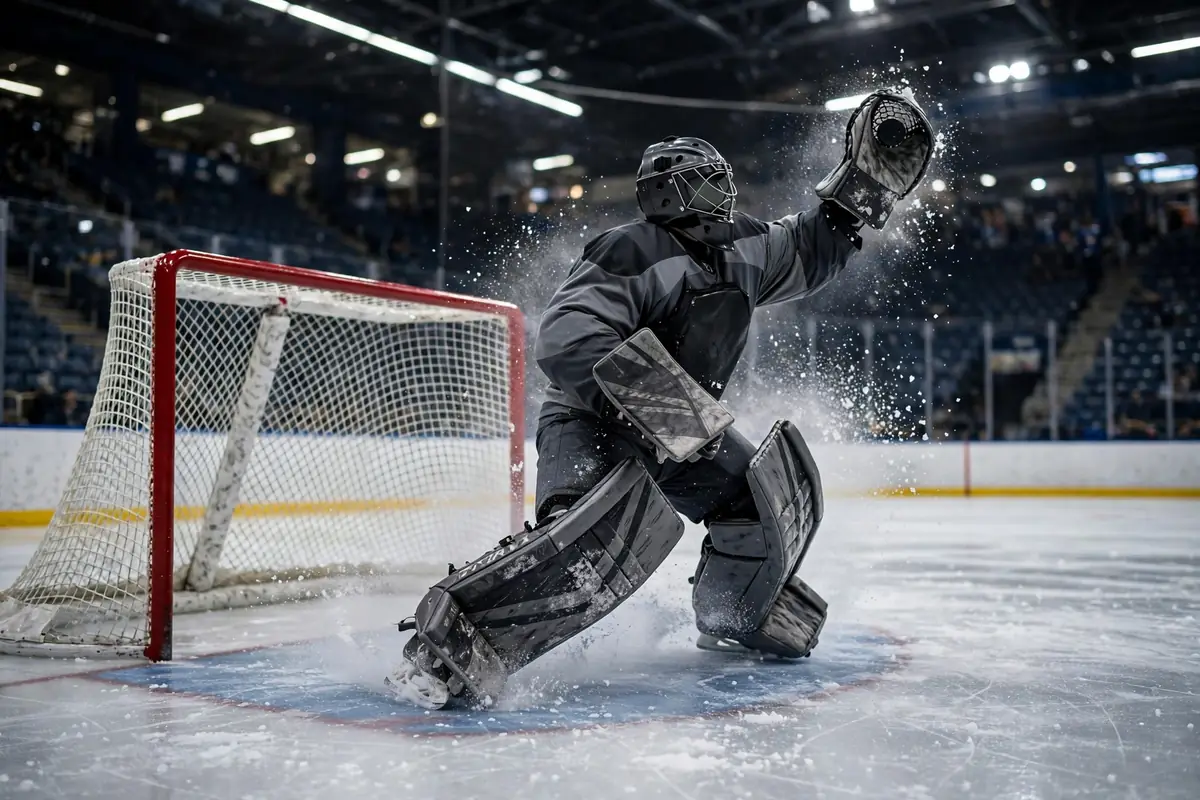
Miller became Buffalo’s starting goalie in the 2005-06 season. He finished that year with 30 wins, a 2.60 goals-against average and a .914 save percentage, and he led the Sabres on a surprise run. Buffalo reached the conference finals that spring, and Miller was the reason they got that far.
He was voted the starting goaltender for the Eastern Conference at the 2007 NHL All-Star Game, his first of two All-Star selections. In 2007-08 he set a Sabres record by playing 76 of the team’s 82 games, a workload few goalies carry. He signed a five-year contract extension worth $31.25 million in 2008, a sign that Buffalo saw him as its franchise goalie.
Miller played 540 games for Buffalo, the franchise record for a goaltender, and won 284 of them, also a franchise record. He spent eleven seasons with the Sabres, from 2002 to 2014, and he was the team’s most reliable player through good years and bad ones. When the Sabres rebuilt, he was the player fans trusted.
The Vezina Season: 2009-10
The 2009-10 season was Miller’s best. He won 41 games, a Sabres record for a single season, and he was named the winner of the Vezina Trophy in June 2010 as the NHL’s best goaltender. The Vezina is voted on by the league’s general managers, and it is the highest honour a goalie can win in a season.
The same year, Miller became the first American player to win the NHL Foundation Player Award, which recognises a player for community work. The award said as much about the person as the player. Miller was known in Buffalo for his work off the ice, and the award recognised it.
The 41 wins in 2009-10 were the peak of his regular-season career. He was 29 years old, in his prime, and he carried a heavy workload for a Sabres team that needed him every night. The season set up the Olympic run that followed, and the two together made 2010 the defining year of his career.
Vancouver 2010: Olympic Silver and MVP
Miller was the starting goaltender for the United States at the 2010 Winter Olympics in Vancouver. He backstopped the team to the gold-medal game, where the United States lost to Canada in overtime. The silver medal was the United States’ best Olympic result in men’s hockey in years, and Miller was the star of the run.
He was named the most valuable player of the tournament and the top goalie. His goals-against average of 1.30 in the tournament is an Olympic record. In the group stage, he beat Canada in a shootout, a win that set the tone for the American run. In the semi-final, he shut down Finland. In the final, he kept the United States in the game until overtime.
St. Louis, Vancouver and Anaheim
On 28 February 2014, Miller was traded from Buffalo to the St. Louis Blues, with forward Steve Ott, in exchange for Jaroslav Halak, Chris Stewart, William Carrier and two future draft picks. The trade ended his eleven-season run in Buffalo. He finished the season in St. Louis, then became a free agent.
On 1 July 2014, he signed a three-year contract worth $18 million with the Vancouver Canucks. In his first season there, he became the 30th goaltender in NHL history to reach 300 career wins, on 28 October 2014. He played three seasons in Vancouver, winning games for a team that was moving into a rebuild.
On 1 July 2017, Miller signed a two-year contract worth $4 million with the Anaheim Ducks. He played four seasons in Anaheim, from 2017 to 2021, as a veteran backup and mentor to younger goalies. He retired after the 2020-21 season, having played 796 regular-season NHL games.
The late-career stops showed a different side of the job. In Buffalo he was the star. In Anaheim he was the steady veteran who helped the next goalie learn the league. Both roles matter, and Miller did both well.
The shootout specialist
Miller was one of the best shootout goalies of his era. He holds the NHL record for an American-born goaltender with 60 career shootout wins, including ten in the 2006-07 season. The shootout rewards a goalie who reads the shooter, stays patient, and does not commit early. Miller’s hybrid style suited it, because he could stay on his feet longer than a goalie who drops early.
How Miller Played: The Hybrid Style
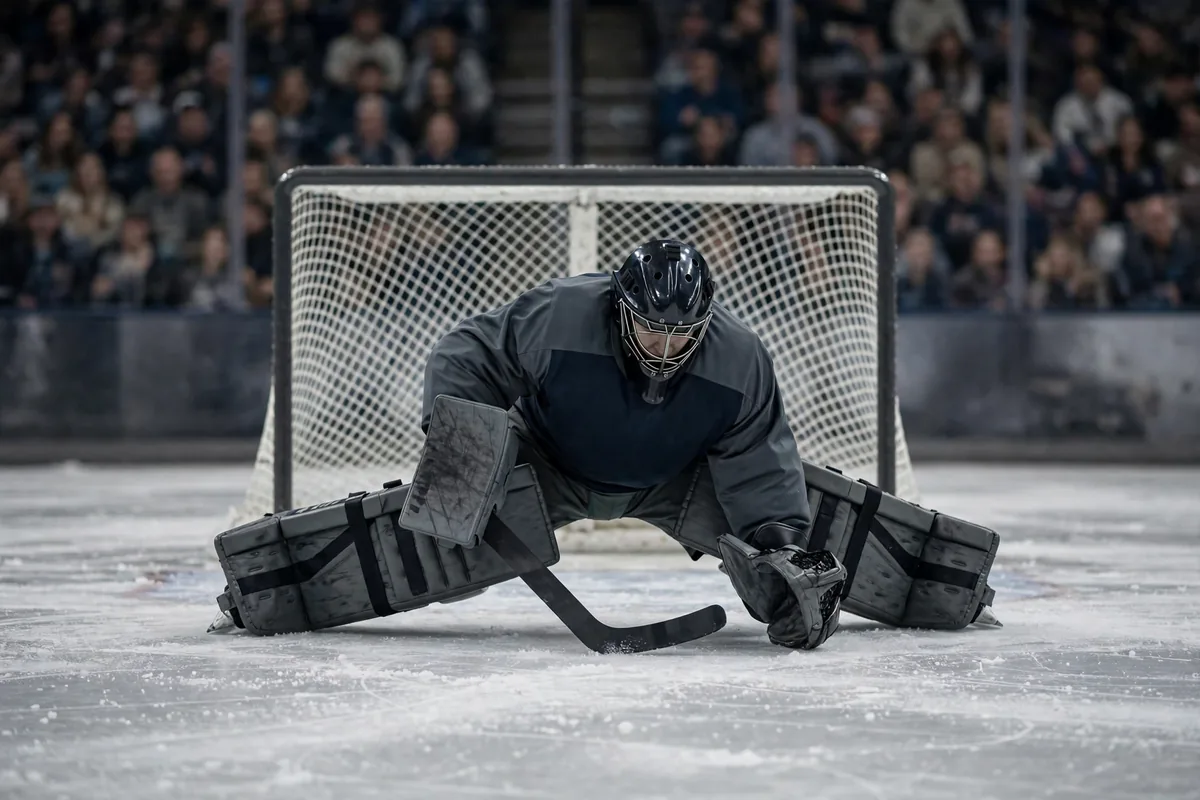
Miller is known for his hybrid style of goaltending. The two main styles are the stand-up style, in which the goalie stays on their feet, and the butterfly, in which the goalie drops to their knees to cover the bottom of the net. A hybrid goalie mixes the two, choosing the right tool for each shot.
The hybrid style suited Miller’s build and his reading of the game. At about 170 pounds, he was lighter than most modern goalies, so he relied on movement and positioning rather than size. He stayed on his feet on long shots, where he could see the puck and react, and he dropped into the butterfly on close shots, where the bottom of the net was the danger.
The style also helped him in the shootout, where patience matters more than size. A goalie who drops early gives the shooter the top of the net. A goalie who waits forces the shooter to make the first move. Miller waited, and shooters ran out of ideas.
Young goalies can learn from the style, but they should not copy it blindly. The hybrid style needs fast legs, good balance and a calm head. A goalie who mixes styles without a plan will be caught between them. Miller’s plan was clear: read the shot, pick the tool, and commit to it.
Career Numbers, Explained
Miller’s career line is easy to read, and it tells a clear story. The numbers below are his NHL regular-season totals.
| Team | Seasons | Games | Wins |
|---|---|---|---|
| Buffalo Sabres | 2002–2014 | 540 | 284 |
| St. Louis Blues | 2014 | 19 | 10 |
| Vancouver Canucks | 2014–2017 | 150 | 64 |
| Anaheim Ducks | 2017–2021 | 87 | 33 |
| Career total | 2002–2021 | 796 | 391 |
His career goals-against average was 2.64, and his save percentage was .914. He recorded 44 shutouts. In the playoffs, he played 57 games, won 28, and posted a .913 save percentage with three shutouts.
The save percentage is the key number for a goalie. It measures the share of shots stopped, and .914 over eighteen seasons is a strong career mark. The goals-against average depends on the team in front of the goalie, so it moves with the quality of the defence. The save percentage is more personal, and Miller’s held up across four teams.
The win total is the headline. Three hundred and ninety-one wins made him the winningest American-born goaltender in NHL history when he retired, a record he held from February 2019 until March 2024, when Jonathan Quick passed him. The record matters because American goalies were once rare at the top of the league. Miller proved an American goalie could be the best in the world.
Records and Honours
Miller’s honours span every level of the game. He was the only player ever to be named the best goalie in the NCAA, the AHL, the NHL and at the Olympic Winter Games. That sweep is the cleanest summary of his career.
His main honours are the Hobey Baker Award in 2001, the Vezina Trophy in 2010, Olympic silver and tournament MVP in 2010, and two NHL All-Star selections. He also holds Sabres records for most games played by a goalie, most wins, most wins in a season, and most shutouts by an American-born goaltender for the franchise, with 28.
He was inducted into the United States Hockey Hall of Fame in 2022, as the winningest American-born goaltender in NHL history. In January 2023, he was inducted into the Buffalo Sabres Hall of Fame, and his number 30 was retired by the team. In April 2025, he was inducted into the Rochester Americans Hall of Fame.
Number retirement is the highest honour a team can give a player. The Sabres do not retire many numbers, and Miller’s 30 now hangs in the arena. It is a mark of what he meant to Buffalo, and to the fans who watched him for eleven seasons.
Life After Playing
After retiring in 2021, Miller stayed in hockey. He works for the San Jose Sharks as a goalie scout and development coach, helping young goalies learn the position. The job suits him, because he was always a student of the position, and he has a lot to teach.
He is the older brother of former NHL forward Drew Miller, who also played in the league. The Miller family is a hockey family, and Ryan’s career is the most decorated part of it.
Fans who want to follow the league Miller played in can start with our guide to NHL players, which covers positions, rosters and stats, and the NHL scores page for live results. The NHL salary cap explains how teams build rosters around a goalie, and our look at Boston Bruins lines shows how to read a team like a fan.
Frequently Asked Questions About Ryan Miller
How many NHL games did Ryan Miller play?
796 regular-season games across 18 seasons, from 2002 to 2021, for Buffalo, St. Louis, Vancouver and Anaheim.
How many wins did Ryan Miller have?
391 wins, with a 2.64 goals-against average, a .914 save percentage and 44 shutouts. He was the winningest American-born goaltender in NHL history when he retired.
When did Ryan Miller win the Vezina Trophy?
In 2010, after winning 41 games for the Buffalo Sabres in the 2009-10 season, a franchise record for a single season.
What did Ryan Miller do at the 2010 Olympics?
He was the starting goalie for the United States at Vancouver 2010, won a silver medal, and was named the most valuable player of the tournament and the top goalie. His 1.30 goals-against average is an Olympic record.
Which teams did Ryan Miller play for?
The Buffalo Sabres from 2002 to 2014, the St. Louis Blues in 2014, the Vancouver Canucks from 2014 to 2017, and the Anaheim Ducks from 2017 to 2021.
What is Ryan Miller’s style of goaltending?
A hybrid style, mixing stand-up and butterfly techniques. He stayed on his feet on long shots and dropped into the butterfly on close ones, and he was one of the best shootout goalies of his era.
Did Ryan Miller win the Hobey Baker Award?
Yes, in 2001, as a sophomore at Michigan State. He posted a 31-5-4 record with a 1.32 goals-against average, a .950 save percentage and ten shutouts, all leading the nation.
What does Ryan Miller do now?
He works for the San Jose Sharks as a goalie scout and development coach, after being inducted into the United States Hockey Hall of Fame in 2022 and having his number 30 retired by the Buffalo Sabres in 2023.
Share this article: X | Facebook | LinkedIn | Email
Written by Saadi | View all articles by Saadi
Miller’s career is a reminder that a goalie can be great without being the biggest or the earliest pick. Fans who follow trade talk will enjoy our look at Pittsburgh Penguins rumors, and anyone who wants to see the next Miller can start in the minors with our guide to American Hockey League tickets. For results across sports, the NFL scores page, the NBA scores page and the college basketball scores page cover the action each week.
Facts checked on 14 November 2026. Sources: Wikipedia and the United States Hockey Hall of Fame for Miller’s career and honours, the Hobey Baker Award site for his college season, and Sports Flash Daily’s own hockey guides for the linked articles.



















