




Ray Ray Mancini: Boom Boom’s Career, Record and Legacy
They called him Boom Boom, and the name fit. Ray Mancini fought the way his father had fought before him: coming forward, throwing punches in bunches, never taking a step back. For two years in the early 1980s he was the WBA lightweight champion of the world, one of the most popular fighters in America, and the pride of Youngstown, Ohio. Then came a night in Las Vegas that changed his life, changed boxing, and still shadows his name today.
This guide tells the whole story: the Youngstown childhood, the rise to the title, the tragedy of Duk Koo Kim, the losses, the comebacks, and the long second act as a broadcaster and Hall of Famer.
Quick Answer
Table of Contents
- Who Is Ray Ray Mancini?
- Youngstown: The Fighting City
- The Father He Fought For
- Amateur Days and Turning Professional
- The Rise: 19 Straight Wins
- First Title Shot: Alexis Arguello
- Winning the World Title: Arturo Frias
- The Title Defences
- The Kim Fight: November 13, 1982
- What Changed After Kim
- Losing the Title and the First Retirement
- The Comebacks: Camacho and Haugen
- Life After Boxing
- Mancini’s Style: Why Fans Loved Him
- Frequently Asked Questions About Ray Ray Mancini
Who Is Ray Ray Mancini?
Ray Mancini, born Raymond Michael Mancino on March 4, 1961, in Youngstown, Ohio, is a former professional boxer who competed from 1979 to 1992. He is best known by his nickname, “Boom Boom”, which he inherited from his father, Lenny Mancini, who was also a professional fighter.
Mancini fought at lightweight and light welterweight. He stood about 5 feet 4 and a half inches tall, short for a fighter, and he made up for it with pressure, volume and heart. He won 29 of his 34 professional fights, 23 of them by knockout, and lost five. All five losses came against world champions.
His peak ran from May 1982 to June 1984, when he held the WBA lightweight title. He defended it four times, fought in front of huge crowds in Ohio and Las Vegas, and became one of the most televised fighters of his era. He retired at 24, came back twice, and retired for good at 31 in 1992.
Youngstown: The Fighting City
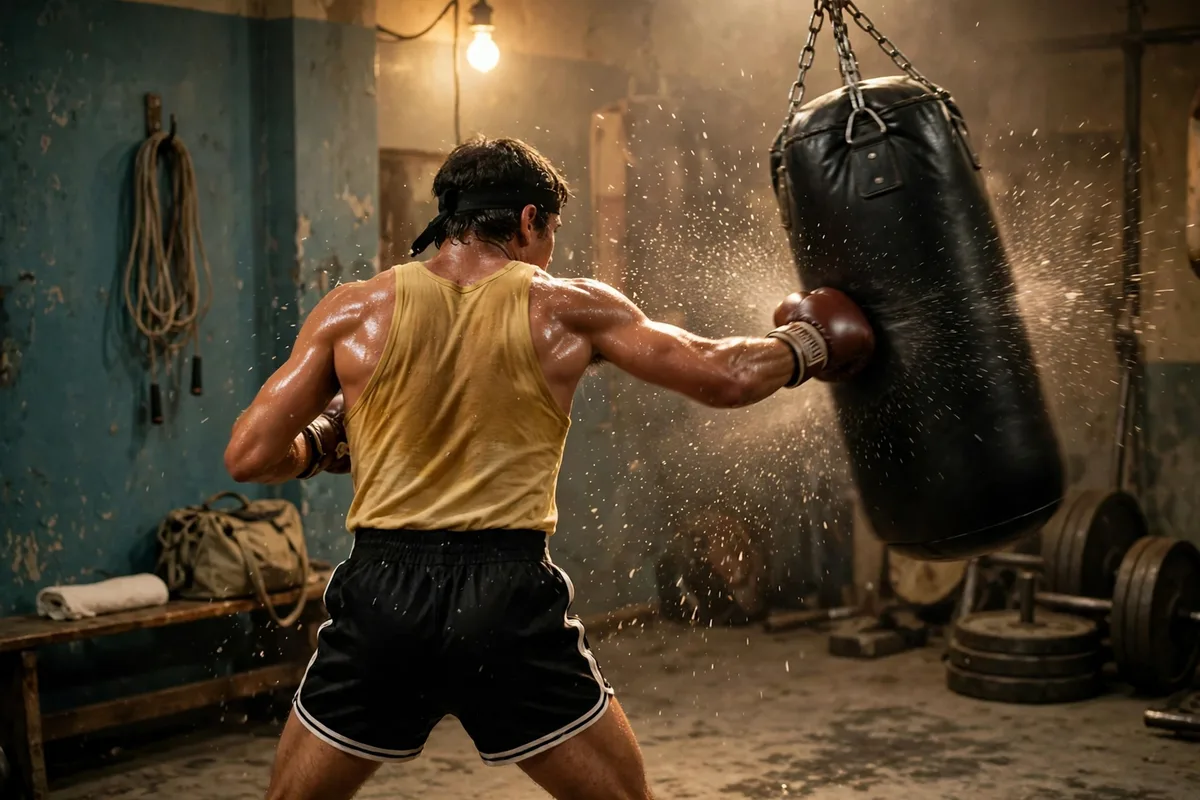
Youngstown, Ohio, sits in the Mahoning Valley, a steel town that made its living in the mills and its reputation in the ring. When the mills closed, the town’s pride took a hit, and its fighters became a source of identity. Mancini grew up in that world, in a neighbourhood where boxing was not a hobby but a way out and a way up.
The city embraced him completely. When he fought at home, crowds of more than 20,000 turned out in nearby Warren, Ohio, a town of modest size, to watch a local boy defend a world title. Youngstown still claims him as its own, and he still lives there.
The Father He Fought For
The heart of Mancini’s story is his father. Lenny “Boom Boom” Mancini boxed professionally from 1937 to 1947, compiling a record of 46 wins, 12 losses and 3 draws, with 16 knockouts. He was ranked the No. 1 lightweight in the world in 1941 and was considered a future world champion.
Then came the Second World War. Lenny served, was wounded, and never got his title shot. He came home, worked, raised a family, and passed the nickname and the dream to his son.
Ray has said many times that he fought to win the world title for his father. When he finally won the belt in 1982, he dedicated the fight to Lenny, who had been unable to become champion because of the wounds he suffered in the war.
Amateur Days and Turning Professional
Mancini had a strong amateur career, winning 43 of 50 fights with 23 knockouts. He won top honours at the 1977 Youngstown Golden Gloves and the Northeastern Ohio Golden Gloves.
He turned professional on October 18, 1979, in Struthers, Ohio, stopping Phil Bowen in the first round. He fought 15 times in his first year as a professional, an extraordinary pace by modern standards, and he won them all. The activity was deliberate: his team wanted him seasoned fast, and the fights kept coming.
Early in his career he picked up the Ohio State lightweight belt, knocking out Bobby Sparks in the first round in April 1980. A year later he won the NABF lightweight championship, when Jorge Morales could not continue after the ninth round.
The Rise: 19 Straight Wins
Mancini won his first 19 professional fights. The run included a win over future two-time world champion Jose Luis Ramirez, who was 71-3 when they met, by unanimous decision over 12 rounds. That win proved Mancini belonged at world level.
The style was already set. Mancini came forward behind a high guard, threw hooks to the body and head in combination, and wore opponents down with pace. He was a volume puncher who broke fighters down over rounds, and the knockouts came late, when opponents were exhausted.
The rise was fast, and it was televised. Network television still showed boxing regularly in the early 1980s, and Mancini’s action style made him a natural for the cameras.
For fans learning how a fighter’s career is tracked, our guide to the Conor Benn record explains how to read wins, losses, knockouts and title fights.
First Title Shot: Alexis Arguello
Mancini was only 20 years old when he got his first world title fight, against Alexis Arguello on October 3, 1981. Arguello was the WBC lightweight champion, one of the great fighters of his era, and he was 67-5 coming in. The fight was dead even after ten rounds, and then Arguello’s class told. He stopped Mancini in the 14th round.
The loss taught him what the gap looked like between a good young fighter and a great one. He went back to work, won three more fights, and got his second chance seven months later.
Fight fans who follow the current scene can check the boxing schedule for upcoming title fights, and our Canelo fight time guide covers the sport’s biggest current draw.
Winning the World Title: Arturo Frias
On May 8, 1982, at the Aladdin in Las Vegas, Mancini challenged the WBA lightweight champion, Arturo Frias. Frias was 24-1 and defending his title. Mancini was shaken and cut early, and then he ended the fight in the first round with a knockout, at 2:54 of the opening round.
The win made him world champion at 21, and it made him a star. He had won the title his father never got, and he had done it in the most spectacular way possible. The victory also made him a hero in Youngstown, a town that had lost its mills and much of its economy.
The Title Defences
Mancini defended the WBA lightweight title four times, and each defence added to his reputation.
The first came on July 24, 1982, against former champion Ernesto Espana, in front of more than 20,000 fans at Mollenkopf Stadium in Warren, Ohio, about ten miles from Youngstown. Mancini knocked Espana out in the sixth round.
The second defence, against Duk Koo Kim on November 13, 1982, is the fight this guide returns to below, because it changed everything.
The third defence came against Orlando Romero, and the fourth against Bobby Chacon, a two-time world champion, whom Mancini stopped in three rounds. Four defences in two years, against real opposition, is a solid championship reign by any measure.

The Kim Fight: November 13, 1982
On November 13, 1982, in Las Vegas, Mancini defended his title against Duk Koo Kim, a challenger from South Korea. Kim was unheralded and little known to American fans, and like Mancini he only knew how to move forward. The fight was a war from the opening bell.
The two men traded punches for 14 rounds. Mancini won by knockout in the 14th, but Kim collapsed after the fight and died days later from injuries sustained in the bout. He was 23 years old.
The death devastated Mancini. He has spoken about it many times since: he never wanted to hurt anyone like that, he thought about quitting, and he carried the guilt for years. He did not cause the death through any foul or rule-breaking. It was a legal fight, fought hard by both men, and it ended in a tragedy that neither man wanted.
Kim’s death also claimed two more lives in its aftermath. Kim’s mother died by suicide months later, and the referee of the fight, Richard Green, also died by suicide.
What Changed After Kim
The Kim fight changed boxing. The most direct change was the length of championship fights. Before Kim, world title fights were scheduled for 15 rounds. After Kim, all championship fights were reduced to 12 rounds, a rule that still stands today, because the final rounds, when exhausted fighters take the most damage, were judged too dangerous.
The sport also tightened its medical checks, its pre-fight examinations and its rules around when a referee should stop a fight. For Mancini, the change was personal. He was 21 years old, a world champion, and suddenly the most famous fighter in America for the worst possible reason. He kept fighting, but he has said the joy went out of the sport for him. He retired at 24, in 1985, after 32 fights in five and a half years.
Boxing safety is a subject every new fan should understand before they start training. Our best boxing gloves for beginners training guide covers the gear that protects hands and heads in the gym.
Losing the Title and the First Retirement
Mancini lost his title to Livingstone Bramble, twice. The first loss came on June 1, 1984, when Bramble stopped him in the 14th round. The rematch on February 16, 1985, went the full 15 rounds, and Bramble won a unanimous decision. Mancini was 23 years old and had fought 32 times in five and a half years.
He retired after the second Bramble fight, at 24. It was a young age to stop, and it surprised many in the sport. He had money, health and options, and he stepped away. The Kim fight had taken something from him that winning could not give back, and the two defeats to Bramble confirmed that the hunger was gone.
The retirement lasted four years. He stayed around boxing, worked in film and television, and lived a life outside the ring.
The Comebacks: Camacho and Haugen
Mancini returned in 1989, at 28, against Hector “Macho” Camacho, a former world champion and one of the most gifted fighters of his generation. Camacho won a split decision. It was competitive, and it showed Mancini could still fight at a high level, but the years away had cost him his edge.
His final fight came on April 3, 1992, against Greg Haugen, for the vacant NABF light welterweight title, in Reno, Nevada. Haugen stopped him in the seventh round. Mancini was 31, and he retired for good with a record of 29 wins, 5 losses and 23 knockouts.
All five of his losses came against world champions: Alexis Arguello, Livingstone Bramble twice, Hector Camacho and Greg Haugen. That is a telling detail. Mancini never lost to an ordinary fighter. Every man who beat him had held, or would hold, a world title.
His professional record, fight by fight, reads as follows.
| Period | Fights | Result | Note |
|---|---|---|---|
| 1979–1981 | 20 | 19 wins, 1 loss | Rise to first title shot vs Arguello |
| 1982 | 6 | 6 wins | Three wins after Arguello, then WBA title vs Frias, defences vs Espana and Kim |
| 1983 | 1 | 1 win | Defence vs Romero |
| 1984–1985 | 3 | 1 win, 2 losses | Defence vs Chacon, lost title to Bramble twice, retired at 24 |
| 1989–1992 | 4 | 2 wins, 2 losses | Comebacks vs Camacho and Haugen, retired at 31 |
| Career total | 34 | 29 wins, 5 losses, 23 KOs | WBA lightweight champion 1982–1984 |
For context on how modern fighters build their records, the UFC schedule shows how today’s combat athletes stay active, and our what is MMA guide explains the sport many young fighters cross into.
Life After Boxing
Mancini stayed in boxing after his final retirement, as a commentator and analyst, notably for PBC on Fox, where his ringside insight and his plain speaking made him a popular voice. He has also worked as an actor and a producer, and his life was the subject of the acclaimed 2013 documentary “The Good Son: The Life of Ray ‘Boom Boom’ Mancini”, based on Mark Kriegel’s 2012 biography of the same name.
In 2015, he was inducted into the International Boxing Hall of Fame, in Canastota, New York. The induction recognised not only his title reign but his place in the sport’s history, including the reforms that followed the Kim fight.
He still lives in Youngstown, and he still works in the sport he gave his youth to. Youngstown fans follow more than boxing — our NFL scores page covers the football season, and the NBA scores page covers basketball nights.
Mancini’s Style: Why Fans Loved Him
Mancini’s style explains his popularity better than his record does. He was a pressure fighter in the classic mould: he walked forward, cut off the ring, and threw punches in volume. He did not run, he did not hold, and he did not look for a way out when a fight got hard.
- Pressure. He stayed in his opponent’s face from the first bell, giving them no room to breathe or think.
- Volume. He threw combinations to head and body, round after round, and the punches added up.
- Body attack. He invested in body punches early, and the payoff came late, when opponents slowed down.
- Heart. He took punches to land his own, and he kept coming forward even when he was hurt, as he did in the opening moments against Frias.
- Stamina. He fought at a pace few lightweights could match, and his knockouts often came in the late rounds.
The style had a cost: pressure fighters take punishment, and Mancini took plenty of it across 34 fights. It also had a reward — fans loved watching him, because every Mancini fight was a guarantee of action.
Young fighters drawn to the sport should start with the fundamentals and the right gear. The types of martial arts guide covers the striking arts that feed into boxing, and the UFC at the White House guide shows where combat sports are headed next.
Frequently Asked Questions About Ray Ray Mancini
Who is Ray Ray Mancini?
Ray “Boom Boom” Mancini is an American former boxer from Youngstown, Ohio, born March 4, 1961. He held the WBA lightweight title from 1982 to 1984 and retired with a record of 29 wins, 5 losses and 23 knockouts.
What was Ray Mancini’s boxing record?
He retired with 29 wins, 5 losses and 23 knockouts from 34 professional fights. All five of his losses came against world champions.
When did Ray Mancini win the world title?
He won the WBA lightweight title on May 8, 1982, knocking out Arturo Frias in the first round at the Aladdin in Las Vegas. He held the title until June 1984.
What happened in the Duk Koo Kim fight?
On November 13, 1982, Mancini defended his title against Duk Koo Kim in Las Vegas. Mancini won by knockout in the 14th round, but Kim collapsed after the fight and died days later from injuries sustained in the bout. The tragedy led to championship fights being shortened from 15 rounds to 12.
Why is Ray Mancini called Boom Boom?
The nickname came from his father, Lenny “Boom Boom” Mancini, who was a professional fighter in the 1930s and 1940s and was ranked the No. 1 lightweight in the world in 1941. Ray inherited the name and the dream of winning a world title.
When did Ray Mancini retire?
He first retired in 1985, at 24, after losing twice to Livingstone Bramble. He came back in 1989 and retired for good in 1992, at 31, after losing to Greg Haugen.
Is Ray Mancini in the Boxing Hall of Fame?
Yes. He was inducted into the International Boxing Hall of Fame in 2015.
Where is Ray Mancini now?
He still lives in Youngstown, Ohio, and works in boxing as a commentator and analyst. He was the subject of the 2013 documentary “The Good Son”.
Share this article: X | Facebook | LinkedIn | Email
Written by Jaani | View all articles by Jaani
Facts checked on 14 November 2026. Sources: Wikipedia, Ohio History Connection and ESPN for the career record, title dates, Kim fight and Hall of Fame induction, and Sports Flash Daily’s own boxing guides for the linked articles.



















