




Russian Machine: Alex Ovechkin Nickname Explained
A puck hit Alex Ovechkin on the foot late in a game in October 2006, and reporters the next morning expected news of a broken bone. He walked into practice, smiled, and told them he was fine. The line he used that day became one of the most famous quotes in hockey, and it gave him a nickname that has followed him for two decades.
This guide explains the Russian Machine nickname from the start: the exact quote, the night it happened, why it stuck, how it differs from his other nickname, the Great 8, and what his durability record really looks like. It also covers the goal-scoring chase that turned a joke about never breaking into a serious claim about the greatest goal scorer the NHL has ever seen.
Quick Answer
Table of Contents
- What Is the Russian Machine?
- The Night the Quote Was Born
- The Morning After in Vancouver
- Why the Line Went Viral
- Russian Machine vs the Great 8
- Ovi’s Office: Where the Goals Come From
- The Durability Record Behind the Nickname
- The Gr8 Chase: Passing Wayne Gretzky
- The 2018 Stanley Cup Run
- Playing Style: Power, Shot and Physical Play
- Ovechkin in Washington: One Team, One Career
- The Nickname in Popular Culture
- Frequently Asked Questions About the Russian Machine
What Is the Russian Machine?
The Russian Machine is Alex Ovechkin, the Russian left winger who has captained the Washington Capitals since 2010. The nickname is not a title the league gave him or a name from a marketing campaign. It comes from his own mouth, in broken English, on a routine morning in his second NHL season.
Ovechkin was born on 17 September 1985 in Moscow, the son of Soviet athletes. His mother played basketball for the Soviet national team and his father played football. He grew up in a sporting family, joined Dynamo Moscow as a teenager, and was taken first overall by Washington in the 2004 NHL Draft. He made his NHL debut on 5 October 2005 against Columbus, and fans who want to follow the league night by night can use our NHL scores page.
Fans use the nickname in two ways. Some use it as a short form for Ovechkin himself, the way other stars get a one-word tag. Others use the full line, “Russian machine never breaks,” as a chant, a shirt slogan, or a comment under a highlight of him taking a hit and skating away. Both uses point at the same idea: a player who absorbs punishment and keeps scoring.
The Night the Quote Was Born
The game was on Wednesday 25 October 2006. Washington visited the Colorado Avalanche at the Pepsi Center in Denver and won 5-3, the kind of result tracked on our NHL scores page. Ovechkin scored the fifth Washington goal, a wrist shot past goaltender Peter Budaj from the left face-off circle, the spot fans would later call his office.
Late in the game, with 2.7 seconds left on the clock, Ovechkin blocked a heavy wrist shot from his own teammate Shaone Morrisonn. The puck struck him directly on the foot. He left the ice hurt, and the first reports suggested a possible fracture. A broken foot for a 21-year-old scorer in his second season would have been a serious setback.
That detail matters, because the quote only makes sense against the worry of the night before. Nobody in the room the next morning was asking about the goal. They were asking whether the foot was broken, and whether the young star would miss weeks. Ovechkin answered with a shrug and a line that sounded like a joke and turned out to be a career summary.
The Morning After in Vancouver
Washington travelled to Vancouver after the Colorado game, and Ovechkin arrived for full practice the next morning. Reporters gathered around him, and the story of what he said has been told in slightly different versions over the years. The version reported at the time, and confirmed later by the beat writer who first wrote it down, is short: “I’m okay. Russian machine never breaks.”
Tarik El-Bashir, then the Capitals beat writer, later explained that he had not been in the scrum himself. Colleagues based in Vancouver told him what Ovechkin had said, and he wrote it down. Canadian reporters in the room had been more interested in a different moment from the night before, a glass-breaking bodycheck, and they treated the line as a cute aside. El-Bashir saw it differently and knew at once that it would travel.
His instinct was right. The line spread through hockey media, then through fan forums, then onto shirts and memes. It worked because it was funny, because it was said in Ovechkin’s own voice, and because it matched what fans were already seeing: a player who hit hard, got hit hard, and never seemed to stay down.
Why the Line Went Viral
A good sports nickname needs three things: a true story, a short phrase, and a player whose play keeps proving it, and our tennis scores guide shows how other sports build the same kind of shorthand around their stars. The Russian Machine had all three from the first day.
The story was true and easy to retell. A puck hit his foot, everyone feared a break, and he practised the next morning. The phrase was short, rhythmic, and easy to chant. The play kept proving it season after season, as Ovechkin piled up goals while missing very few games through injury.
Russian Machine vs the Great 8
Ovechkin has two famous nicknames, and they mean different things. The Russian Machine is about durability and toughness. The Great 8, sometimes written as the Great Eight, is about his jersey number and his goal scoring.
The Great 8 is a play on “the Great One,” the nickname of Wayne Gretzky, combined with Ovechkin’s number 8. It is the nickname that appears on his branding, including his OVIGR8 clothing line, which blends “Ovi” and “Great Eight.” The line’s tagline draws on the 2006 quote, so the two nicknames meet in his commercial work.
A fan who wants to follow his numbers should start with the scoring record, while a fan who wants to understand his reputation should start with the durability story. Our guide to NHL players explains positions, rosters and stats, and it is a good place to put Ovechkin’s numbers in context.
Ovi’s Office: Where the Goals Come From
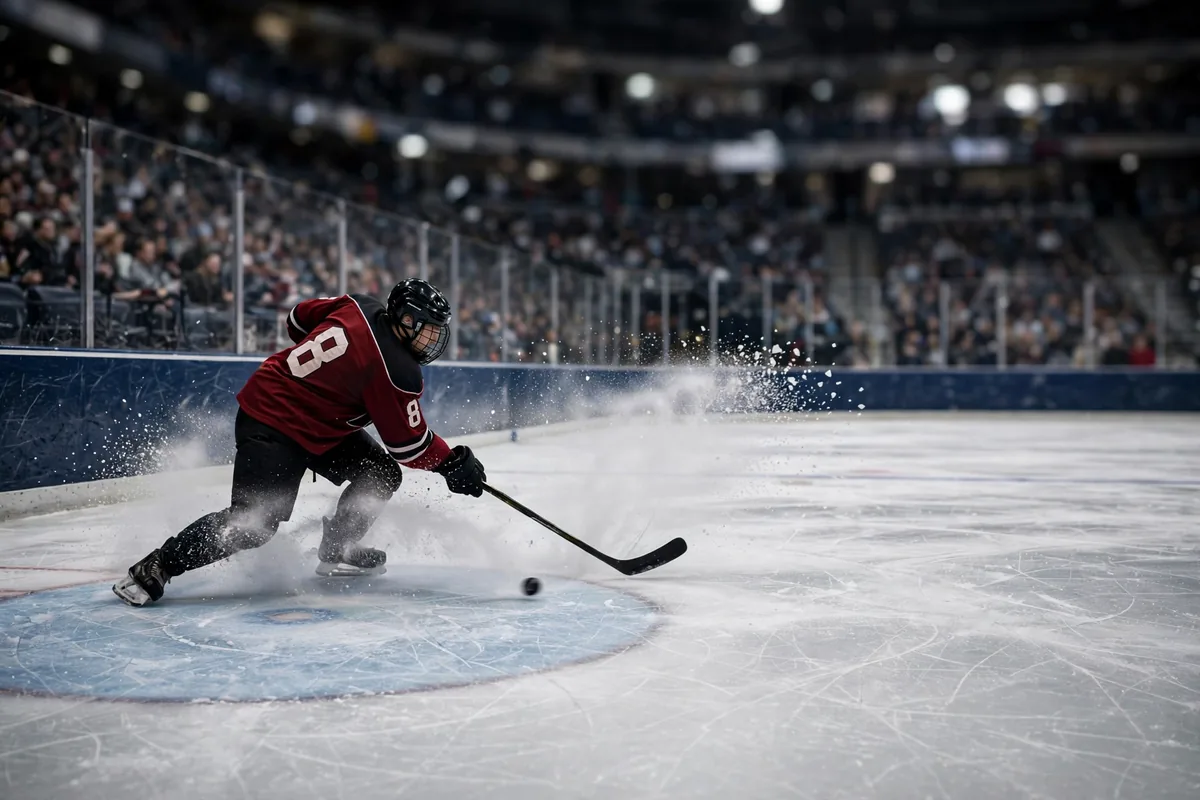
Every great scorer has a spot on the ice, and Ovechkin’s is famous enough to have its own name. “Ovi’s Office” is the top of the left face-off circle, where he sets up on the power play and waits for a one-timer.
The play looks simple from the stands. A teammate moves the puck across the ice, Ovechkin loads his stick, and the shot is gone before the goalie can slide across the crease. The reason it keeps working after two decades is that the release is fast, the shot is heavy, and the angle is hard to cover. Goalies know it is coming, defences plan for it, and it still goes in.
The office explains a large share of his power-play goals. He is the NHL’s all-time leader in power-play goals, with 331 to his name at the point his final season was announced. That number is a record in its own right, and it shows how much of his scoring comes from one rehearsed, repeatable play.
The one-timer also explains why the Russian Machine nickname fits his scoring as well as his durability. A machine repeats the same action with the same result. Ovechkin has repeated the left-circle one-timer for more than 20 seasons, and the result has been goals in every one of them.
The Durability Record Behind the Nickname
A nickname about never breaking needs numbers behind it, and Ovechkin’s numbers are striking. In his first 13 seasons, he missed more than four games only once and never missed more than 10 in a single season. Taking out eight games missed for suspensions, he sat out for injury only 21 times in his first 1,028 games.
That last detail is worth pausing on: the same kind of injury that the 2006 quote was about did not stop him in the playoffs either. The line was not a one-night joke. It was a fair description of how he handles pain.
Durability is not the same as invincibility. Ovechkin has missed games, and he has had seasons where the goals came slower. What sets him apart is the pattern across a very long career: very few long absences, very few seasons lost to injury, and a scoring rate that stayed high into his late 30s and early 40s.
Fans who want to understand how a hockey season is built around its stars can read our guide to how long a hockey game lasts, which explains periods, overtime and real time. The short version is that an 82-game season punishes bodies, and lasting 20 of them at Ovechkin’s level is rare.
The Gr8 Chase: Passing Wayne Gretzky
For most of hockey history, Wayne Gretzky’s record of 894 regular-season goals looked unbreakable. Gretzky scored his 894th goal on 29 March 1999, and for a quarter of a century nobody came close. Ovechkin chased it openly in his later years, in a pursuit fans called the Gr8 Chase.
He tied Gretzky with two goals against Chicago on 4 April 2025. Two days later, on 6 April 2025, he scored his 895th goal against the New York Islanders at UBS Arena, on a power play at 7:26 of the second period. The goal broke the record in the same number of games Gretzky had needed to set it: 1,487.
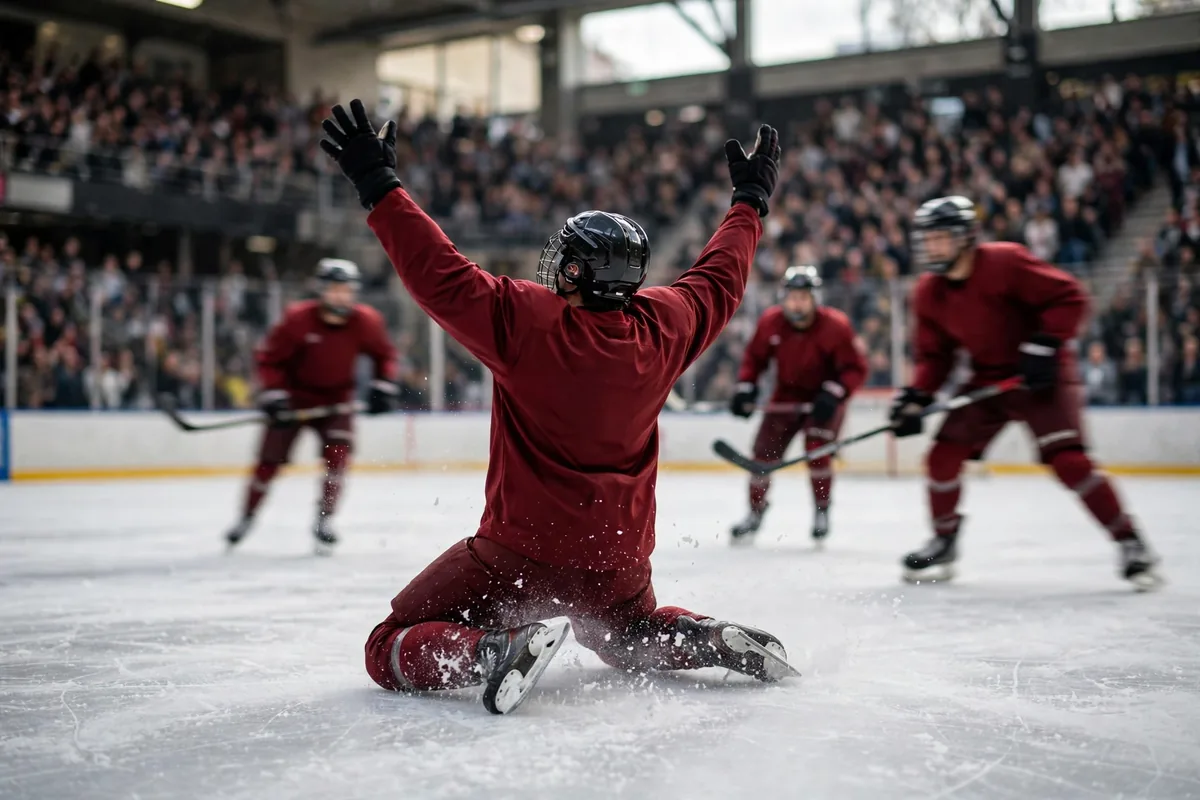
The celebration that followed became famous in its own right, and the MLB scores page shows how other sports mark record nights in the same way. Ovechkin slid across the ice on his stomach in a belly-flop slide, arms out, grinning. It was the same joyful style fans had seen since his rookie season, now attached to the biggest goal of his life.
The chase did not stop at 895. In November 2025 he became the first player in NHL history to score 900 regular-season goals. In March 2026 he scored his 1,000th career goal across regular season and playoffs combined, becoming only the second player after Gretzky to reach that mark. Gretzky still leads the combined total with 1,016 goals, so the final gap in that count is a small one.
At the time his final season was announced in October 2026, Ovechkin had 929 regular-season goals and 1,688 points in 1,575 games, all with Washington. He had also led the NHL in goals nine times, more than any other player in history, and he held the record for the most 40-goal seasons with 14.
The 2018 Stanley Cup Run
For all the goals and all the nicknames, the missing piece in Ovechkin’s career for many years was a Stanley Cup. Washington had good teams and early playoff exits, and Ovechkin lost to Sidney Crosby and the Pittsburgh Penguins in 2009, 2016 and 2017, watching them win the Cup each time.
The breakthrough came in 2018. Washington beat Pittsburgh in six games in the second round, then went on to beat the Vegas Golden Knights in six games in the Stanley Cup Final. Ovechkin scored 15 goals and 27 points in 24 playoff games, and he won the Conn Smythe Trophy as the most valuable player of the playoffs.
The Cup win changed how his career is talked about. Before 2018, critics asked whether a great scorer could lead a team to a title. After 2018, that question was gone. He was the first Russian player to captain a team to the Stanley Cup, and the image of him lifting the Cup is one of the most famous in modern hockey.
Fans who follow the Capitals’ rivals can read our guide to the Pittsburgh Penguins rumors, which explains how trade talk works around a team like Pittsburgh. The rivalry with the Penguins is part of the Cup story, because beating them was the step Washington had to take first.
Playing Style: Power, Shot and Physical Play
Ovechkin plays as a power forward, a scorer who also hits. That combination is rare, because most pure scorers avoid contact to protect themselves. Ovechkin seeks it out, and his open-ice hits were a signature of his early career.
His shot is the centrepiece. He shoots hard, he shoots often, and he shoots from places other players would pass from. The one-timer from the left circle is the best-known weapon, but he also scores on wrist shots, snap shots and rebounds. Volume matters: he has led the league in shots as well as goals, and the sheer number of attempts keeps goalies under pressure all night.
His physical play has a cost. Big hits draw penalties and suspensions, and they wear a body down over time. Ovechkin has taken eight games of suspensions in his career, a small number given how physical his game is. The balance he struck, hitting hard without crossing the line too often, is part of why he lasted so long.
Younger fans who are new to the sport can start with our guide to ice hockey rules for beginners, which explains the basics before the tactics. Once the rules are clear, Ovechkin’s game is easier to read: a left winger who lives in the left circle, shoots at every chance, and hits everything that moves.

The shot, in plain terms
A one-timer is a shot taken straight from a pass, without stopping the puck first. It needs timing, because the shooter must meet the puck at full speed. Ovechkin’s one-timer works because his stick is loaded early, his weight is already shifting forward, and his release is short. Goalies have less time to react than they do against a normal wrist shot.
The power play is where the one-timer does most damage. With an extra skater, Washington can move the puck around the zone until the lane to Ovechkin opens. The defence must choose between covering him and covering the net-front player. Either choice leaves a gap, and Ovechkin has spent 20 years finding it.
Ovechkin in Washington: One Team, One Career
Ovechkin has spent his whole NHL career with one team, the Washington Capitals. He was drafted first overall in 2004, debuted in 2005, and became captain in 2010. At the time his final season was announced, he was the franchise leader in games played, goals and points, and he had played 22 seasons for the club.
That loyalty is unusual in modern sport, where stars often move teams. Washington built around him for two decades, and he repaid them with a Cup, a goals record, and a run of playoff appearances, the kind of long team story our NFL scores page follows in football. The Capitals qualified for the playoffs 16 times in a stretch of 18 years during his career, including three Presidents’ Trophies as the league’s best regular-season team and 10 division titles.
He announced in October 2026 that the 2026-27 season would be his last in the NHL, at the age of 41. The announcement turned his final season into a farewell tour, with every arena giving him a reception and every goal adding to a record that may never be broken.
The business side of a long career matters too. Our guide to the NHL salary cap explains how teams fit star contracts under a league-wide limit, and why keeping one player for 22 years is a cap challenge as well as a hockey one.
The Nickname in Popular Culture
The Russian Machine nickname has travelled well beyond hockey. It appears on shirts, hats and posters, and it is used in headlines whenever Ovechkin takes a big hit or scores a big goal. The fan site that took the name has become a fixture of Capitals coverage, and its writers have kept the origin story alive.
Frequently Asked Questions About the Russian Machine
What is the Russian Machine?
It is the nickname of Alex Ovechkin, taken from his own words in October 2006: “I’m okay. Russian machine never breaks.” He said it after blocking a shot off his foot and practising the next morning.
Who said “Russian machine never breaks” first?
Alex Ovechkin said it on 26 October 2006 in Vancouver, the morning after a game against Colorado in which a puck hit his foot. Beat writer Tarik El-Bashir first reported the quote.
Is the Russian Machine the same as the Great 8?
No. The Russian Machine is about durability and toughness. The Great 8 is about his jersey number 8 and his goal scoring, playing on Wayne Gretzky’s nickname, the Great One.
How many goals did Ovechkin score to pass Gretzky?
He scored his 895th regular-season goal on 6 April 2025 against the New York Islanders, passing Gretzky’s record of 894. He reached the mark in 1,487 games, the same number Gretzky needed.
Did Ovechkin win a Stanley Cup?
Yes. He captained Washington to its first Stanley Cup in 2018, beating Vegas in six games in the Final. He scored 15 goals in 24 playoff games and won the Conn Smythe Trophy as playoff MVP.
How durable has Ovechkin been?
Very durable. In his first 13 seasons he missed more than four games only once and never more than 10 in a season. He missed only 21 games through injury in his first 1,028 games, not counting suspensions.
What is Ovi’s Office?
It is the top of the left face-off circle, where Ovechkin sets up on the power play and scores with a one-timer. It is his best-known scoring spot.
When will Ovechkin retire?
He announced in October 2026 that the 2026-27 season, his 22nd with Washington, would be his last in the NHL.
Share this article: X | Facebook | LinkedIn | Email
Written by Saadi | View all articles by Saadi
Facts checked on 14 November 2026. Sources: NHL.com, Russian Machine Never Breaks and Sports Illustrated for the 2006 quote and the goals record, and Sports Flash Daily’s own NHL guides for the linked articles.



















